
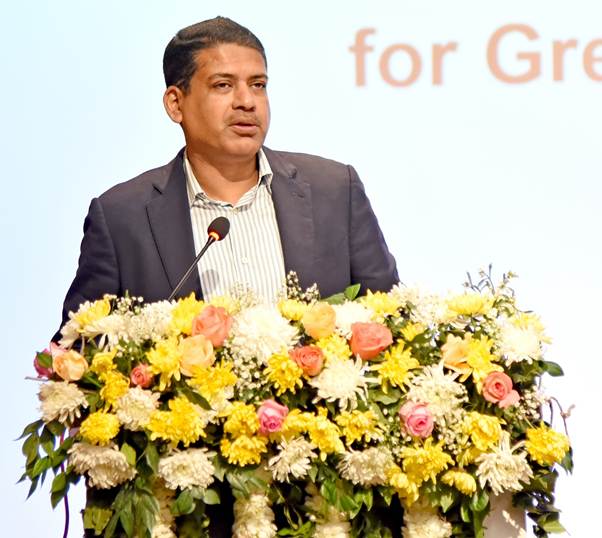

Shri Naik said that under the leadership of Prime Minister Narendra Modi, India’s renewable energy journey has gained unprecedented momentum over the past decade, with bioenergy evolving from a peripheral option into a strategic pillar of the country’s clean energy framework. He noted that bioenergy today contributes not only to energy security but also to rural livelihoods, waste management, pollution reduction and climate action.
Highlighting the challenge of industrial decarbonisation, the Minister pointed out that MSMEs account for nearly one-third of India’s manufacturing output and employ millions of people. However, a significant portion of their demand for steam and heat is still met through coal, furnace oil and pet coke, making the transition to clean thermal energy both urgent and essential.
Biomass-Based Green Heat: A Practical Pathway
According to the Minister, biomass-based green steam and heat solutions present a practical and cost-effective pathway for MSMEs. India’s abundant availability of agricultural residue, animal waste and municipal solid waste offers a unique opportunity to convert waste into value while reducing emissions and generating additional income for farmers and rural entrepreneurs.
He highlighted government initiatives such as the National Bioenergy Programme, SATAT and GOBARdhan, which support biomass briquettes and pellets, non-bagasse-based cogeneration, decentralised energy solutions and industrial applications tailored for MSMEs. These initiatives, he said, are also aligned with the broader objectives of the National Green Hydrogen Mission.
MNRE–GIZ Report Lays Clear Roadmap
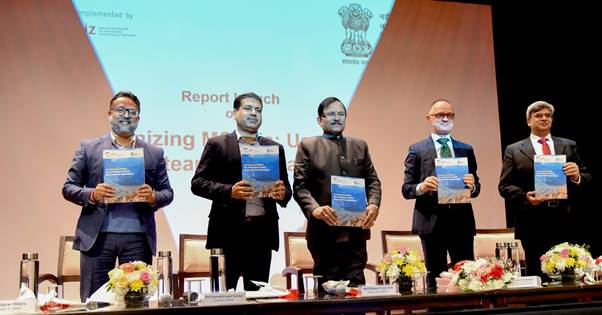
The MNRE–GIZ report released during the workshop provides a data-driven and sector-specific roadmap for adopting biomass-based green heat and steam solutions across industries such as textiles, food processing, chemicals, foundries and pharmaceuticals. It identifies key policy and market enablers including biomass deployment obligations, standardised steam supply agreements, biomass exchanges and strengthened supply-chain coordination.
The report is expected to serve as a valuable reference for policymakers, industry stakeholders and financial institutions by offering a clear picture of current energy consumption patterns and outlining steps to accelerate the adoption of biomass solutions across Indian industry.
Collaboration Across Value Chain Essential
Emphasising that technology alone cannot drive transformation, Shri Naik called for close collaboration across the entire value chain—from farmers and farmer producer organisations supplying biomass to aggregators, logistics providers, boiler manufacturers, energy service companies, financiers and regulators.
He stressed that MSMEs need confidence in year-round fuel availability, pricing stability, operational reliability and supportive policies. Platforms such as national workshops, he said, are critical for trust-building, knowledge-sharing and co-creation of viable solutions.
Biomass Solutions Support Livelihoods Nationwide
Speaking at the event, Secretary, MNRE, Shri Santosh Kumar Sarangi highlighted that biomass-based applications have the potential to be deployed across the country. From municipal solid waste-to-energy projects and compressed biogas to decentralised biogas plants in rural areas, biomass solutions can strengthen rural value chains and promote decentralised energy access.
Referring to the report, the Secretary said it highlights strong potential for biomass-based heat and steam applications across sectors such as textiles, food processing, metals and artisan-based industries. He underscored the need to strengthen biomass supply chains, enhance research and development, and promote multi-fuel boiler technologies to ensure cost-effective operations for MSMEs.
Global Collaboration and Way Forward
Shri Sarangi also emphasised the importance of international collaboration, particularly with Germany, in advancing boiler technologies and accelerating the adoption of biomass-based solutions in Indian industry. He encouraged MNRE’s scientific and R&D community to deepen partnerships and scale up deployment.
The workshop witnessed participation from senior MNRE officials, representatives of the German Embassy and GIZ, industry leaders, MSMEs, financial institutions, state governments, technology providers and knowledge partners, marking a significant step towards greener industrial growth.