
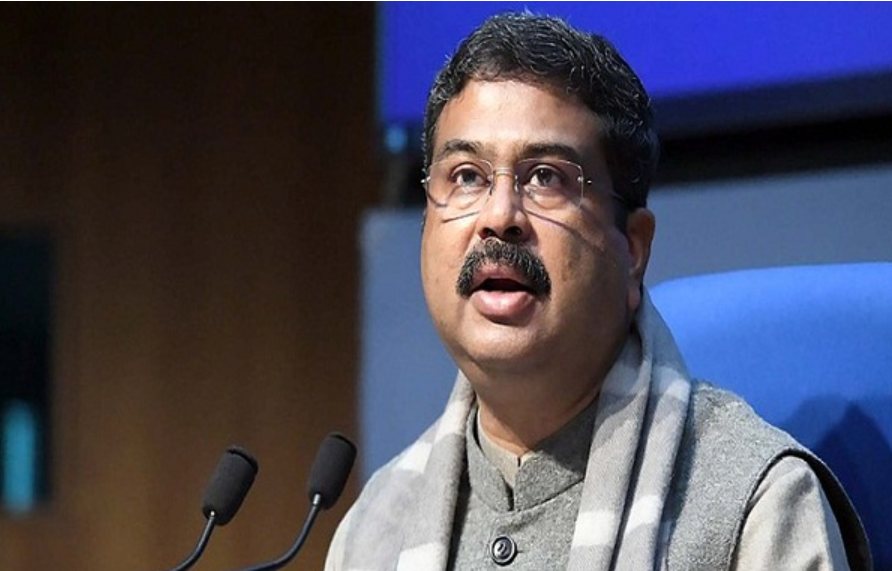
Union Minister Dharmendra Pradhan took sharp aim at the Congress slogan “Sarkar tumhari, system humara” (“Your government, our system”), questioning why successive Congress governments had failed to implement caste enumeration despite being in power for most of independent India’s history. The Bharatiya Janata Party (BJP) on Thursday hit back at the Congress for claiming credit for the upcoming caste-based census, accusing the party of historical hypocrisy and decades of inaction on the issue.
Speaking at a press conference, Pradhan said, They now claim credit for a caste census, but where was this intent in 1951, when the first post-Independence census was conducted under Prime Minister Nehru? He was a staunch opponent of caste-based reservations and resisted such steps, not just in principle, but in practice. He even wrote to chief ministers, warning against caste-based appointments, arguing they would lower standards.
Pradhan emphasised that under British rule, the last full caste census was carried out in 1931. He questioned why the opportunity to resume it in 1951 was missed, suggesting that Nehru’s ideological stance was to blame.


He also took the Congress leadership, particularly the Gandhi family, to task for not acting on key recommendations like the Kaka Kalelkar Report and delaying the implementation of the Mandal Commission findings. “Who suppressed the Kaka Kalelkar report? It was Indira Gandhi’s government. And when the Mandal Commission was set up in 1977 by the Janata Party, where BJP’s predecessors were involved, who kept its findings locked away for years? Congress again.”
The BJP’s criticism came in response to Congress leaders hailing the Modi government’s announcement of a caste census as a win for Rahul Gandhi’s advocacy. Congress communications chief Jairam Ramesh claimed the development validated Gandhi’s long-standing demand, calling the caste census an “X-ray of society” and a major step toward social justice.
“Rahul Gandhi has consistently raised this issue in Parliament and beyond. The fact that the government is now moving forward is a testament to the people’s demands being finally heard,” Ramesh said in a post on X (formerly Twitter).
A caste census would involve systematically documenting caste identities across the population—data that hasn’t been officially collected in India since 1931. Post-independence censuses have included only Scheduled Castes and Scheduled Tribes, leaving out Other Backwards Classes and other groups. Advocates argue that such data is essential for designing equitable policies, especially in education, employment, and resource allocation.
With political stakes high and the issue of representation gaining momentum, the debate over who gets credit for reviving the caste census is turning into a flashpoint between the two national parties.