Tribute to Sardar Patel and Spirit of Self-Reliance
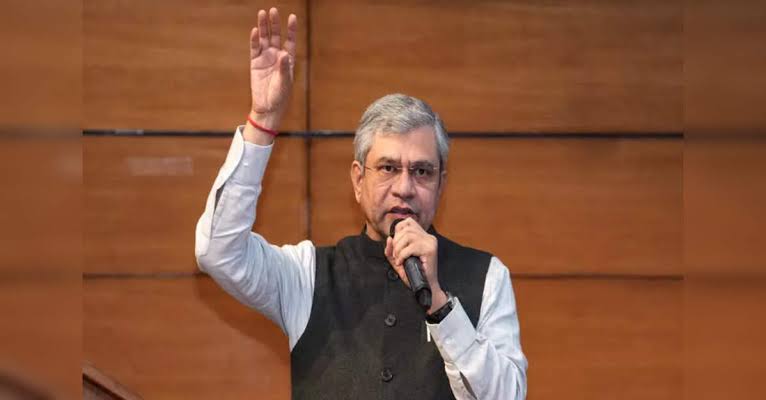
Speaking on the death anniversary of Sardar Vallabhbhai Patel, Shri Goyal recalled the Iron Man of India as a visionary who believed in political, economic and strategic self-reliance. He said the same spirit now guides India’s modern energy policies.
The Minister noted that Prime Minister Modi’s governance model has translated this vision into action, ensuring that energy security becomes the backbone of India’s growth and national resilience.
Coal, Renewables and Infrastructure Milestones
Highlighting key achievements, Shri Goyal said India recorded its highest-ever coal production of 1,048 million tonnes in FY 2024–25, while coal imports declined by nearly 8 percent. This, he said, strengthened energy security without compromising availability.
India’s solar power capacity has expanded 46 times over the past 11 years, making the country the world’s third-largest solar power producer. Wind power capacity has grown from 21 GW in 2014 to 53 GW in 2025, reflecting a decisive shift towards clean energy.
The Minister added that India has emerged as the world’s fourth-largest refining hub and is working to expand refining capacity by 20 percent. He also highlighted the rapid expansion of the natural gas pipeline network, with over 34,000 km authorised and nearly 26,000 km already operational.
Five Pillars of Energy Sector Transformation
Shri Goyal outlined five core pillars underpinning India’s energy sector reforms — universal access, affordability, availability, financial viability and sustainability.
Under the first pillar of universal access, electricity has reached every household through the Saubhagya scheme. Over 36.87 crore LED bulbs distributed under the UJALA programme have reduced electricity bills and carbon emissions, while 10 crore LPG connections under the Pradhan Mantri Ujjwala Yojana have improved women’s health.
Affordability and Reliable Supply
On affordability, Shri Goyal said GST on solar, wind and clean energy equipment was reduced from 12 percent to 5 percent. He noted that India achieved its 20 percent ethanol blending target well ahead of the 2030 deadline, reducing fuel imports and emissions.
Addressing availability, the Minister said power shortages have declined sharply from 4.2 percent in 2013 to just 0.03 percent in 2025. The unified national grid has enabled India to meet a record peak demand of 250 GW, ensuring uninterrupted power supply.
Financial Viability and Sustainability
Shri Goyal said reforms under the PM-UDAY scheme have strengthened the power distribution sector. DISCOM dues declined from ₹1.4 lakh crore in 2022 to ₹6,500 crore in 2025, restoring financial discipline.
On sustainability, he noted that India has become the first G20 nation to achieve its Paris Agreement commitments. Today, 50 percent of India’s installed power capacity comes from non-fossil fuel sources, positioning the country as a global climate leader.
Future Roadmap Towards Viksit Bharat 2047
Looking ahead, Shri Goyal said India’s energy strategy is being recalibrated for future challenges as the nation approaches 100 years of Independence. He highlighted the National Green Hydrogen Mission, targeting production of 5 million metric tonnes annually by 2030.
The PM Surya Ghar scheme aims to install rooftop solar panels in nearly 20 lakh households, empowering citizens as energy producers. He also mentioned reforms in coal gasification and the proposed SHANTI Bill to enable private participation in nuclear energy.