
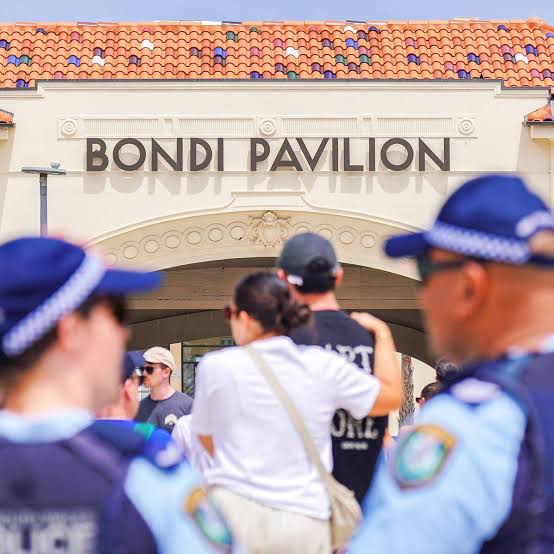


Police later confirmed that the alleged attackers were a father and son named Sajid Akram and Naveed Akram, aged 50 and 24 respectively. However, social media users hastily connected the name to the wrong individual, triggering a cascade of false claims.
Images of the innocent man were shared extensively on platforms such as X and Facebook, accompanied by unverified claims about his background. Some international websites even published incorrect biographical details, further amplifying the misinformation.
Several posts originated from politically motivated accounts that attempted to link the attack to broader geopolitical narratives, ignoring basic fact-checking norms. Despite millions of views, many of these posts were not flagged or corrected by platform moderation systems.
Personal Trauma and Safety Fears
Speaking about his ordeal, Akram described feeling shocked and deeply distressed after discovering that his image was trending online as an alleged terrorist. Fearing for his safety, he immediately returned home and avoided public spaces.
He approached local police authorities, who advised him to temporarily deactivate his social media accounts. However, he struggled to get direct assistance from major platforms to remove the false content, forcing him to post a clarification video himself.
“My only priority right now is to clear my name and protect my wife,” he said, adding that unchecked misinformation had put his life at real risk.
Wider Misinformation After the Attack
Akram was not the only casualty of online misinformation following the Bondi attack. Several other false narratives emerged, including incorrect claims about the identity of a civilian hero who disarmed one of the attackers.
In another instance, an AI chatbot on X repeated inaccurate information regarding the hero’s identity, highlighting serious gaps in automated content moderation during crisis events.
False communal claims also surfaced, including fabricated allegations of celebratory actions by religious groups, which were later proven unrelated to the attack.
Calls for Platform Accountability
Media experts and academics have raised concerns about the failure of social media platforms to respond swiftly to misinformation during sensitive situations. The Bondi incident has renewed calls for stronger accountability mechanisms.
India has also emphasized responsible digital conduct through initiatives under the Ministry of Electronics and Information Technology, urging platforms to act decisively against harmful false content.