

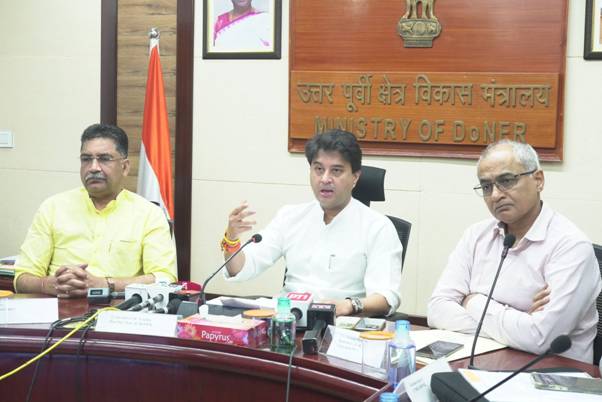

The MoU signing ceremony in New Delhi was attended by Union Minister of Communications and DoNER, Shri Jyotiraditya M. Scindia, along with senior officials from the Department of Telecommunications (DoT), BSNL leadership, and executives from the partner companies.
Shri Scindia hailed the collaboration as “a landmark step in building a skilled and future-ready telecom workforce,” adding, “From local to global—India will not just make in India, but make for the world. Jabalpur will be at the heart of this transformation.” He also confirmed that Phase 1 will see investments exceeding ₹1 crore.
DoT Secretary Dr. Neeraj Mittal described the project as a “unique public-private partnership” designed to train not just public sector staff, but also students and private telecom professionals through short, medium, and long-term courses.
What Each Partner Will Contribute
- Ericsson India will establish a 5G Centre of Excellence at BRBRAITT, providing hands-on training, online learning via the Ericsson Educate Program, and access to global curriculum and labs.
- Qualcomm Technologies Inc. will set up the Qualcomm Institute, focusing on advanced 5G and AI training, internships, and premium online modules, sponsoring the first 100 trainees in its inaugural year.
- Cisco Systems will expand its Networking Academy Program to train participants in networking, cybersecurity, and IT infrastructure, offering free curriculum access nationwide.
- Nokia Solutions and Networks India will create a 5G and AI/ML Lab, training 300 students annually, and introduce a joint certification program with BRBRAITT and the Telecom Sector Skill Council.
Boosting India’s Digital Future
The TIRTC will serve as a catalyst for telecom research, product prototyping, and entrepreneurship, contributing to flagship programs like Digital India, Make in India, and Startup India. By aligning industry expertise with government policy, the centre aims to equip India’s youth with skills demanded in both domestic and global markets.
This initiative also reflects the government’s broader vision of creating regional innovation hubs that contribute to employment generation, economic growth, and technological self-reliance.