
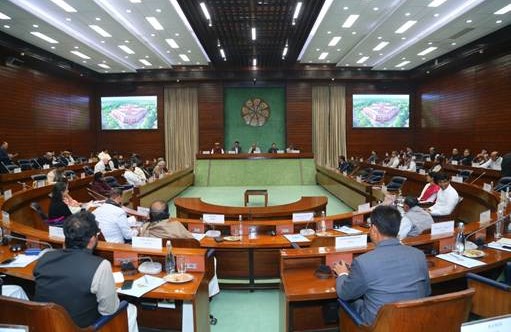
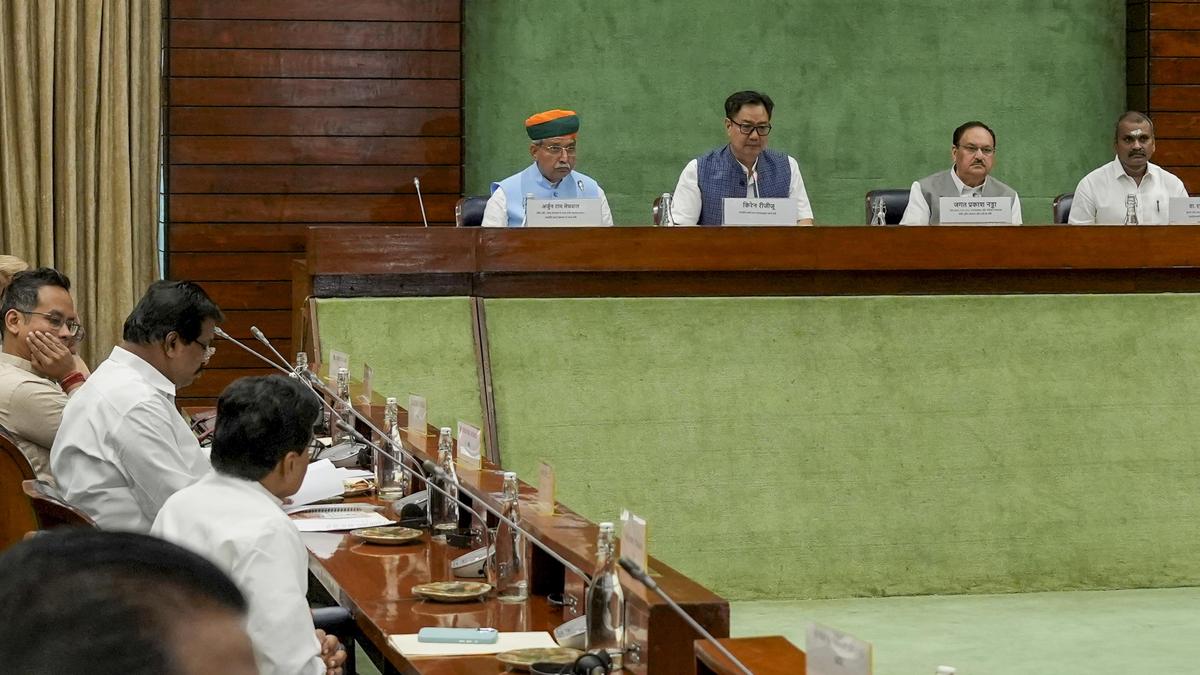

Addressing the leaders, Kiren Rijiju informed that the Budget Session of Parliament 2026 will commence on Wednesday, January 28, and is expected to conclude on April 2, subject to government business requirements. The session will span 65 days and include a total of 30 sittings across two phases.
The first phase of the session will comprise 13 sittings, after which both Houses will adjourn for a recess on February 13. Parliament will reconvene on March 9 for the second phase, which will include 17 sittings. The recess period will allow Standing Committees to examine Demands for Grants of various Ministries and Departments.
Union Budget and Economic Survey Timeline
The Minister of Parliamentary Affairs also outlined the key financial milestones of the session. The Economic Survey of India will be tabled in Parliament on January 29, 2026, followed by the presentation of the Union Budget for 2026–27 on February 1.
The session will be largely devoted to financial business, including discussion and passage of budgetary proposals, along with deliberations on the Motion of Thanks to the President’s Address. Essential legislative and other government business is expected to be taken up mainly during the second phase of the session.
Broad-Based Participation by Union Ministers
The meeting was attended by several senior members of the Union Government, including Health and Family Welfare Minister and Leader of the House in the Rajya Sabha, Jagat Prakash Nadda. Ministers of State Arjun Ram Meghwal and Dr. L. Murugan were also present, reflecting the government’s coordinated approach towards parliamentary management.
In his opening remarks, Rajnath Singh welcomed all party leaders and emphasized the importance of constructive dialogue for effective parliamentary functioning. He highlighted Parliament’s role as the cornerstone of India’s democracy and urged all stakeholders to contribute meaningfully to debates and discussions.
Opposition Voices and Government Assurance
Leaders of various political parties shared their views on issues they intend to raise during the Budget Session. Several opposition representatives flagged matters related to economic challenges, social welfare, and governance, while also stressing the need for adequate time for debate.
Kiren Rijiju assured participants that the government remains open to discussing all issues in accordance with parliamentary rules. He sought cooperation from all parties to ensure that legislative business is conducted smoothly and disruptions are minimized.
Consensus for Smooth Parliamentary Functioning
At the conclusion of the meeting, leaders across party lines expressed their willingness to cooperate with the government during the session. The Parliamentary Affairs Minister noted the concerns raised and thanked all participants for their constructive engagement.
The all-party meeting is seen as a significant preparatory step ahead of the Budget Session, aimed at building consensus and ensuring that Parliament functions as an effective forum for debate, accountability, and lawmaking during a crucial financial period for the country.