 Financial Support and Infrastructure Backbone
Under the scheme, the Central Government provides financial assistance of up to ₹1,000 crore per park or 70 percent of the cost of common infrastructure facilities, whichever is lower. For North-Eastern and hilly states, including Himachal Pradesh, Uttarakhand, Jammu & Kashmir, and Ladakh, the assistance can go up to 90 percent of the project cost.
The infrastructure developed within these parks includes effluent treatment plants, solvent recovery systems, dedicated power substations, water and steam distribution networks, logistics hubs, testing laboratories, and emergency response centres. These shared facilities ensure compliance with global quality and environmental standards while lowering operational expenses for manufacturers.
Three States Lead Implementation
After evaluating proposals from 13 states, the Department of Pharmaceuticals approved Bulk Drug Parks in Gujarat, Himachal Pradesh, and Andhra Pradesh. Each of these parks has received a grant-in-aid of ₹1,000 crore to develop core infrastructure.
The Gujarat Bulk Drug Park at Jambusar in Bharuch district spans over 2,000 acres and is being developed by the Gujarat Industrial Development Corporation. Most civil and utility-related works, including effluent management and solvent recovery systems, are already at advanced stages.
Progress in Andhra Pradesh and Himachal Pradesh
In Andhra Pradesh, the Bulk Drug Park at Nakkapalli in Anakapalli district has seen steady progress with road networks, power supply systems, and utility buildings under construction. Environmental clearance for additional land was granted in January 2026, further accelerating project execution.
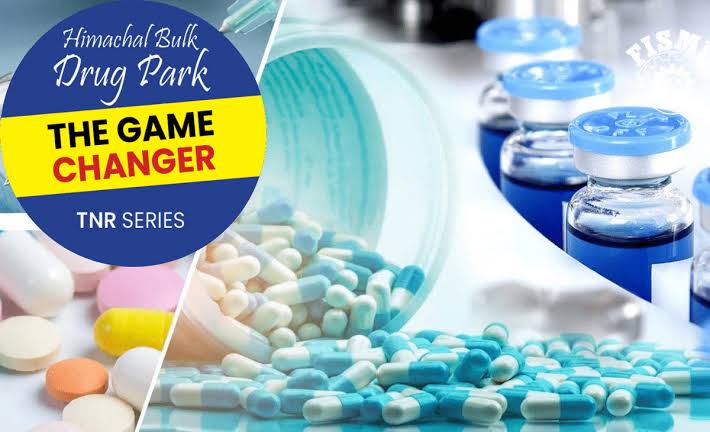
The Himachal Pradesh Bulk Drug Park at Haroli in Una district is advancing with work on roads, bridges, drainage systems, and water infrastructure. Tenders for zero liquid discharge facilities and steam generation systems have also been floated, reflecting a strong focus on sustainability.
No Bulk Drug Park for Tamil Nadu, But Other Support Continues
The government clarified that there is currently no proposal to establish a Bulk Drug Park in Tamil Nadu under this scheme. However, the state continues to benefit from other central initiatives aimed at strengthening pharmaceutical and medical device manufacturing.
Tamil Nadu hosts one of the three Medical Devices Parks being developed under a separate scheme, along with Greater Noida in Uttar Pradesh and Ujjain in Madhya Pradesh. These parks are nearing completion and have already attracted significant industry participation.
PLI Schemes Complement the Ecosystem
The Production Linked Incentive schemes further reinforce India’s pharmaceutical ambitions. Incentives are being provided for domestic manufacturing of critical APIs, bulk drugs, high-value medicines, and medical devices, helping reduce import dependence and diversify production.
Several projects approved under these PLI schemes are located in Tamil Nadu, reflecting the government’s broader strategy to promote balanced regional growth across the pharmaceutical sector.
Strategic Step Towards Pharma Self-Reliance
The Bulk Drug Park Scheme marks a structural shift in India’s pharmaceutical policy by addressing cost inefficiencies and infrastructure gaps at scale. By clustering manufacturing units around shared facilities, the scheme enhances competitiveness while ensuring environmental compliance.
Information on the scheme and its progress was shared by Union Minister for Chemicals and Fertilizers Shri Jagat Prakash Nadda in a written reply to the Lok Sabha, underlining the government’s commitment to building a resilient and self-sustaining pharma manufacturing ecosystem.