
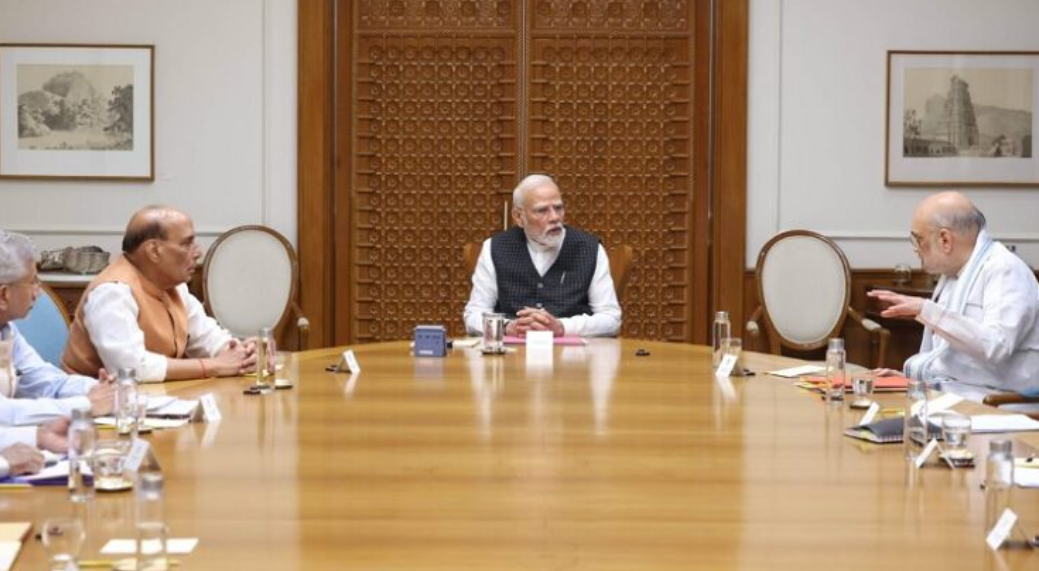
The Cabinet Committee on Political Affairs, chaired by Prime Minister Narendra Modi, has approved the inclusion of caste enumeration in the upcoming national census, marking a significant policy shift aimed at fostering inclusive development and strengthening the nation’s social fabric.
Under Article 246 of the Indian Constitution, the census is a Union subject listed at Entry 69 in the Seventh Schedule. While several states have carried out caste-based surveys in the past, the lack of uniform standards and political motivations behind some of these efforts has led to concerns about transparency and societal division. To avoid such fragmentation and ensure credible data, the government has decided to integrate caste enumeration into the official census rather than conducting it through separate state-led surveys.
The move is seen as a step toward promoting economic and social equity while avoiding the politicisation of caste data. The government emphasised that this decision reflects its commitment to balanced governance and the holistic development of all communities.
It is worth noting that caste has not been included in any official census since independence. In 2010, then Prime Minister Dr. Manmohan Singh had assured Parliament that the issue would be reviewed. A Group of Ministers was later formed, and several political parties expressed support for a caste census. However, the previous administration opted for the Socio-Economic and Caste Census (SECC) instead, which was conducted as a survey rather than part of the main census framework.
The current decision also follows the precedent of introducing 10% reservation for Economically Weaker Sections (EWS)—a reform that was implemented smoothly and without causing societal discord.
By integrating caste data into the national census, the government aims to create reliable, comprehensive datasets that will inform policymaking, support targeted welfare schemes, and reinforce the country’s journey toward inclusive growth.