

According to official details released by the Press Information Bureau, the total capital cost of the NH-326 upgradation project is ₹1,526.21 crore. Of this, ₹966.79 crore has been earmarked specifically for civil construction works.
The investment reflects the Centre’s focus on strengthening highway infrastructure in backward and aspirational regions, where improved connectivity plays a crucial role in economic inclusion and service delivery.
Addressing Long-Standing Road Constraints
The Mohana–Koraput section of NH-326 currently suffers from sub-standard geometry, including narrow carriageways, sharp curves and steep gradients. These deficiencies have constrained the safe and efficient movement of heavy vehicles and reduced freight throughput.
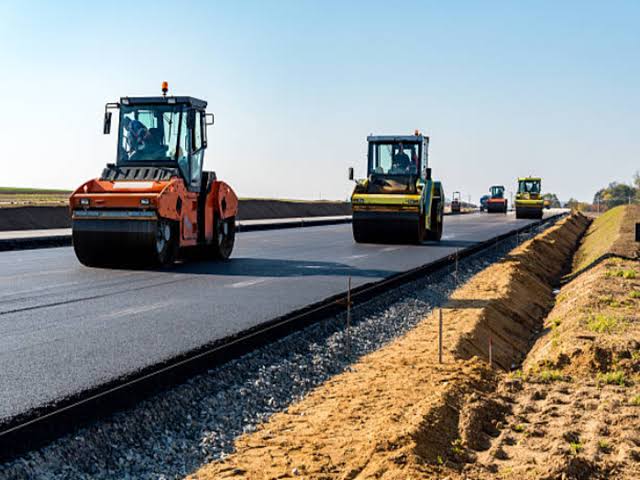
The approved upgrade will convert the existing road into a two-lane highway with paved shoulders, accompanied by geometric corrections such as curve realignments and gradient improvements. Black spots will be removed and pavement strength enhanced to ensure safer and uninterrupted travel.
Boost to Connectivity and Logistics
The upgraded corridor will provide improved connectivity to key national and regional highways, including NH-26, NH-59, NH-16 and the Raipur–Visakhapatnam corridor. This will significantly enhance access to coastal ports, industrial hubs and logistics centres.
Improved last-mile connectivity will also link the region more efficiently to Gopalpur Port, Jeypore Airport and multiple railway stations, reducing travel time and vehicle operating costs for both passengers and freight.
Support for Industry, Education and Tourism
NH-326 connects several major industrial and logistics nodes such as NALCO, IMFA, Vedanta, Utkal Alumina, HAL, JK Paper and the Mega Food Park. Faster road connectivity is expected to streamline supply chains and enhance industrial productivity.
The corridor also serves important educational and tourism centres including the Central University of Odisha, Koraput Medical College, Taptapani and Rayagada. Improved road infrastructure is expected to promote tourism and facilitate better access to healthcare and education.
Economic and Social Impact
Economic analysis of the project indicates an Economic Internal Rate of Return (EIRR) of 17.95 per cent, driven largely by travel time savings, reduced vehicle operating costs and safety improvements. Travel time between Mohana and Koraput is expected to reduce by nearly three hours.
Although the Financial Internal Rate of Return (FIRR) is negative, the project’s justification lies in its significant social, economic and non-market benefits, particularly for tribal and backward regions of southern Odisha.
Implementation Strategy and Timeline
The project will be implemented on EPC mode, with contractors required to adopt modern construction and quality assurance technologies. These may include precast structures, reinforced earth walls, cement-treated sub-base layers and advanced bridge components.
Construction is targeted for completion within 24 months from the appointed date for each package, followed by a five-year defect liability and maintenance period. Monitoring will be carried out using digital tools such as drone mapping, Network Survey Vehicles and the Project Monitoring Information System.
Employment Generation and Regional Development
The NH-326 upgrade is expected to generate substantial direct and indirect employment during construction and maintenance phases. Opportunities will arise for skilled, semi-skilled and unskilled workers, along with growth for local suppliers and service providers.
By improving intra-state and inter-state connectivity, the project is set to accelerate industrial activity, promote tourism and enhance access to essential services in southern Odisha, contributing to inclusive and balanced regional development.