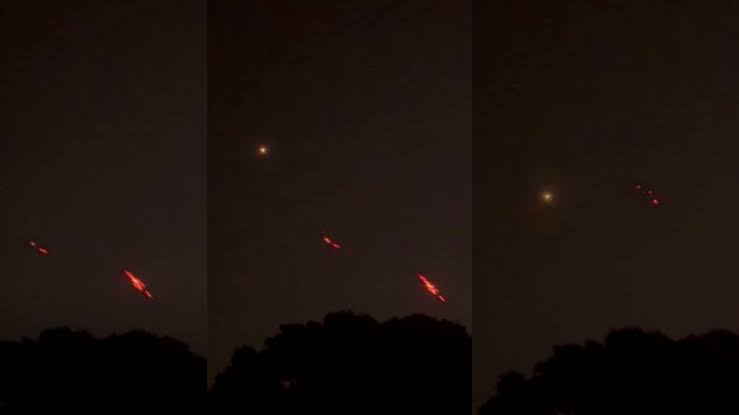
On Monday evening, residents of Samba in Jammu and Kashmir experienced tense moments as red streaks lit up the night sky and loud explosions echoed near the International Border. These unsettling visuals, later confirmed to be India’s air defence systems intercepting suspected Pakistani drones, brought back fresh anxiety to an area already familiar with conflict.

The Indian Army has since confirmed that the situation is now calm and under control. A small number of drones were detected near the border, but no hostile activity has been reported since. Security forces acted swiftly to neutralise the threat, ensuring the safety of civilians in the region. While temporary blackouts were imposed as a precautionary measure, officials reassured the public that there was no need for alarm.
This recent drone activity followed closely on the heels of heightened tensions between India and Pakistan, which flared up after Operation Sindoor—a series of Indian airstrikes launched on May 7 in response to a brutal terror attack in Pahalgam that claimed 26 lives. Pakistan retaliated with hundreds of drones and projectiles targeting Indian cities and military positions. However, India’s robust air defence successfully intercepted the majority of these attacks and carried out effective retaliatory strikes.
In an effort to de-escalate the situation, a second round of high-level talks between the Directors General of Military Operations (DGMOs) of both nations was held on Monday. These discussions aimed at reinforcing the commitment to a ceasefire and reducing troop presence along the border. Lt Gen Rajiv Ghai, the Indian DGMO, revealed that Pakistan had initially proposed a ceasefire, which was agreed upon and put into effect on May 10. However, he noted with disappointment that violations followed soon after, including cross-border shelling and drone intrusions.
Despite these setbacks, both sides appear to be seeking a return to stability. The ceasefire understanding came after the Pakistani DGMO reached out again, signalling a willingness to halt hostilities. Civilian lives on both sides of the border have been deeply affected by the recent hostilities, and the hope now is that this fragile peace holds.
As the dust settles in Samba and beyond, the resilience of the people living in these vulnerable regions is once again on display. Their quiet courage, matched by the vigilance of the armed forces, continues to be a powerful reminder of the human cost of conflict—and the urgent need for lasting peace.