
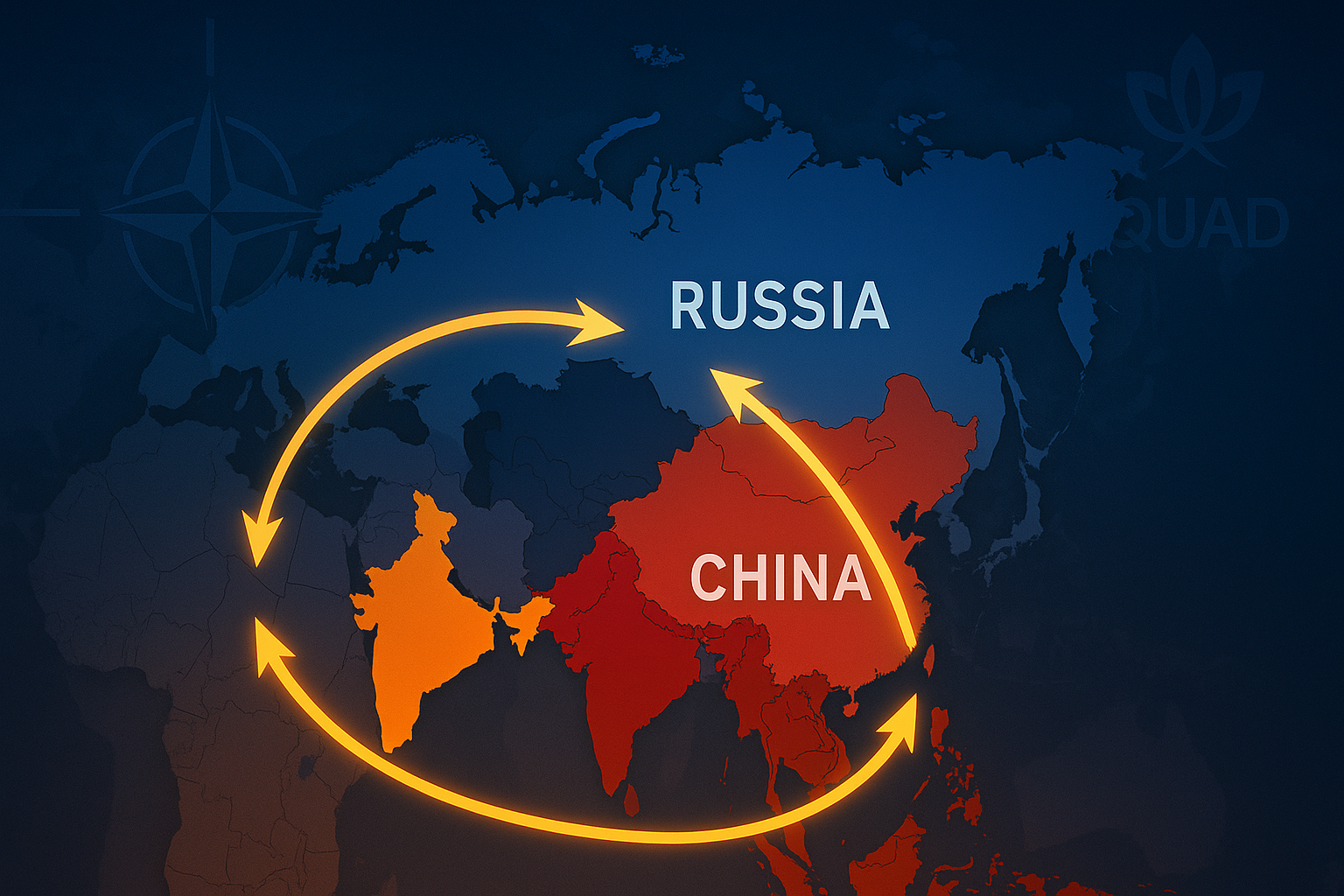
Can Bharat, Russia, and China overcome deep-rooted mistrust to challenge Western dominance?
In today’s changing world of global politics, one idea keeps coming back — the possibility of a BhaRuCh alliance, bringing together Russia, India, and China. If it happens, this group could challenge the power of the West. But one big problem stands in the way: China’s lack of trustworthiness, especially from India’s point of view.
The Trust Gap: China’s Expansionist Past
The main reason why the BhaRuCh alliance is not close to becoming real is China’s long history of territorial expansion. There are several key issues:
- China took control of Aksai Chin, which India strongly claims.
- China gives ongoing support to Pakistan, including military aid.
- China continues to control Tibet, denying it real autonomy. This affects many Tibetans living in exile in India.
These disputes make it very hard for India and China to build trust or form a true partnership.
🔗 Read more: How China’s Border Disputes Complicate Regional Diplomacy
What Could Make BhaRuCh Possible? A Practical Four-Point Plan
Still, if China changes its approach, a possible path forward could open. Below is a simple plan that could help bring the three nations closer:
1. China Ends Support to Pakistan, India Leaves QUAD
If China stops backing Pakistan and agrees to India’s full control over Kashmir, then India might leave the QUAD (which includes the US, Japan, and Australia). This would reduce tensions in the region.
2. Territorial Swap: Aksai Chin for Kailash Access
India could think about accepting China’s hold over Aksai Chin. In return, China would:
- Give India a secure route to Kailash-Mansarovar, important for religious travel
- Drop its claim over Arunachal Pradesh permanently
This kind of exchange shows fairness — a “give and take” that benefits both sides.
3. Tibet: Autonomy Instead of Independence
India could work with the Dalai Lama to ask Tibetans to seek only autonomy, not full independence. In exchange, China would:
- Allow Tibetan refugees to return and live in Tibet with dignity
- Give them the right to preserve their culture and language
4. Stay Neutral in Alliances
Both India and China should agree to not join any group or military alliance that targets the other. This would ensure peace and a sense of security on both sides.
Why China Might Agree in the Future
At present, China is not ready to accept these terms. However, the global situation is changing quickly:
- China is having border issues with many countries in East and South Asia.
- Its fight with the US over technology and trade is getting worse.
- The Chinese economy is under pressure due to sanctions and companies leaving.
Therefore, China may soon need new allies. If it finds itself isolated, building a strong partnership with India may become necessary, even if that means compromise.
India’s Growth, China’s Growing Challenges
India is moving ahead quickly. It is:
- Expected to become the third-largest economy by 2027
- Modernizing its defense and space programs
- Gaining international support through stable democratic leadership
As India gets stronger, and as China faces more obstacles, there could be a shift. Eventually, China may approach India for talks on India’s terms.
BhaRuCh Today: Still Just a Dream
Right now, the BhaRuCh alliance is not realistic. Old border issues, China’s support of Pakistan, and a lack of trust keep this alliance from happening. However, the idea of BhaRuCh can still be useful. It can:
- Make Western countries nervous
- Help India and Russia gain better deals
- Show that the world is moving away from being dominated by the US
What’s Next?
If India and China reach a balance of power, the alliance may become real. Not because of friendship, but because of shared needs.