
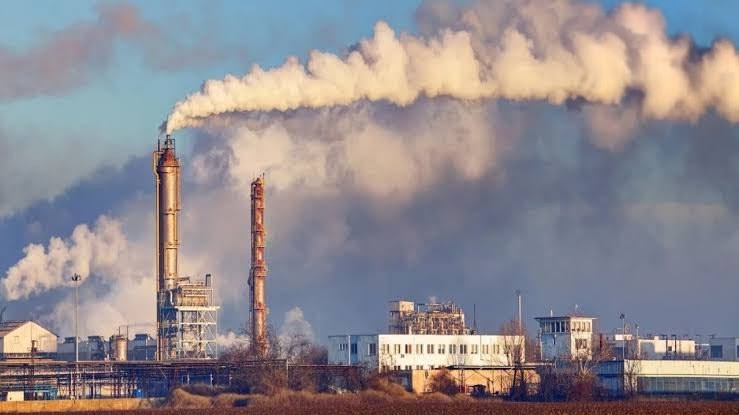

The Commission, after reviewing recommendations from the Central Pollution Control Board (CPCB) and technical studies by IIT Kanpur, concluded that the 50 mg/Nm³ standard is both technically achievable and necessary to improve air quality. This stricter limit is expected to significantly reduce industrial emissions, lower particulate pollution, and provide health benefits to communities living near industrial zones.
Scope and Applicability
The new standard targets 17 categories of highly polluting industries identified by CPCB, including red-category medium and large industries, food processing units, textile industries with boilers or thermic fluid heaters, and metal industries with furnaces. Exceptions are made for units already operating under stricter emission standards. The revised norms apply to large and medium industries from August 1, 2026, and to remaining industries from October 1, 2026.
Implementation and Compliance
Industrial stack emissions contribute significantly to elevated PM levels and secondary particulate formation in Delhi-NCR. To ensure compliance, state governments of Delhi, Haryana, Uttar Pradesh, and Rajasthan, along with the respective pollution control boards, have been instructed to enforce the statutory direction. They are also tasked with conducting awareness campaigns and stakeholder sensitisation programs.
Previous Measures and Ongoing Efforts
Since its establishment, CAQM has implemented measures like mandatory fuel transitions, prescribed emission standards for boilers and furnaces, and issuing approved fuel lists. These efforts aim to curb pollution at the source and promote environmentally responsible industrial practices.
Health and Environmental Impact
Lowering PM emissions is expected to reduce respiratory and cardiovascular health risks among the population and contribute to the overall improvement of air quality in Delhi-NCR. With stricter enforcement, the initiative also aligns with India’s broader environmental and public health objectives.