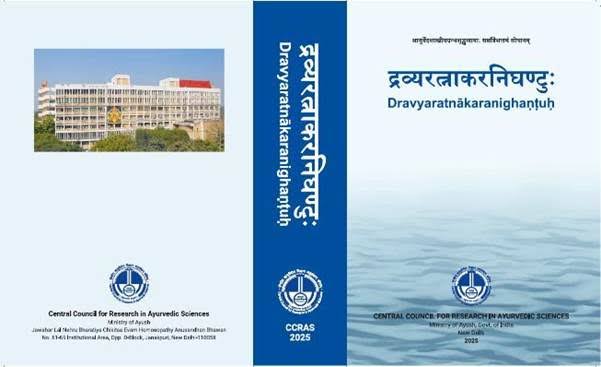
In a heartening move to safeguard and revive India’s timeless medical wisdom, the Central Council for Research in Ayurvedic Sciences (CCRAS), under the Ministry of Ayush, has successfully brought back to life two rare Ayurvedic manuscripts—Dravyaratnākara Nighaṇṭu and Dravyanāmākara Nighaṇṭu. These long-lost texts, once integral to the classical study of Ayurveda, have now been critically edited, translated, and reintroduced to the academic world, promising to ignite renewed interest and deeper scholarship in traditional Indian medicine.
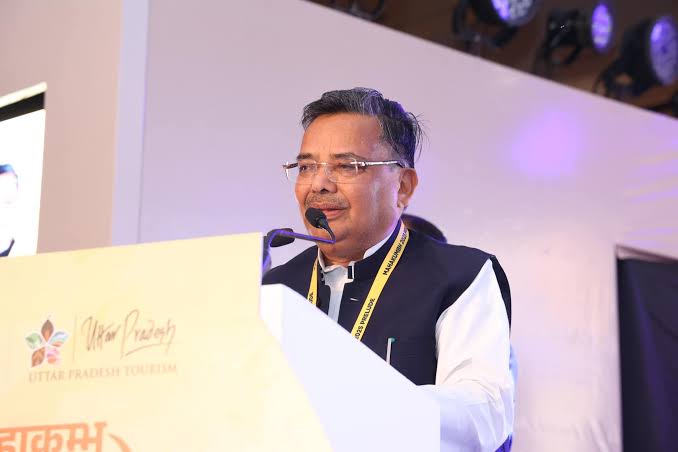
The manuscripts were unveiled during a special event hosted by the RRAP Central Ayurveda Research Institute in Mumbai. The occasion was graced by Professor Vaidya Rabinarayan Acharya, Director General of CCRAS, who passionately spoke about the council’s ongoing efforts in research, digitization, and the revival of ancient Ayurvedic literature. His words reflected a strong belief that these manuscripts are not mere remnants of the past, but living texts that hold the potential to influence and enrich modern healthcare when revisited with a spirit of inquiry and respect.
The credit for this meticulous revival goes to the esteemed Ayurveda expert and manuscriptologist Dr. Sadanand D. Kamat of Mumbai. Known for his deep commitment to preserving Ayurvedic heritage, Dr. Kamat has brought scholarly precision and heartfelt dedication to the task, ensuring that the nuances of these centuries-old texts are preserved for generations to come. The ceremony also witnessed the presence of several dignitaries and respected figures from the field of Ayurveda, all of whom celebrated the significance of this academic milestone.
The Dravyaratnākara Nighaṇṭu, written by Mudgala Paṇḍita in 1480 AD, is a lexicon consisting of eighteen chapters that delve into drug synonyms, therapeutic uses, and medicinal attributes sourced from plants, minerals, and animal origins. Widely used in Maharashtra until the 19th century, it builds on earlier classical works while introducing many novel insights that enrich the discipline of Dravyaguna.
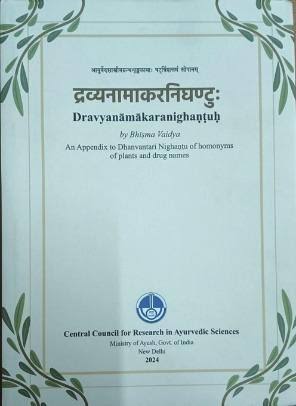
The second manuscript, Dravyanāmākara Nighaṇṭu, attributed to Bhisma Vaidya, serves as a unique appendix to the renowned Dhanvantari Nighaṇṭu. This text explores the complex world of Ayurvedic homonyms, offering valuable clarifications on drug and plant names—an area often fraught with confusion. Dr. Kamat’s critical edition, consisting of 182 verses, brings clarity and structure to this challenging subject.
These revived works are not just scholarly contributions; they are acts of cultural preservation and academic compassion. They offer aspiring Ayurveda students, researchers, and practitioners an opportunity to connect with India’s ancient medical heritage through authentic and carefully interpreted sources. By bringing these texts back into the spotlight, CCRAS continues its noble mission of honoring the past while paving the way for a healthier, knowledge-rich future.