
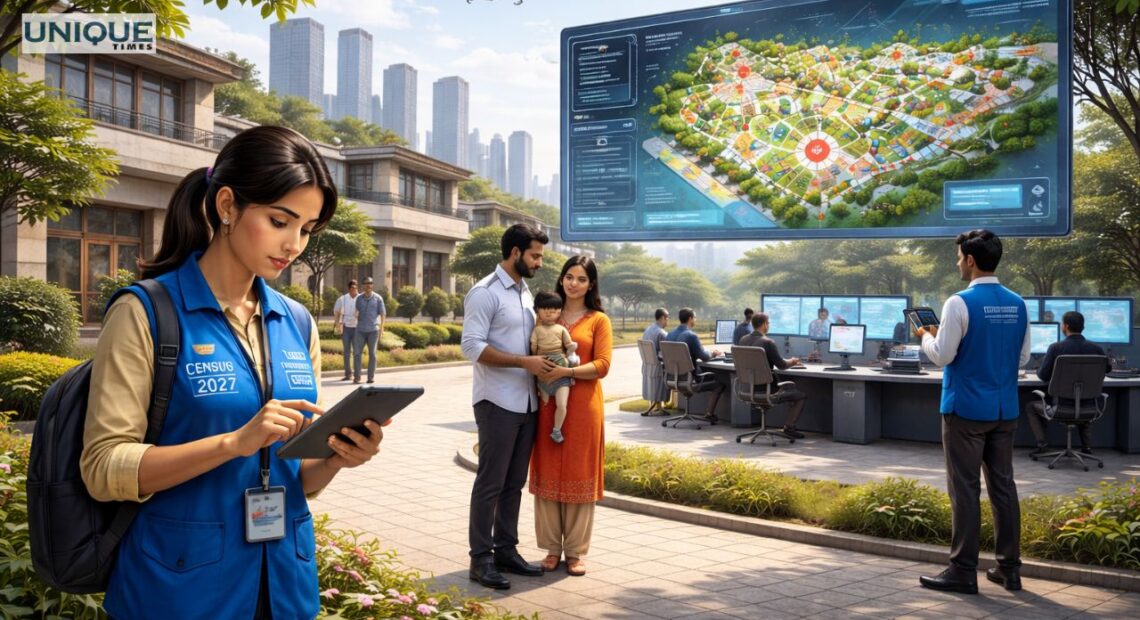

The CMMS portal will act as the central hub for the entire Census process, enabling real-time monitoring and management of 3.2 million enumerators and supervisors. Using handheld devices and geotagged mapping tools, officials will capture granular demographic, social, and economic data from hundreds of millions of households, replacing clipboards and carbon copies.
Enhanced Accuracy with Geo-Tagging
Geo-tagging of houselisting blocks (HLBs) will help officials delineate precise boundaries, reducing overlaps and omissions. The integration of spatial data with demographic enumeration will create a valuable digital archive for planning, disaster management, and infrastructure projects long after the Census is completed.
Phased Census and Citizen Participation
The Census will be conducted in two phases: house-listing and housing census from April to September 2026, followed by population enumeration in February 2027. Citizens will also have the option for self-enumeration for the first time, allowing greater participation and accuracy in data reporting.
Budget and Administrative Preparedness
The Union Cabinet has approved ₹11,718 crore for Census 2027, which will include caste enumeration. The Registrar General of India, Mrityunjay Kumar Narayan, emphasized the use of digital technology to modernize the Census and improve data quality. HLBs and enumeration blocks (EBs) will be the smallest administrative units, structured for efficient fieldwork.
Future-Ready Census
The CMMS platform facilitates role-based access, training, and real-time monitoring of enumerators. Digital mapping and handheld devices ensure that India’s largest administrative exercise achieves unprecedented accuracy, efficiency, and speed, marking a transformative milestone in Census history.