
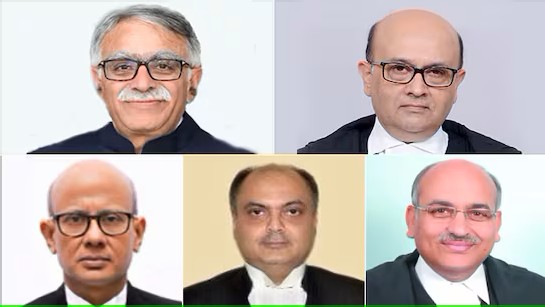
Government Appoints Five New Chief Justices in High Courts
The Central government approved five new Chief Justices across Indian High Courts on July 14, 2025. This decision follows recommendations from the Supreme Court Collegium, led by Chief Justice of India BR Gavai.


These appointments bolster leadership in key High Courts—Madhya Pradesh, Jharkhand, Karnataka, Gauhati, and Patna. The move aims to improve justice delivery across these states.
Meet the Appointed Chief Justices
Here are the newly appointed Chief Justices:
-
Appointed to the Madhya Pradesh High Court, Justice Sanjeev Sachdeva brings his expertise in civil and commercial law from the Delhi High Court.
-
A prominent figure in constitutional law, Justice Tarlok Singh Chauhan has been transferred to the Jharkhand High Court from Himachal Pradesh.
-
The Karnataka High Court will now benefit from the regulatory law expertise of Justice Vibhu Bakhru, who earlier served as an Additional Judge in Delhi.
-
Justice Ashutosh Kumar, noted for his clear rulings in criminal law at the Patna High Court, has taken charge at the Gauhati High Court.
-
Known for handling service law and public interest litigation in Gujarat, Justice Vipul Manubhai Pancholi has joined the Patna High Court.
Their appointments reflect a timely transition and a stronger legal framework for state-level judiciary.
The Collegium’s Crucial Role
The Supreme Court Collegium recommends judges for elevation based on experience, performance, and integrity. Led by the Chief Justice of India, it plays a key part in preserving judicial independence. The Centre approved these five recommendations quickly, indicating smooth coordination.
Why These Appointments Matter
Each High Court serves millions of citizens. With new Chief Justices, courts can address case backlogs faster. Better management and leadership will also strengthen courtroom efficiency.
Profiles of the Appointed Judges
Each judge brings unique expertise to the bench:
-
Having served the Delhi High Court, Justice Sanjeev Sachdeva brought significant experience in civil and commercial law matters.
-
In Himachal Pradesh, Justice Tarlok Singh Chauhan made notable contributions to constitutional law.
-
Regulatory law was the area of specialization for Justice Vibhu Bakhru, who also served as an Additional Judge in Delhi.
-
Known for delivering clear rulings in criminal law, Justice Ashutosh Kumar served at the Patna High Court.
-
Meanwhile, Justice Vipul Manubhai Pancholi focused on service law and handled numerous public interest cases in Gujarat.
Their combined experience promises stronger administration in their respective courts.
Judicial Reforms in Action
The appointments align with ongoing judicial reforms. The Ministry of Law and Justice has emphasized timely filling of judicial vacancies. These steps help reduce case delays and improve court efficiency.
Legal Community Reacts
Legal experts and bar councils welcomed the appointments. Advocate Meenakshi Arora remarked, “New judicial leadership is essential to rebuild trust and speed up pending cases.”
What Lies Ahead
The new Chief Justices are likely to take oath later this month. Once in office, they’ll manage case allocation, digital court infrastructure, and legal aid systems.
They’ll also support e-courts, faster hearings, and improved access to justice.
Conclusion
These appointments mark a pivotal moment for the Indian judiciary. With experienced judges at the helm, citizens can expect faster verdicts, reduced delays, and a more responsive justice system.