
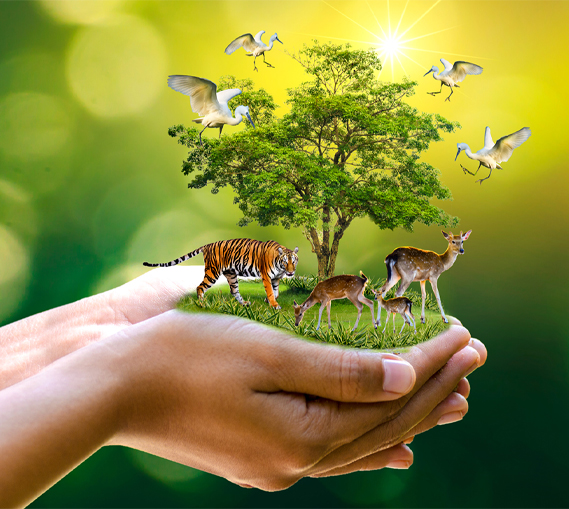


According to the Ministry of Tourism, wildlife tourism is being promoted through a mix of policy interventions, digital outreach, and on-ground infrastructure development. The Ministry regularly highlights wildlife destinations on its official website and social media platforms, showcasing India’s national parks, wildlife sanctuaries, and forest reserves to both domestic and international tourists.
This integrated approach ensures that wildlife tourism is positioned alongside cultural, spiritual, and heritage tourism, offering travellers a comprehensive experience of India’s natural and cultural diversity.
National Strategy for Ecotourism Development
To provide structured momentum to eco-friendly tourism, the Ministry of Tourism has formulated a National Strategy for the Development of Ecotourism. This strategy has been circulated to all State Governments and Union Territory Administrations to guide policy planning and project execution.
The strategy focuses on responsible tourism practices, community participation, environmental safeguards, and sustainable infrastructure. It encourages states to develop tourism projects that generate local employment while preserving fragile ecosystems.
Swadesh Darshan Scheme and Thematic Circuits
Under the flagship Swadesh Darshan Scheme, the Ministry of Tourism has identified several thematic circuits for integrated development, including Eco Circuits and Wildlife Circuits. These circuits cover national parks, wildlife sanctuaries, reserves, and ecologically sensitive landscapes across India.
Financial assistance is provided by the Centre based on project proposals and detailed project reports submitted by State and UT governments. The funding supports infrastructure creation, visitor amenities, connectivity, and interpretation facilities, while adhering to sustainability norms.
Eco Circuit Projects Across States
Several eco-tourism projects have been sanctioned under the Eco Circuit component of the Swadesh Darshan Scheme. In Jharkhand, an eco-tourism circuit linking Dalma, Betla National Park, Mirchaiya, and Netarhat received central assistance of over ₹30 crore.
Kerala’s Pathanamthitta–Gavi–Vagamon–Thekkady eco circuit was sanctioned more than ₹64 crore, while Madhya Pradesh received nearly ₹94 crore for an extensive eco circuit covering major dams and river landscapes. Mizoram, Telangana, and Uttarakhand have also benefited from significant funding for eco-tourism infrastructure development.
Wildlife Circuits Strengthening Conservation Tourism
In addition to eco circuits, the Ministry has sanctioned dedicated Wildlife Circuits aimed at enhancing visitor experiences in biodiversity hotspots. Assam’s wildlife circuit connecting Manas, Pobitora, Nameri, Kaziranga, and Dibru-Saikhowa received central funding of over ₹94 crore.
Madhya Pradesh, known for its rich wildlife heritage, was sanctioned over ₹92 crore for a wildlife circuit linking Panna, Bandhavgarh, Kanha, Pench, and other key reserves. These projects focus on improving access, interpretation centres, and eco-sensitive facilities without disturbing wildlife habitats.
Government’s Vision for Sustainable Tourism
The promotion of wildlife and forest tourism reflects the government’s vision of making tourism a driver of inclusive growth while safeguarding natural heritage. By integrating conservation goals with tourism development, the initiatives aim to ensure long-term ecological balance and economic benefits for local communities.
This information was shared by Union Minister for Tourism and Culture Shri Gajendra Singh Shekhawat in a written reply in the Lok Sabha, underscoring the Centre’s commitment to sustainable tourism development.