
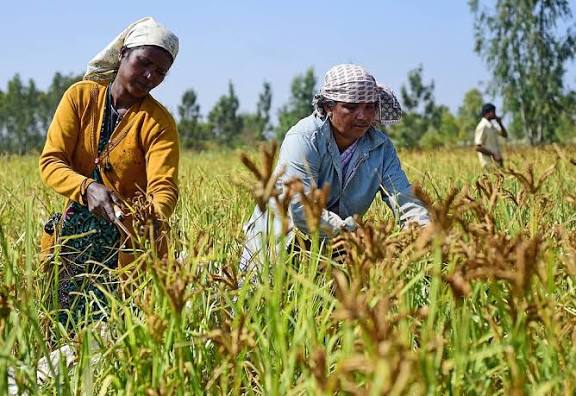
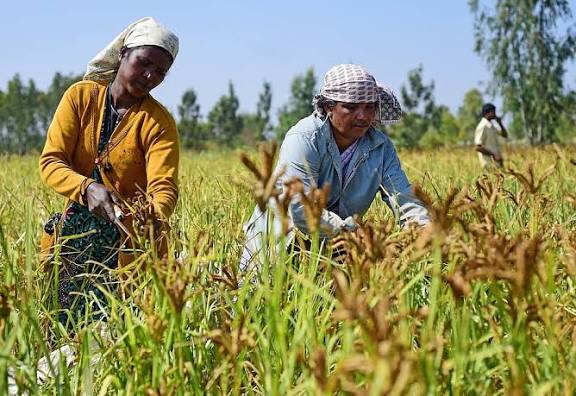
The Crop Diversification Programme promotes crops such as pulses, oilseeds, coarse cereals and nutri cereals, including millets now branded as ‘Shree Anna’. These crops require less water, improve soil structure and help farmers reduce input costs while maintaining productivity.
Under the scheme, financial assistance is provided for alternative crop demonstrations, farm mechanisation, value addition and site-specific infrastructure such as underground pipelines and crop dryers. Support is also extended for farmer awareness programmes and training activities.
Expansion Beyond Paddy to Tobacco Replacement
Recognising the environmental and health concerns linked with tobacco cultivation, the Centre extended the CDP in 2015-16 to facilitate replacement of tobacco farming in major producing states. These include Andhra Pradesh, Gujarat, Karnataka, Maharashtra, Tamil Nadu, Telangana, Uttar Pradesh, Bihar, Odisha and West Bengal.
States have been given flexibility to adopt suitable alternate crops or cropping systems under existing cost norms of centrally sponsored or state schemes, enabling region-specific solutions.
Area Diversion and Ground Impact
Between 2013-14 and 2024-25, alternative crop demonstrations under the Crop Diversification Programme covered a cumulative area of over 6.96 lakh hectares. From 2018-19 to 2024-25 alone, more than 1.86 lakh hectares were diverted from paddy and tobacco cultivation through targeted demonstrations.
The data highlights a steady policy shift towards climate-resilient agriculture, particularly in regions facing acute groundwater stress.
New Pilot Project with ICAR
To strengthen scientific backing for diversification, the Department of Agriculture and Farmers Welfare has approved a five-year pilot project on crop diversification under the National Food Security and Nutrition Mission (NFSNM). The project, implemented by ICAR-Indian Institute of Farming Systems Research, Modipuram, carries a total outlay of Rs 13.26 crore.
The initiative aims to develop location-specific cropping systems that balance productivity, profitability and environmental sustainability.
Convergence of Multiple Schemes
The Centre is also leveraging convergence across flagship agricultural missions to promote diversification. These include the National Mission on Edible Oil-Oilseeds, the Mission for Aatmanirbharata on Pulses, the Mission for Integrated Development of Horticulture and the Prime Minister Dhan-Dhaanya Krishi Yojana.
Under PMDDKY, crop diversification is a core objective across 100 aspirational districts, implemented through convergence of 36 schemes spanning 11 central departments.
Growth in Foodgrain and Millet Area
Government data shows that between 2018-19 and 2024-25, the total area under foodgrain cultivation increased by 127.72 lakh hectares nationwide. Millet cultivation alone expanded by over five lakh hectares during this period, reflecting growing acceptance among farmers.
The area under oilseeds also rose significantly, expanding by 56.46 lakh hectares, strengthening India’s push towards self-reliance in edible oils.
Complementary Push for Sustainable Farming
Crop diversification is being reinforced by schemes such as Paramparagat Krishi Vikas Yojana and the National Mission on Natural Farming, which promote organic and natural farming practices. Meanwhile, the Per Drop More Crop scheme enhances water efficiency through drip and sprinkler irrigation systems.
Collectively, these initiatives aim to secure farmer livelihoods while addressing long-term ecological challenges.