 Aircraft and Flight Details
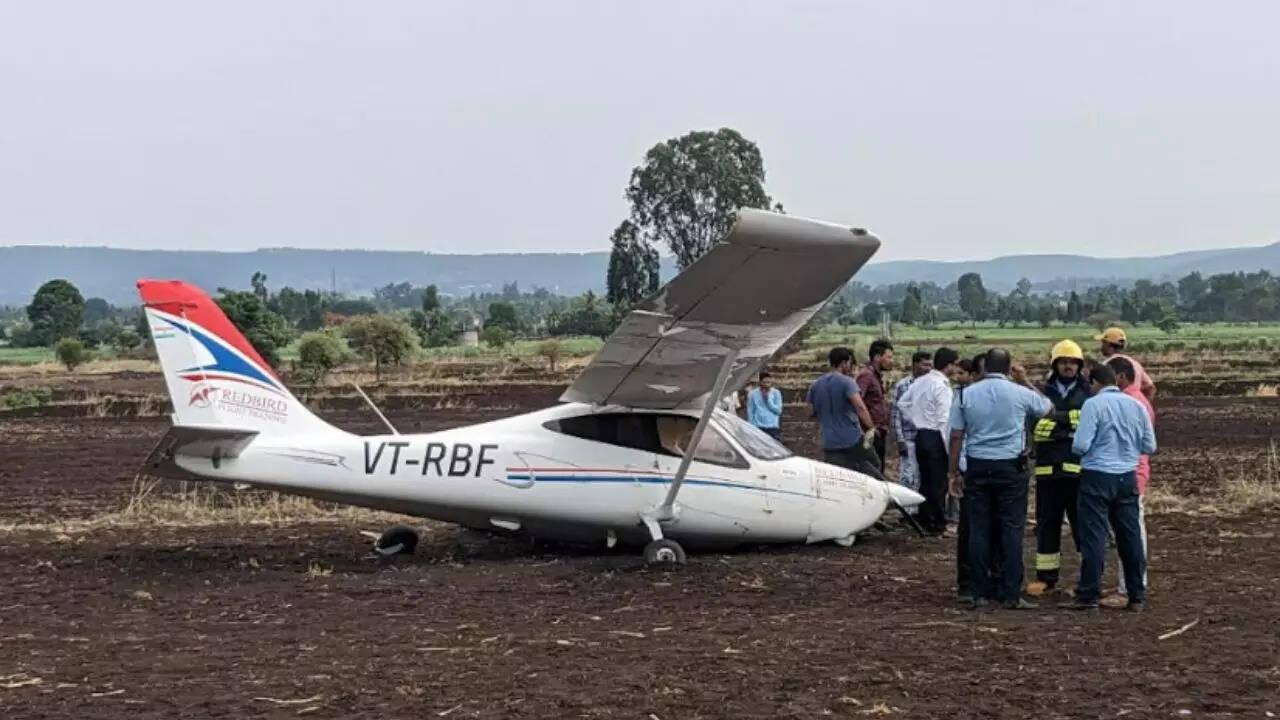
The aircraft involved was a Cessna 172, a single-engine, four-seat aircraft commonly used for pilot training across the world. Registered as VT-EUC, the aircraft was manufactured in 1975 and is part of Redbird Flight Training Academy’s operational fleet. The training sortie was conducted as part of routine pilot instruction under approved flying schedules.
At the time of the incident, the aircraft was operating within permissible flight parameters. However, preliminary inputs indicate that fuel starvation may have led to loss of engine power, prompting the crew to carry out a precautionary forced landing in an open area. The aircraft’s total time since new (TSN) stood at over 17,500 flight hours.
Crew Safe, Emergency Procedures Followed
The aircraft was being flown by a qualified Commercial Pilot Licence (CPL) holder serving as the pilot-in-command and flight instructor. The instructor had logged more than 700 flight hours and held a valid medical certificate and proficiency clearance. The trainee pilot was undergoing supervised cross-country training at the time of the incident.
Aviation officials noted that the crew followed standard emergency operating procedures after experiencing engine issues. Their quick decision-making and controlled landing ensured the safety of both occupants. The incident once again highlights the importance of emergency preparedness in pilot training operations.
About Redbird Flight Training Academy
M/s Redbird Flight Training Academy Pvt Ltd is a Directorate General of Civil Aviation (DGCA)-approved Flying Training Organisation (FTO). The academy received its initial approval in July 2020 and its certification remains valid until July 2030. It currently operates a fleet of 48 aircraft, making it one of the larger flight training organisations in the country.
The organisation conducts ab-initio and advanced flight training programmes for aspiring commercial pilots. All operations are carried out under DGCA-mandated safety and maintenance protocols, including regular airworthiness reviews and inspections.
DGCA and AAIB Investigation Ordered
Following the incident, the Directorate General of Civil Aviation and the Aircraft Accident Investigation Bureau (AAIB) have initiated a detailed investigation to determine the exact cause of the forced landing. Officials will examine fuel management records, maintenance logs, engine performance data, and pilot reports as part of the probe.
Aviation experts note that while training aircraft incidents are relatively rare, each such occurrence is treated with utmost seriousness to ensure systemic safety improvements. The findings of the investigation are expected to contribute to enhanced operational oversight and training standards.