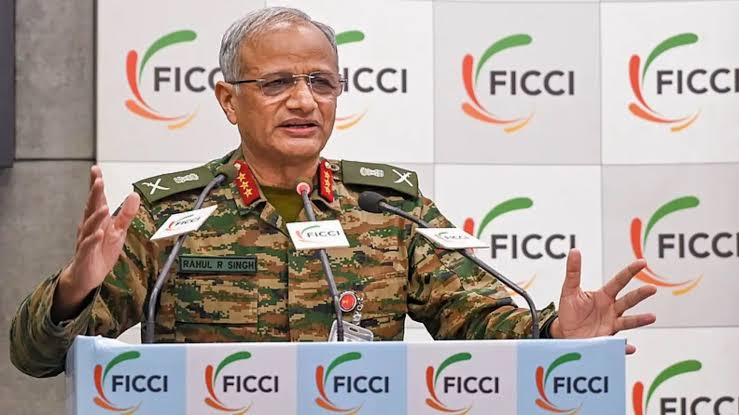
In a stark revelation, India’s Deputy Chief of Army Staff, Lt Gen Rahul R Singh, emphasized that the nation is no longer confronting a single adversary along its western border. During Operation Sindoor, launched in May 2025 in response to the Pahalgam terror attack, India effectively faced two adversaries: Pakistan and China.
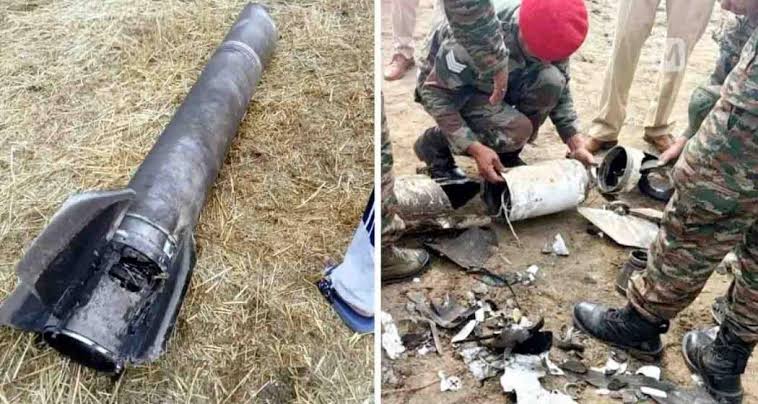 China’s Military Footprint in Pakistan
Speaking at the ‘New Age Military Technologies’ event organized by FICCI, Lt Gen Singh disclosed that a staggering 81% of Pakistan’s military hardware is of Chinese origin. This includes arms used in the recent conflict, indicating an increasingly strategic and technical partnership between Islamabad and Beijing.
He called the conflict a “live lab” for China, which used the confrontation to test and assess its weapon systems in a real-time battle environment. “China provided all possible support. While Pakistan was the face, the push came from beyond,” he stated.
Turkey’s Role and Technology Infiltration
Besides China, Turkey also played a crucial role by supplying Bayraktar drones to Pakistan. This further complicates India’s regional security calculations and highlights the growing military convergence between anti-India forces.
Need for Enhanced Air Defence
Lt Gen Singh also underlined a critical gap in India’s preparedness: air defence infrastructure. Although civilian zones remained untouched during Op Sindoor, the future might not be as forgiving. “We need a robust air defence system. Next time, our cities may not be spared,” he warned.
He praised the Indian forces for executing precise strikes against terror bases and key installations across Pakistan and Pakistan-occupied Kashmir (PoK). The mission, which began on May 7, led to a four-day military confrontation that included fighter jets, drones, long-range artillery, and missile attacks.
Strategic Implications
The statements mark a significant shift in India’s defense narrative. The acknowledgment of a dual-front threat indicates a need for deeper strategic partnerships, tech-driven intelligence, and an updated military doctrine. With China using proxy platforms to challenge India, the threat matrix has grown multi-dimensional.
India must reassess its geopolitical approach and ensure preparedness not just for border skirmishes, but for technologically coordinated aggression from hostile alliances.
Conclusion
Operation Sindoor served as a reality check. While India successfully demonstrated military strength, the conflict also highlighted vulnerabilities that must be addressed. A future-ready defence setup will require modern weaponry, cross-domain synergy, and continuous innovation to counter hybrid threats from China-Pakistan collaboration.