On the occasion of the 17th Civil Services Day, Prime Minister Narendra Modi delivered an impassioned address to civil servants across the nation, reflecting on India’s journey and charting the road ahead toward a developed, future-ready nation. His message, though rooted in praise, also called for renewed dedication and adaptability in the face of modern challenges.
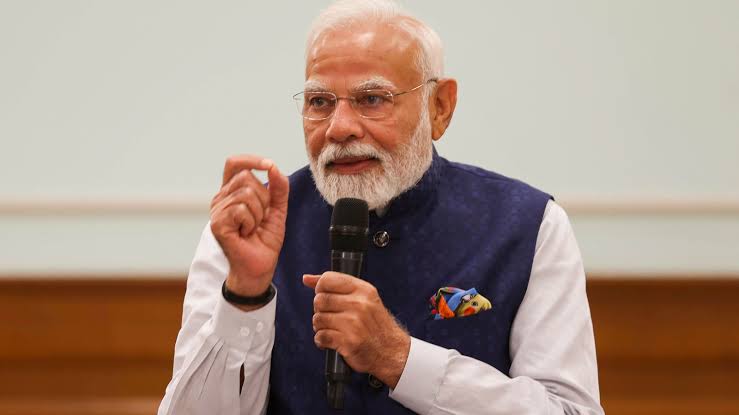 Extending heartfelt greetings to civil servants, the Prime Minister reminded them of their legacy as envisioned by Sardar Vallabhbhai Patel, who first referred to them as the “Steel Frame of India” in 1947. As the country celebrates 75 years of the Constitution and the 150th birth anniversary of Sardar Patel, PM Modi emphasized how deeply relevant the founding ideals remain today—integrity, discipline, commitment, and an unwavering devotion to public service.
He pointed out that the policies and actions taken in the 25th year of this century would shape India’s path for the next thousand years. Citing ancient scriptures, he stressed the need for continuous hard work, saying destiny alone cannot drive the nation forward—effort and intent must go hand in hand.
With humility and warmth, the Prime Minister acknowledged the rapid pace at which the world is changing, from technology to societal aspirations, and noted that governance must evolve just as swiftly. “Our policies cannot afford to move at yesterday’s pace,” he said, referring to the sweeping reforms and system overhauls initiated since 2014.
The theme of this year’s Civil Services Day—Holistic Development of India—resonated deeply in his speech. Modi described it as more than a slogan: it is a solemn promise to ensure no citizen, family, or village is left behind. True progress, he said, lies not in marginal improvement, but in achieving full-scale impact—from clean water in every household to universal access to quality education and digital opportunities in every corner of the nation.
He lauded the work done in aspirational districts and blocks, citing real-life transformations across India—from improved maternal health care in Bihar to full clean water access in Jharkhand. These, he said, are not mere statistics, but proof that change is possible even in the most remote regions, when intent, planning, and execution align.
Throughout his address, the Prime Minister underlined the importance of a civil service that is agile, empathetic, and enabler-oriented. In today’s fast-paced world, he said, bureaucrats must move beyond being mere regulators and instead act as facilitators of growth and innovation. He highlighted the government’s significant steps to reduce compliance burdens, ease of doing business reforms, and the decriminalization of over 3,000 legal provisions—all aimed at empowering citizens and businesses alike.
Touching upon the G20 presidency, he shared how India set a new benchmark through inclusive hosting across 60+ cities, showcasing the power of collective effort and grassroots engagement. He reminded civil servants that global investors are watching India closely, and it’s up to them to eliminate red tape and seize this moment of opportunity.
Acknowledging India’s growing population and its implications, he stressed that saturation of basic services is a non-negotiable goal. Civil servants, he said, must continuously adapt, challenge their own benchmarks, and drive last-mile delivery with zeal and urgency. The focus, he reiterated, must shift from comparing past governments to envisioning where we must reach by 2047—India’s centenary of independence.
Modi underscored that technology must become an integral part of governance, enabling data-driven decision-making, inclusivity, and efficient service delivery. Civil servants must embrace this transformation by becoming future-ready through training, upskilling, and embracing innovation under initiatives like Mission Karmayogi.
He concluded on a philosophical yet urgent note, reminding officers of the Panch Pran—the five vows he had outlined from the Red Fort: a vision of a developed India, freedom from colonial mindsets, pride in heritage, unity, and fulfilling duties with integrity. Every time a civil servant chooses integrity over convenience, innovation over inertia, or service over status, the nation moves forward.
With sincerity and resolve, the Prime Minister’s address was not just a speech, but a heartfelt call to action—urging India’s civil servants to rise to the occasion, shoulder greater responsibility, and become the backbone of a stronger, more inclusive, and visionary India.