
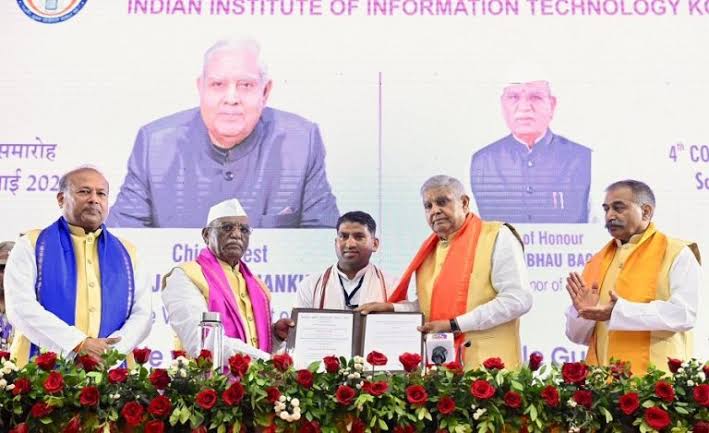
Kota, Rajasthan – July 13, 2025 — At the 4th Convocation Ceremony of the Indian Institute of Information Technology (IIIT), Kota, Vice-President of India Shri Jagdeep Dhankhar delivered a powerful critique of India’s coaching centre culture. Calling them “poaching centres,” he said they are draining talent and undermining the vision of India’s National Education Policy (NEP).
“Coaching Centres Are Black Holes for Talent”
In his hard-hitting address, Shri Dhankhar said, “Coaching centres have become black holes for talent. They trap our youth in regimented silos.” He criticized the explosion of coaching institutions across India, especially in cities like Kota, noting that this trend is now “menacing.”
“This obsession with perfect grades and standardized scores,” he said, “has compromised curiosity—an inalienable facet of human intelligence.”
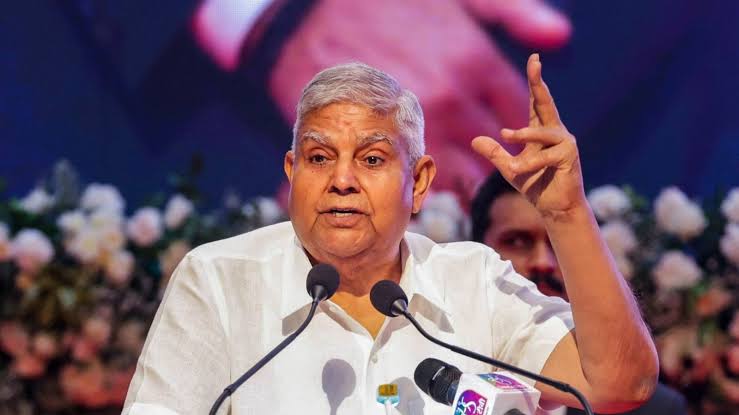

Dhankhar urged coaching centres to reimagine their role. “Use your infrastructure to become skill centres,” he said, appealing to civil society and elected representatives to help address this growing concern.
He emphasized that India needs coaching for life skills, not just exam ranks. “Let’s restore sanity to our education system,” he said. “Education is not an assembly line.”
National Education Policy vs Cramming Culture
The Vice-President was clear in his support of the National Education Policy, which promotes holistic, flexible, and multidisciplinary learning. “Coaching centres,” he warned, “are against the very flow of NEP.”
He slammed the cramming culture as toxic. “It creates memory without meaning,” he said. “This kind of education is producing intellectual zombies, not creative thinkers.”
Marksheets Don’t Define You
Encouraging students to break free from the grade-obsessed mindset, Dhankhar said, “Your marksheets do not define you. When you step into the real world, your ideas and knowledge will.”
He warned of the psychological cost of years-long coaching, which robotizes students and can cause mental health issues.
Digital Sovereignty: A New Form of Patriotism
Turning to the global digital landscape, Dhankhar said, “Sovereignty today isn’t lost by armies—it’s lost through digital dependence.” He stressed that India must not rely on foreign technology for critical sectors like defense and digital infrastructure.
“We must rise as architects of our own digital destiny,” he said. “Technological leadership is the new frontier of patriotism.”
Build Bharatiya Systems for Bharatiya Users
The Vice-President called upon India’s tech innovators to create inclusive solutions. “A smart app that doesn’t work in rural India isn’t smart enough,” he said. “An AI model that doesn’t support regional languages is incomplete.”
He added, “We must build Bharatiya systems for Bharatiya users and then globalize them.”
India Must Export, Not Import, Technology
Shri Dhankhar highlighted the shrinking technology gap between nations. “Earlier, we waited decades for new tech. Now the delay is just weeks,” he said. “We should be exporting technology—not just consuming it.”
He praised India’s coders, AI engineers, and data scientists, calling them the new-age “nation builders.”
Blasting Misuse of Money and Marketing Hype
In a scathing critique of commercial coaching advertising, Dhankhar said, “Money is poured into billboards and newspaper ads. But this money comes from families who often take loans to secure their child’s future.”
He called such practices “eyesores to our civilizational ethos,” saying they promote illusion over value.
India’s Gurukul Ethos Still Matters
Reflecting on the traditional values of Indian education, Dhankhar said, “The Constitution has a depiction of the Gurukul. We have always stood for donating knowledge, not monetizing it.”
He emphasized that modern India should combine this ethos with digital innovation to lead globally.
Dignitaries in Attendance
The event was also attended by Shri Haribhau Kisanrao Bagde, Governor of Rajasthan, Lt. Gen. (Retd.) A.K. Bhatt, Chairperson of IIIT Kota, and Prof. N.P. Padhy, the Institute Director, among other dignitaries.
Conclusion: Rethinking the Future
Vice-President Jagdeep Dhankhar’s message was clear: India must move away from cramming and commercial coaching. It must embrace curiosity-driven learning, build digital self-reliance, and invest in skill-based education.
Only then, he emphasized, will India rise as a global thought leader—powered by its own minds, systems, and innovations.