

Project Focus: Holistic Development for Tribal Students
The initiative, titled “Empowering Tribal Students in Eklavya Model Residential Schools,” seeks to bridge gaps in education and development. Key components include distribution of desktops, UPS systems, and tablets to improve digital access, structured mentorship programs to guide career choices, and installation of sanitary napkin vending machines and incinerators to ensure menstrual hygiene and dignity for girl students. Additionally, training modules will be designed to strengthen teacher capacity, ensuring long-term benefits for EMRS students.
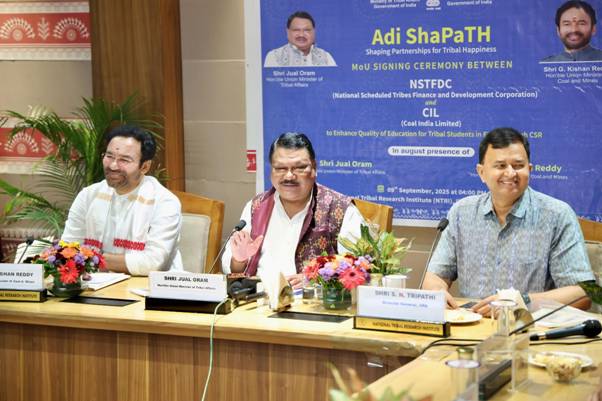

Union Minister of Coal & Mines G. Kishan Reddy lauded CIL’s efforts in addressing challenges faced by tribal communities. He highlighted that the vision of a “Viksit Bharat” can only be achieved when tribal populations are empowered through education, health, and livelihood opportunities. “Eklavya Model Residential Schools represent a strong foundation for preparing a modern, empowered generation. This collaboration will strengthen their capacity to provide quality education,” he said.
Union Minister of Tribal Affairs Jual Oram welcomed the partnership and expressed confidence that more public sector companies will extend Corporate Social Responsibility (CSR) support for tribal education. He emphasized that initiatives like this are vital to ensuring tribal youth have equal opportunities for growth.
CIL’s Commitment Beyond Coal
Vinay Ranjan, Director (HR) at Coal India Limited, reiterated the company’s commitment to nation-building beyond coal production. He explained that CIL’s CSR initiatives have had a transformative impact in coal-bearing regions, particularly in education, healthcare, skill development, and women’s empowerment. Partnerships with NSTFDC and EMRS, he said, will create long-lasting opportunities for tribal youth by integrating social welfare into business responsibility.
Shared Responsibility for Tribal Welfare
Rupinder Brar, Additional Secretary in the Ministry of Coal, stressed the importance of collaboration among ministries and stakeholders. She called the MoU “a beginning” and urged all parties to ensure successful implementation. According to her, initiatives like these embody the spirit of inclusive development by making the upliftment of marginalized communities a shared responsibility of government, corporations, and institutions.