
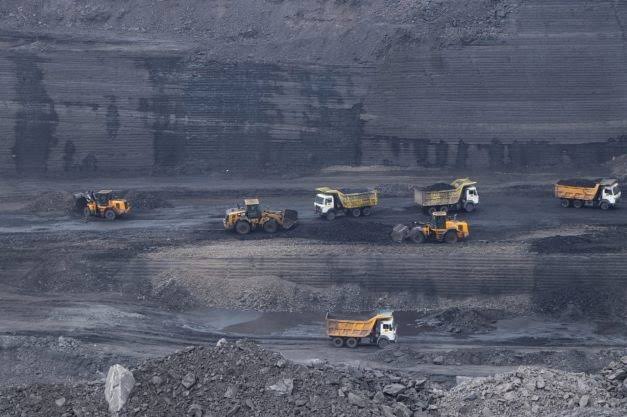
Magadh and Amrapali Mines Strengthen Jharkhand’s Coal Output
Located in Jharkhand’s rich coal-bearing belt, the Magadh and Amrapali mines form a crucial backbone of Central Coalfields Limited (CCL). These two mines alone contribute nearly 50% of CCL’s total coal production for 2024–25, ensuring stable coal supply for India’s thermal power plants. Their combined performance has enabled India to reduce dependence on imported coal, a goal central to the larger framework of Aatmanirbhar Bharat.
According to official figures tabled in Parliament, the Magadh mine possesses an estimated mineable reserve of 854.91 million tonnes, while the Amrapali mine holds around 456.34 million tonnes. During the financial year 2025–26, these mines are projected to generate net sales revenues of ₹2,812 crore and ₹2,367 crore respectively.
Local Employment and Community Development
Beyond coal production, the mines play a critical role in uplifting local communities. Employment opportunities have been extended to Project Affected Persons (PAPs) and villagers residing in proximity to the mining zones. Specifically, 808 people have already been approved for employment in the Magadh-Sanghmitra area, while 210 people are set to benefit in the Amrapali-Chandragupt zone.
These employment initiatives reflect the government’s aim to improve socio-economic conditions in historically underdeveloped mining belts. Steady incomes, community support programs and enhanced infrastructure are helping transform once-isolated regions into growing local economies.
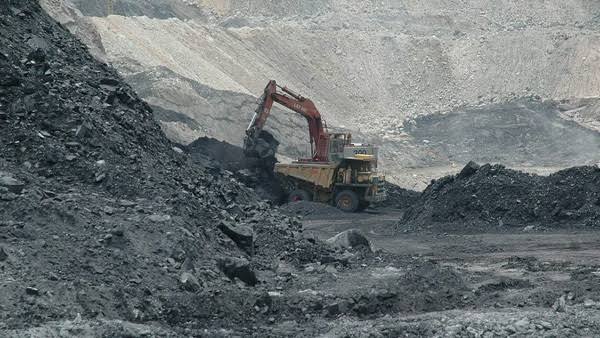

While Jharkhand continues to lead India’s coal output, the northeastern region is also emerging as a key contributor. The Namchik Namphuk Coal Mine in Arunachal Pradesh is expected to produce 0.2 million tonnes per annum, strengthening the state’s energy security.
With estimated geological reserves of 14.97 million tonnes, the mine is projected to generate an annual revenue of ₹173 crore. Importantly, it will create employment opportunities for approximately 270 individuals, thus bringing much-needed economic activity to the region.
Mission GREEN: Ecological Restoration and Sustainable Mining
Recognising the environmental concerns associated with mining, the Ministry of Coal has undertaken a comprehensive initiative titled Mission GREEN (Grow, Restore, Enrich and Empower Nature) Coal Regions. Through this mission, Coal India Limited (CIL), NLC India Limited (NLCIL), and Singareni Collieries Company Limited (SCCL) have introduced multiple eco-friendly interventions.
The five-year mission emphasises afforestation, ecological restoration of post-mining areas, circular resource management and renewable energy. Innovative projects such as mine-based tourism, sustainable water recycling and green livelihood opportunities are also being advanced.
A significant aspect of Mission GREEN is community participation. Local self-help groups (SHGs) have been engaged to take part in environmental protection, plantation drives and eco-based revenue-generating activities. A dedicated committee has been formed to ensure continuous monitoring and transparent implementation of the mission.
Driving Investment and Regional Integration
The development of these three major coal mines aligns with the government’s long-term goal of reducing reliance on imported coal and strengthening national energy independence. Their impact goes beyond energy production. As new mines develop, investments in roads, logistics, transportation and local markets naturally follow.
This multiplier effect supports inclusive development and integrates rural, remote and tribal regions into the national economic network. In states like Jharkhand and Arunachal Pradesh, where infrastructure gaps have historically hindered progress, these mining projects are acting as catalysts for modernization.