
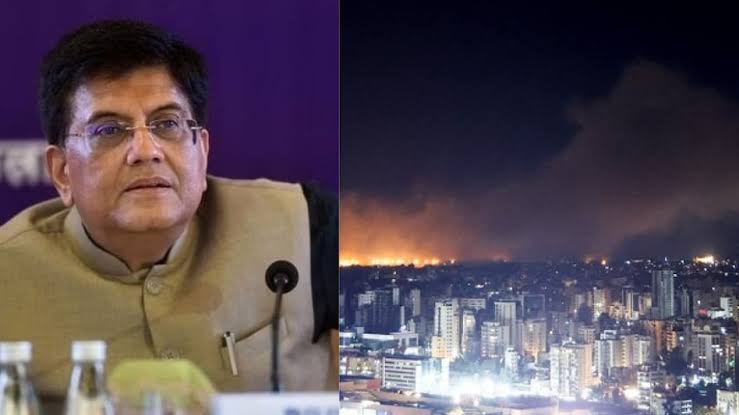
New Delhi, March 2: The Department of Commerce under the Ministry of Commerce & Industry convened a high-level stakeholder consultation to assess the impact of evolving geopolitical developments on India’s export-import (EXIM) cargo flows and ensure uninterrupted trade operations.
Officials reviewed the emerging operational environment and evaluated potential disruptions to India’s trade ecosystem.

The discussion centered on ensuring stability in EXIM cargo movement despite changing global conditions. Stakeholders presented assessments of routing alterations, transit-time changes, vessel scheduling shifts, container availability, and freight and insurance cost trends.
Special attention was given to the implications for time-sensitive export segments, including perishables, pharmaceuticals, and high-value manufactured goods.
Participants highlighted the need to maintain predictability in cargo flows, reduce avoidable delays, and safeguard documentation and payment processes for exporters and importers.
Coordinated Government Response
The Department reiterated that ensuring continuity in India’s trade flows remains a top government priority. Officials emphasized a facilitative and coordinated approach to mitigate disruptions and strengthen supply chain resilience.
Stakeholders agreed to maintain close, real-time coordination to monitor route developments, shipping capacity, equipment availability, and surcharges. The aim is to prevent congestion at ports and inland container depots (ICDs) and ensure swift cargo evacuation.
Officials also discussed measures to streamline customs clearances and enhance coordination across agencies to minimize dwell times.
Protecting Exporters and MSMEs
The Government underscored its commitment to protecting exporter interests, particularly Micro, Small and Medium Enterprises (MSMEs), which are often more vulnerable to global disruptions.
Support mechanisms discussed during the meeting include procedural flexibility in export authorisations in cases of genuine disruptions, coordination with Customs authorities for smooth clearance, and engagement with financial and insurance institutions to support exporters.
Ensuring uninterrupted supply of essential imports required for domestic production and consumption was also identified as a priority.
Multi-Agency Participation
The consultation saw participation from the Central Board of Indirect Taxes & Customs, Department of Financial Services, Ministry of Petroleum & Natural Gas, Ministry of Ports, Shipping and Waterways, and the Reserve Bank of India, among others.
Logistics operators, shipping lines, freight forwarders, and export promotion bodies also contributed insights from ground-level operations.
Officials emphasized that such inter-ministerial coordination is crucial to maintaining seamless trade operations during periods of global uncertainty.
India’s Trade Resilience
India has navigated multiple global disruptions in recent years by strengthening policy coordination and enhancing supply chain capabilities. The Government reiterated that India remains committed to being a stable and reliable trading partner.
The Department of Commerce confirmed that it will continue close engagement with stakeholders and relevant ministries to address emerging challenges in a timely manner.
As global trade dynamics evolve, the government’s proactive consultations signal preparedness and a strong institutional framework aimed at safeguarding India’s trade continuity.