
From Reformist Zeal to Political Pragmatism
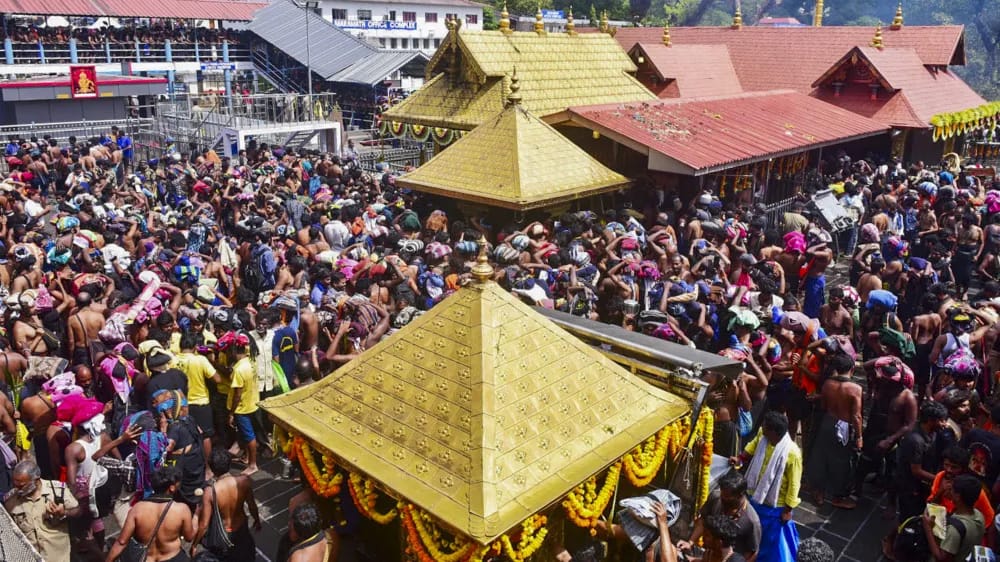
Back in 2018, the Supreme Court ruled that the exclusion of women of menstruating age from Sabarimala was unconstitutional. Chief Minister Pinarayi Vijayan championed the verdict, framing it as a fight against “anti-human rituals” and mobilising mass campaigns like the historic 600 km “women’s wall.”
But the move came at a political cost. In the 2019 Lok Sabha elections, the Left Democratic Front (LDF) was reduced to just one seat in Kerala, while the Congress-led United Democratic Front (UDF) swept 19 constituencies. The BJP, though seatless, saw its vote share rise significantly, consolidating conservative Hindu support.
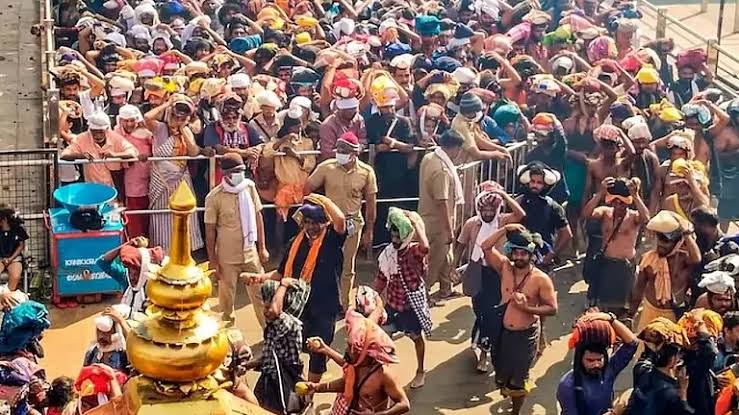

Fast forward to 2025, and the same Left government is hosting the Ayyappa Summit with promises of protecting customs and traditions. Officials have stated that contentious issues like women’s entry will not be on the agenda. This shift has angered progressive groups, including Dalit organisations and reformist voices, who accuse the CPI(M) of betraying its earlier principles to court Hindu voters.
Critics such as scholars and civil society leaders argue that the summit should engage with all stakeholders, including tribal communities like the Malayarayans, historically linked to the temple, and consider how the Supreme Court verdict could still be meaningfully implemented. Instead, the government appears focused on building consensus with powerful caste organisations like the Nair Service Society (NSS) and the Sree Narayana Dharma Paripalana (SNDP).
Political Stakes Ahead of Elections
The CPI(M)’s changing stance reflects its attempt to reclaim ground lost to both the Congress and BJP. Party insiders admit that support from caste-based organisations could shift Kerala’s electoral equations. With the BJP gaining traction among sections of the Ezhava community and the UDF maintaining its stronghold, the Left sees appeasing conservative groups as a survival strategy.
Meanwhile, Sangh Parivar outfits are reportedly planning a parallel summit, with the possible participation of senior BJP leaders, which could further politicise the issue. Opposition parties have already criticised the CPI(M) for “sheer opportunism” and demanded clarity on whether the government will revisit its position in the Supreme Court or withdraw cases against those arrested during the earlier protests.
Between Faith, Politics, and Reform
Observers note that the CPI(M)’s stand has always been flexible, balancing electoral calculations with its reformist rhetoric. Historians argue that even in 2018, the party maintained a dual tone—publicly supporting reforms while assuring devotees that traditions would be respected.
With the Ayyappa Summit approaching, Kerala once again finds itself at a crossroads, where faith, politics, and reform intersect. Whether the CPI(M)’s gamble will consolidate Hindu support or alienate its progressive base remains to be seen. What is clear is that the Sabarimala debate continues to shape the state’s political landscape in unpredictable ways.