
Focus on Translational Research
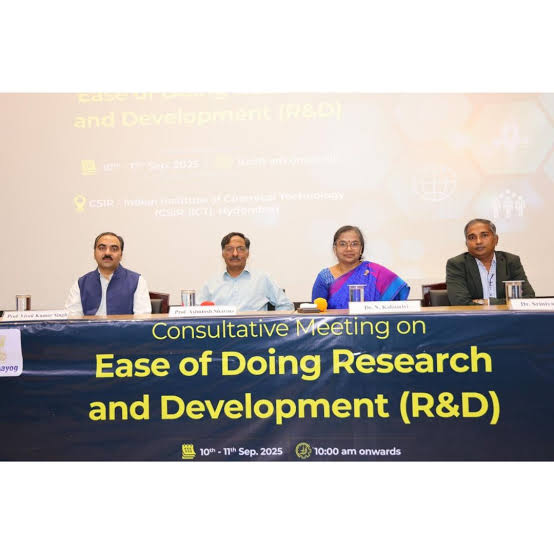
In his keynote address, Prof. Ashutosh Sharma, President of the Indian National Science Academy (INSA), highlighted the need for reimagining India’s research framework. He stressed that while India possesses significant scientific strengths, stronger institutional mechanisms and effective industry partnerships are essential to ensure that research outputs are quickly translated into solutions for society and industry.
Dr. N. Kalaiselvi, Director General of the Council of Scientific and Industrial Research (CSIR), echoed this sentiment. She underlined that simplifying regulatory frameworks and building efficient pathways from laboratories to markets should be the central focus of future policy reforms.

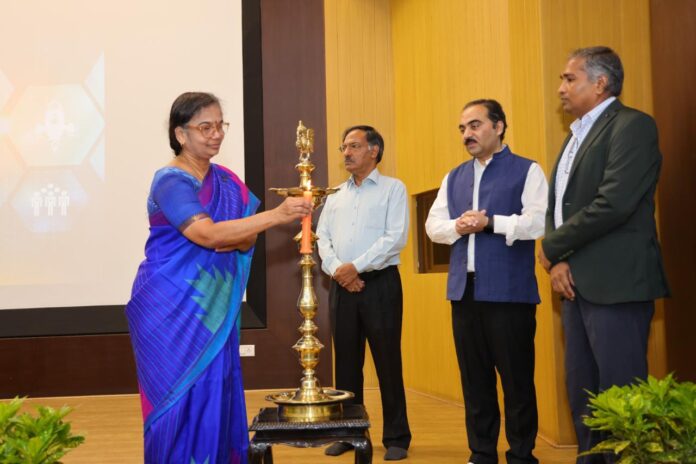
The meeting was inaugurated by Shri Jishnu Dev Varma, Hon’ble Governor of Telangana. He called for building a resilient R&D architecture that supports the vision of Atmanirbhar Bharat. According to him, India must not only generate new knowledge but also concentrate on converting it into technologies and processes that enhance self-reliance and global competitiveness.
The Governor commended NITI Aayog for creating a platform where diverse stakeholders could align research priorities with societal needs and economic development.
Industry Linkages and Policy Pathways
Dr. Anil Kakodkar, former Chairman of the Atomic Energy Commission, and Dr. V. K. Saraswat, Member of NITI Aayog, shared their perspectives on future directions. Both leaders emphasized that translational pathways—connecting universities, startups, industry clusters, and public-sector applications—are vital for India to maximize the impact of its scientific output.
They also recommended policy measures to streamline funding, encourage public-private partnerships, and accelerate the adoption of indigenous innovations in priority sectors such as healthcare, energy, and advanced manufacturing.
Deliberations Across Institutions
The technical sessions witnessed active participation from Vice Chancellors, Directors of national institutes, and leaders of research organizations. Discussions focused on regulatory challenges, resource-sharing models, advanced infrastructure access, and sustainable funding mechanisms.
Participants shared success stories of applied research and underlined the importance of nurturing a culture of innovation among students and young researchers. The sessions also explored frameworks for global collaborations that respect national interests while advancing cutting-edge science.
Key Outcomes
The consultation concluded with a strong consensus that India’s research journey must prioritize both ease of doing research and ease of translating research outcomes into practical applications. Embedding translational focus in policy design, institutional frameworks, and funding strategies was seen as critical to achieving this goal.
Experts agreed that by bridging the gap between laboratories and markets, India can accelerate innovation, strengthen industries, and deliver solutions that directly improve the quality of life for its citizens.