 Strengthening India’s Environmental and Renewable Energy Ecosystem
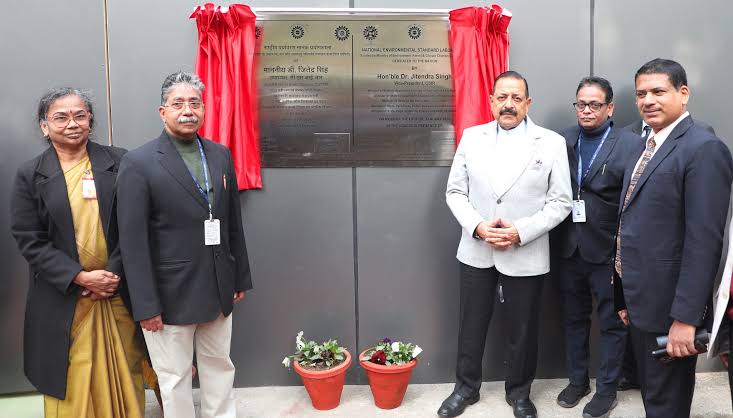
Dr. Singh emphasized that the National Environmental Standard Laboratory represents a significant leap in India’s environmental governance, enabling India-specific calibration of air pollution monitoring systems. This ensures accurate, transparent, and traceable environmental data to support regulatory authorities, industries, and startups under initiatives such as the National Clean Air Programme.
Simultaneously, the National Primary Standard Facility for Solar Cell Calibration positions India among a select global league in photovoltaic measurement standards. Using the laser-based Differential Spectral Responsivity system developed with PTB, Germany, the facility achieves a global uncertainty low of 0.35% for reference solar cell calibration. This reduces India’s dependence on foreign certification, saves foreign exchange, and strengthens investor confidence in the country’s solar sector.
CSIR-NPL: A Monument of India’s Scientific Journey
Describing CSIR-NPL as a “monument of New India,” Dr. Singh highlighted the laboratory’s legacy dating back to pre-Independence, which shaped the nation’s standard time through its atomic clocks. For decades, half of India synchronized its watches with NPL’s atomic clock, symbolizing the institution’s contribution to national integration and scientific advancement.
He stressed the importance of showcasing scientific institutions to inspire students and citizens, similar to historical monuments, fostering innovation and interest in STEM fields.
Collaborations and Future-Ready Initiatives
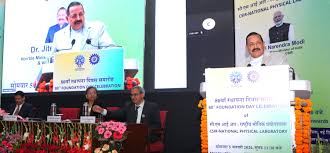
During the ceremony, fourteen Phytochemical Bharatiya Nirdeshak Dravya (BNDs) developed jointly by CSIR-CIMAP and CSIR-NPL were released, alongside two Gas BNDs and one Silica Fume BND, enhancing India’s quality assurance ecosystem. Several MoUs and technology transfer agreements were also signed to support indigenous manufacturing, MSMEs, and startups.
Dr. Singh concluded that Indian scientists are central to national aspirations, with CSIR-NPL set to play a defining role in India’s technological leadership and Atmanirbhar Bharat goals leading up to 2047.