 Inclusive Skill Development Framework
The CSIR Integrated Skill Initiative follows an inclusive approach, catering to students, young researchers, technical staff, working professionals, school dropouts, ITI diploma holders, farmers, and rural communities. The programme ensures equitable access to skill training across diverse social and economic backgrounds.
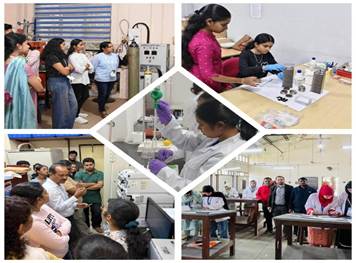
Skill development modules include short-term and long-term courses, internships, certification programmes, and hands-on laboratory exposure, enabling participants to gain both theoretical knowledge and practical competencies.
Coverage Across Key Industrial Sectors
The initiative spans 18 of the 36 key sectoral skills identified by the National Skill Development Mission. These include aerospace and aviation, agriculture, automotive, construction, electronics, food processing, green jobs, healthcare, life sciences, textiles, chemicals, mining, IT and ITeS, and entrepreneurship.
Training programmes are designed to align closely with industry demands, supporting employment, innovation, and enterprise creation across emerging and traditional sectors.
Significant Training Milestones
Since its launch, the CSIR Integrated Skill Initiative has trained more than 1.90 lakh individuals through over 5,200 skill-based training programmes. Special focus initiatives have been undertaken to support rural citizens and women, strengthening inclusive workforce participation.
Phase III of the initiative was launched in June 2025 by Dr. N. Kalaiselvi, Director General of CSIR and Secretary, DSIR. In its first year alone, the programme has trained more than 14,000 candidates through over 425 training programmes conducted across 37 CSIR laboratories nationwide.
Role of CSIR-HRDC
The CSIR-Human Resource Development Centre (HRDC), Ghaziabad, serves as the nodal agency for the initiative. It plays a key role in coordination, monitoring, performance evaluation, and quality assurance of training programmes across CSIR laboratories.
With a strong emphasis on relevance, quality, and impact, the initiative continues to support India’s goal of developing a knowledgeable, skilled, and self-reliant workforce.