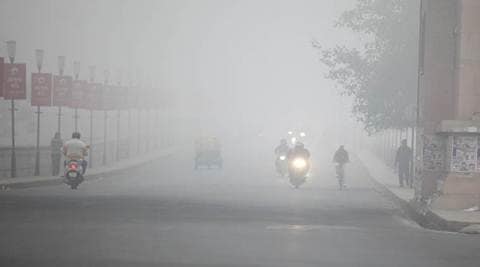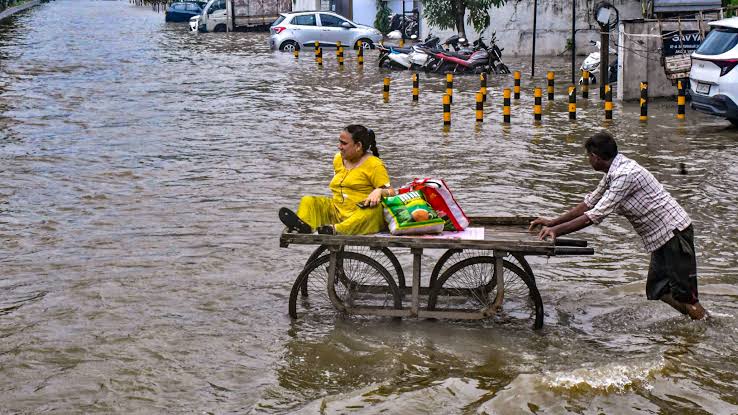
The Central Water Commission (CWC) on Monday convened a high-level national stakeholders’ workshop in New Delhi aimed at strengthening flood forecasting services and improving the preparation, submission, and appraisal of flood management Detailed Project Reports (DPRs). The initiative reflects the Government of India’s renewed focus on disaster resilience, climate-responsive water management, and enhanced Centre–State coordination.
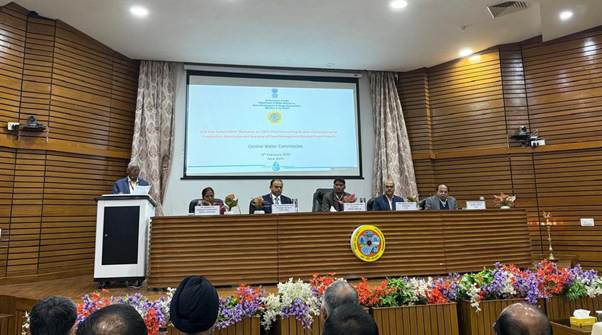 Focus on Climate Variability and Preparedness
Inaugurating the workshop, Secretary, Department of Water Resources, Shri V. L. Kantha Rao underscored the growing urgency of robust flood preparedness in the face of increasing climate variability and extreme weather events. He highlighted the need for closer coordination between the Centre and States to ensure timely forecasting, efficient response, and effective flood management planning.
CWC Chairman Shri Anupam Prasad, along with senior officials from the Commission and State governments, participated in the opening session, reinforcing the institutional commitment to strengthening India’s flood resilience framework.
Wide Participation from States and Central Agencies
The workshop saw participation from 27 States and Union Territories and 15 Central agencies, with around 173 officers attending the deliberations. Participants included representatives from State Water Resources Departments, State Disaster Management Authorities, and Central organisations involved in flood forecasting, disaster response, and project appraisal.
Key agencies present included the India Meteorological Department, National Disaster Management Authority, National Disaster Response Force, National Remote Sensing Centre, and the National Water Informatics Centre, among others.
Shift Towards Impact-Based Flood Forecasting
During the technical sessions, CWC delivered multiple presentations outlining the evolution of flood forecasting services in India. These covered short-range forecasts, seven-day advisory services, inundation modelling, integrated reservoir operation support, and Glacial Lake Outburst Flood studies.
The discussions highlighted the growing adoption of impact-based forecasting and decision-support systems, supported by automation and real-time data sharing between Central and State agencies. Emerging tools using artificial intelligence and machine learning were also discussed as part of future-ready forecasting solutions.
State Experiences and Best Practices
Representatives from flood-prone States such as Assam, Bihar, Odisha, Uttar Pradesh, Tamil Nadu, and Telangana shared field-level experiences and operational challenges. These presentations offered valuable insights into coordination mechanisms, data integration, and on-ground response during flood events.
The exchanges underscored the importance of aligning State-level initiatives with national forecasting platforms to ensure consistency, accuracy, and timely dissemination of warnings.
Improving Quality of Flood Management DPRs
The afternoon session focused on guidelines for preparing and appraising flood management and anti-erosion DPRs. CWC officials stressed the importance of basin-level planning, sound hydrological analysis, and early engagement with appraisal authorities to avoid delays and deficiencies.
Presentations highlighted common shortcomings observed in DPR submissions and explained the online appraisal process through the e-PAMS portal. Timelines for appraisal, response to observations, and procedures for seeking central assistance under schemes such as the Flood Management and Border Areas Programme were also clarified.
Way Forward for Stronger Flood Resilience
The workshop concluded with a summary session chaired by Member (Design & Research), CWC, reiterating the need for sustained collaboration, capacity building, and knowledge-sharing between the Centre and States.
Officials agreed that effective use of forecasting services, improved DPR quality, and integrated decision-making are critical to strengthening India’s flood preparedness and long-term resilience. The outcomes of the workshop are expected to support better-informed policies and more effective flood management interventions nationwide.