
District Export Action Plan (DEAP) Targets Infrastructure Gaps
As part of the DEH process, a District Export Action Plan (DEAP) for Dakshina Kannada has been prepared to identify and remedy export bottlenecks. The DEAP highlights priority infrastructure needs including improved first-mile connectivity to New Mangalore Port, additional warehousing and consolidation facilities, upgraded testing and packaging infrastructure, and enhanced cold-chain capacity for seafood.
Planned interventions under the DEAP are intended to reduce transit time, lower logistics costs and enable producers to meet international standards on packaging, phytosanitary testing and traceability all crucial for competitiveness in global seafood and nuts markets.

The government has set up a District Export Promotion Committee (DEPC) for Dakshina Kannada to coordinate actions among district authorities, exporters, port and customs officials, logistics agencies and state departments. The DEPC will work alongside State Export Promotion Committees (SEPCs) to fast-track implementation of DEAP measures and resolve operational issues affecting shipments.
This institutional mechanism is designed to provide a single table for problem-solving from resolving customs clearance delays to organising consolidation of small consignments thereby making exports more predictable for local firms and FPOs.
Logistics Resilience: Warehousing, DNKs and E-commerce Links
To mitigate freight volatility and international supply-chain disruptions, the DEH framework promotes several practical interventions. These include setting up port-connected warehousing and common facility centres, expanding Dak Ghar Niryat Kendras (DNKs) for postal exports, and fostering partnerships with e-commerce logistics platforms such as Amazon, Shiprocket and international couriers to lower costs for small consignors.
DNKs aim to provide last-mile services for documentation, packaging and small-parcel shipments an important option for micro-exporters and cottage enterprises that lack scale to negotiate favourable freight rates.
Capacity Building and Market Access
DGFT regional authorities and district administrations will run outreach and capacity-building programmes for exporters, covering export procedures, packaging norms, quality testing and compliance. Such programmes are expected to help processors, fishermen co-operatives and cashew units upgrade processes to meet foreign buyer expectations.
Monitoring of district-wise export performance and periodic review by DEPC will allow timely, data-driven responses if bottlenecks emerge, the government said.
Linkages with New Mangalore Port and Long-Term Value Retention
DEAP recommendations for Dakshina Kannada prioritise strengthened linkages to New Mangalore Port to speed first-mile movement and reduce handling costs. The DEH initiative also stresses retention of value-chains locally by promoting processing, testing and packing near production clusters steps that can increase local employment and enhance margin capture by producers.
By aligning district requirements with broader port and regional infrastructure projects, the initiative seeks sustainable improvements rather than ad-hoc fixes, the government noted.
What This Means for Local Industry
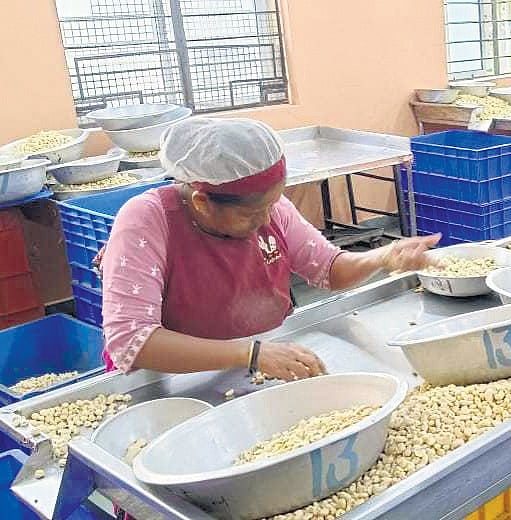
For Dakshina Kannada’s seafood processors, cold-chain expansion and faster port access can open new markets and reduce spoilage. For cashew units, better testing labs and packaging capacity can help meet strict buyer specifications and secure premium markets. Small exporters and MSMEs stand to benefit from reduced logistics costs and improved market intelligence.
The designation forms part of the government’s wider effort to promote balanced regional development by strengthening district-level export ecosystems across the country.