
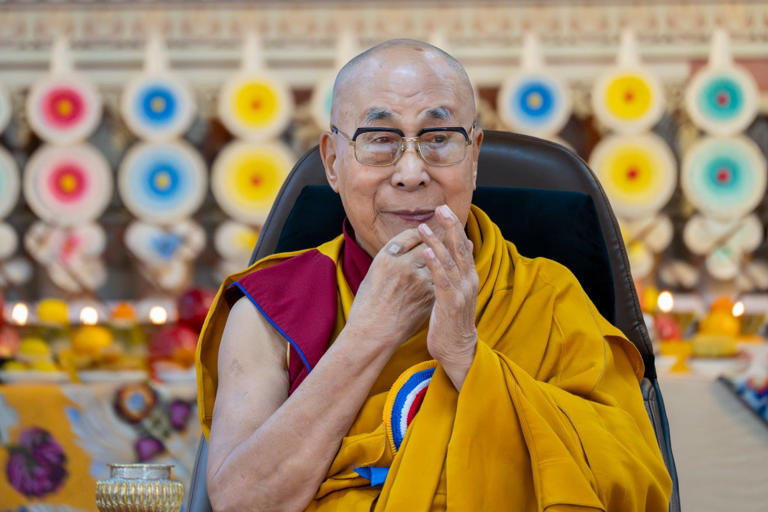
The debate over the Dalai Lama’s reincarnation has grown more intense. Once again, China dismissed the spiritual leader’s claim to choose his own successor. Notably, the statement came during his 90th birthday celebrations.
Meanwhile, Xu Feihong, China’s top envoy in India, reiterated that the reincarnation process follows a centuries-old tradition. According to him, the state—not any individual—holds authority over it.
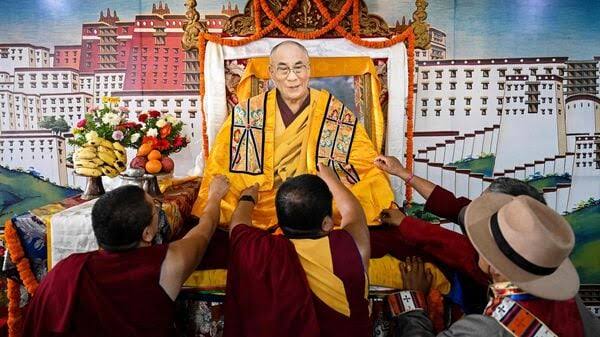

On Saturday, Ambassador Xu Feihong responded directly to the Dalai Lama’s recent succession comments via social media. Xu emphasized that the Living Buddha reincarnation system has existed for over 700 years.
“The 14th Dalai Lama is part of this tradition,” he wrote. “But he did not start it, and it will not end with him.”
Furthermore, Xu noted that over 1,000 Living Buddhas live across Tibet and neighboring provinces like Sichuan, Yunnan, Gansu, and Qinghai.
Therefore, he argued that the Dalai Lama cannot unilaterally alter or abolish this system. He described it as a structured religious process shaped by history.
Dalai Lama’s Stand on Succession
On the other side, the Dalai Lama—who lives in exile in Dharamshala, India—has consistently offered a different view since 1959. He insists that traditional Buddhist principles, not political pressure, must guide the reincarnation process.
In fact, he has repeatedly said that his next incarnation may appear in a free country—likely outside China. This belief, however, stands in direct opposition to Beijing’s efforts to dominate Tibetan Buddhism.
Recently, the Gaden Phodrang Trust, the Dalai Lama’s official nonprofit, asserted that only it holds the right to identify his next incarnation. As a result, this claim has once again escalated tensions with China.
Earlier, the Dalai Lama even considered ending the lineage. However, his recent statements confirm his intent to continue the succession to preserve the Tibetan cause.
Beijing Pushes the Golden Urn
At the same time, China’s Foreign Ministry spokesperson, Mao Ning, backed the government’s stance again on July 2. She emphasized that Tibetan Buddhism should reflect “Chinese characteristics.”
She further stated that the Golden Urn method—a Qing Dynasty lottery system—must determine the next Dalai Lama. According to her, this method offers both transparency and continuity.
Moreover, Mao declared that only the state can approve reincarnations of top Buddhist leaders, including the Dalai Lama.
“Reincarnation is not a matter of personal will,” she said. “It is a sacred ritual rooted in history and law.”
Global Impacts of the Dispute
This dispute carries international consequences. The Tibetan government-in-exile, based in India, continues to complicate diplomatic ties between New Delhi and Beijing.
In addition, many human rights organizations around the world have criticized China’s control over religion in Tibet. The reincarnation issue now symbolizes broader struggles for autonomy and freedom.
If China selects its own Dalai Lama while the exile movement recognizes another, then two rival figures may emerge. As a result, this scenario could confuse followers and widen the spiritual and ideological divide.
What Happens Next?
Now that the Dalai Lama has turned 90, the urgency of naming a successor has grown. While he remains active, his circle has already started preparations.
China, unsurprisingly, will likely continue its state-directed succession plan. In contrast, the Dalai Lama’s followers aim to defend religious independence and reject political influence.
In conclusion, this conflict goes beyond one spiritual leader. It represents a deeper clash between belief and control, tradition and state authority.