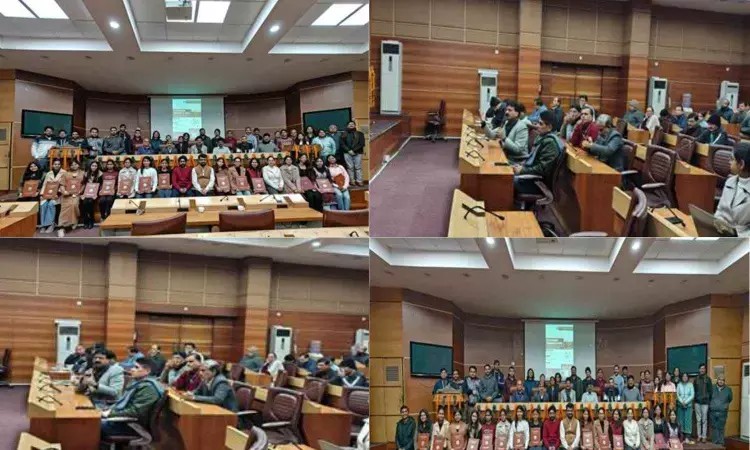
New Delhi, February 24, 2026: The Department of Drinking Water & Sanitation (DDWS) under the Ministry of Jal Shakti organised the fourth edition of the multilingual ‘Sujal Gram Samvad’, reinforcing participatory water governance and community ownership under the Jal Jeevan Mission (JJM).
Representatives included Gram Panchayat members, Village Water and Sanitation Committees (VWSCs), women self-help groups, students, frontline workers, State Mission Directors, and district officials. The initiative provided a platform for villages to share best practices in their native dialects and learn from each other’s experiences.
 Focus on Sustainability and Local Ownership
In his opening remarks, Shri Ashok K.K. Meena, Secretary, DDWS, emphasized that while infrastructure creation under Jal Jeevan Mission has been substantial, sustainability and regular water supply must now become the priority.
He highlighted that water supply management is fundamentally a local responsibility. Gram Panchayats and VWSCs must take ownership of schemes, supported by strengthened institutional mechanisms such as District Technical Units.
He also underlined the importance of Jal Seva Aankalan, an annual exercise where Gram Panchayats present water service details before the Gram Sabha to ensure transparency and accountability.
Voices from the Villages
Communities from West Damcherra in Tripura shared in Bengali how household tap connections have reduced dependence on hill streams and seasonal sources. Women reported relief from daily drudgery and a noticeable decline in waterborne diseases due to regular quality testing.
In Sederapet, Puducherry, residents highlighted 100% Functional Household Tap Connections covering over 1,200 households. Robust infrastructure, routine testing, and an active grievance redressal system ensure uninterrupted service.
Villagers from Pulimamidi in Telangana confirmed full tap water coverage across homes, schools and Anganwadi Centres. Regular field-level water quality testing and preparations for Jal Arpan activities reflect strong community participation.
Ngopok in Arunachal Pradesh showcased a gravity-based 24×7 water supply system serving 330 households. A trained VWSC, user charge collection, and active involvement of women in water testing demonstrate sustainable management practices.
In Mawtawar, Meghalaya, elevated tanks have enabled gravity-based supply in challenging hilly terrain. Local monitoring systems and trained women volunteers ensure water quality and quick resolution of issues.
Kunnummal in Kerala shared its journey from tanker dependence during summers to achieving self-sufficiency with round-the-clock water supply. Real-time monitoring through digital tools has further strengthened service delivery.
Jal Mahotsav to Deepen Community Participation
DDWS announced a nationwide Jal Mahotsav from March 8 to March 22, aligning with International Women’s Day and World Water Day. Activities will include formal handover of assets to Gram Panchayats through Jal Arpan Diwas, enhanced water quality monitoring, and capacity-building initiatives.
Officials stressed that the Sujal Gram Samvad platform is not only meant to showcase success stories but also to openly discuss challenges and collectively improve systems. The full interaction is available via the National Informatics Centre webcast services.
As Jal Jeevan Mission enters its next phase, the focus remains clear: strengthen community-led water governance, ensure sustainable service delivery, and empower villages to safeguard their drinking water systems for the long term.