
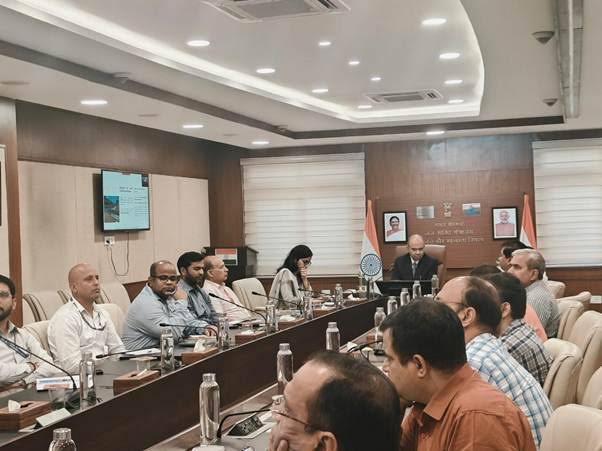
New Delhi, February 17, 2026: The Department of Drinking Water & Sanitation (DDWS), under the Ministry of Jal Shakti, convened the 6th District Collectors’ Peyjal Samvad to accelerate implementation of the Jal Jeevan Mission (JJM) and deepen community ownership of rural water services.
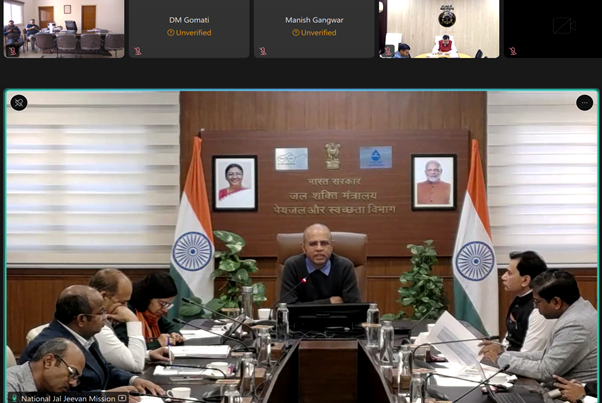

The virtual conference was chaired by Shri Ashok K.K. Meena, Secretary, DDWS, and brought together District Collectors, Mission Directors, and senior officials from across States and Union Territories. The session focused on strengthening “Har Ghar Jal” delivery and ensuring long-term sustainability of rural water supply systems.
Secretary Meena highlighted that since its launch in 2019, the Jal Jeevan Mission has significantly expanded household tap water coverage despite multiple constraints. He noted that the Mission is now transitioning from rapid infrastructure creation to community-managed service delivery.
He emphasized that systematic handover of water supply schemes to Gram Panchayats is essential. Community ownership, he said, is central to maintaining functionality, ensuring service quality, and safeguarding investments.
Jal Utsav: Making Water a People’s Movement
A key highlight of the Samvad was the presentation on Jal Utsav–Jal Mahotsav, envisioned as a nationwide public engagement initiative. Officials described it as a culturally rooted movement that blends tradition, awareness, and collective responsibility for water conservation.
The initiative will operate at three levels: National Jal Mahotsav from March 8 to March 22, aligned with International Women’s Day and World Water Day; Rajya Jal Utsav at the State level; and Lok Jal Utsav at Gram Panchayats.
Districts were encouraged to prepare local calendars reflecting regional customs and seasonal patterns. Officials clarified that Jal Utsav is not centrally imposed but designed as a decentralized, community-driven celebration under the Jal Jeevan Mission.
District Innovations Take Centre Stage
Several districts presented innovative models demonstrating progress and challenges in water governance.
Gangtok, Sikkim showcased spring rejuvenation through Dhara Vikas, recharge pits, and community-led operations and maintenance. Women’s participation and trained barefoot technicians have strengthened scheme sustainability.
North Goa highlighted its fully digital water utility system, including QR-code enabled billing and plans for IoT-based real-time monitoring and SCADA integration.
Bahraich, Uttar Pradesh demonstrated structured quality checks, district-level call centres, and IoT sensors for monitoring supply hours and water quality. Women-led field testing kits (FTK) were emphasized as tools for vigilance.
Nawada, Bihar presented the use of the Peyjal App for real-time monitoring and Jal Chaupal for community dialogue. A surface water scheme has significantly reduced fluoride contamination in affected areas.
Jaisalmer, Rajasthan described revival of traditional Tankas, rainwater harvesting, and artificial recharge structures to secure water in arid conditions.
Longding, Arunachal Pradesh highlighted voluntary catchment protection under State legislation, supported by community competitions to improve tariff collection and asset upkeep.
South Andaman shared innovative youth-led water audits in schools, reservoir desilting efforts, and extensive IEC campaigns including rallies and public cultural events.
Dashboard Monitoring and Accountability
Additional Secretary and Mission Director Shri K.K. Soan stressed the importance of regular District Water & Sanitation Mission (DWSM) meetings and effective use of the operational dashboard. He urged districts to maintain updated data, clear action plans, and strong field evidence of progress.
He informed participants that NITI Aayog has been requested to review Jal Jeevan Mission progress during visits under the Aspirational District and Block Programmes. This step aims to strengthen accountability and performance tracking.
Next Phase: Sustainability and Functionality
Officials acknowledged that while significant progress has been achieved, the Mission’s next phase demands sharper focus on sustainability, water quality, and greywater management. Emphasis will also remain on strengthening engineering teams, capacity building of Panchayat representatives, and expanding community-led initiatives.
The Samvad concluded with renewed confidence that strong district leadership will drive the Mission toward universal, reliable, and safe drinking water access.