

The workshop emphasized manuscriptology, palaeography, Ayurvedic technical terminology, and script orientation. Special sessions on Grantha and Vattezhuthu scripts allowed participants to work directly on original palm-leaf manuscripts. As a result, five rare and previously unpublished Ayurvedic manuscripts were successfully transliterated:
- Dhanwanthari (Vaidya) Chinthamani: 146 pages, Grantha to Sanskrit.
- Dravyashuddhi: 110 pages, Grantha to Sanskrit.
- Vaidyam: 59 pages, Medieval Malayalam transliterated to Malayalam.
- Roga Nirnaya, Part I: 75 pages, Medieval Malayalam to Malayalam.
- Vividharogangal: 78 pages, Vattezhuthu to both Malayalam and Sanskrit.
Expert Insights and Collaboration
Addressing the valedictory session, Prof. Vaidya Rabinarayan Acharya, Director General of CCRAS, highlighted that this was the second collaborative workshop with CSU under the Ayurveda Manuscript Research Initiative. The first workshop at CSU Puri Campus, Odisha, successfully transliterated 14 manuscripts, demonstrating a growing national effort to preserve India’s medicinal heritage.
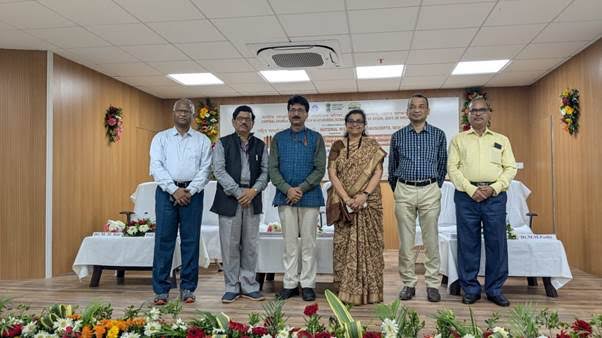
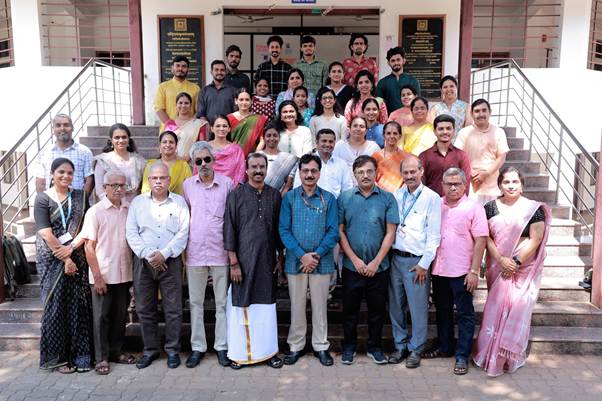
Prof. K. K. Shine, Director of CSU Guruvayoor Campus, and Prof. K. Vishwanathan reaffirmed their commitment to continued collaboration, particularly for preserving and processing Malayalam Ayurvedic manuscripts. The workshop was coordinated by Prof. K. Vishwanathan (CSU) and Dr. Parvathy G. Nair (CCRAS), with the valedictory session attended by Dr. V. C. Deep (CCRAS–NARIP) and other senior officials and academicians.
Significance for Ayurveda and Research
The workshop was widely praised for its integrated approach and tangible research outcomes. CCRAS emphasized that initiatives like this not only strengthen evidence-based Ayurveda but also help preserve regional medical traditions, ensuring the long-term conservation of India’s classical medical knowledge.