

Cloud Seeding Plan Yet to Take Off
The Delhi government had proposed the artificial rain experiment in July 2025 as part of its strategy to mitigate hazardous pollution levels. However, the India Meteorological Department (IMD) has confirmed that there are currently no suitable clouds for the operation. Environment Minister Manjinder Singh Sirsa said the government is ready to launch the trial “the moment suitable cloud conditions arise.”
“All preparations—from flight permissions to technical readiness—are complete. We are just waiting for the right cloud formation,” Sirsa told PTI. The government had planned to conduct the experiment immediately after Diwali, but no viable weather window is expected until October 25, according to IMD forecasts.
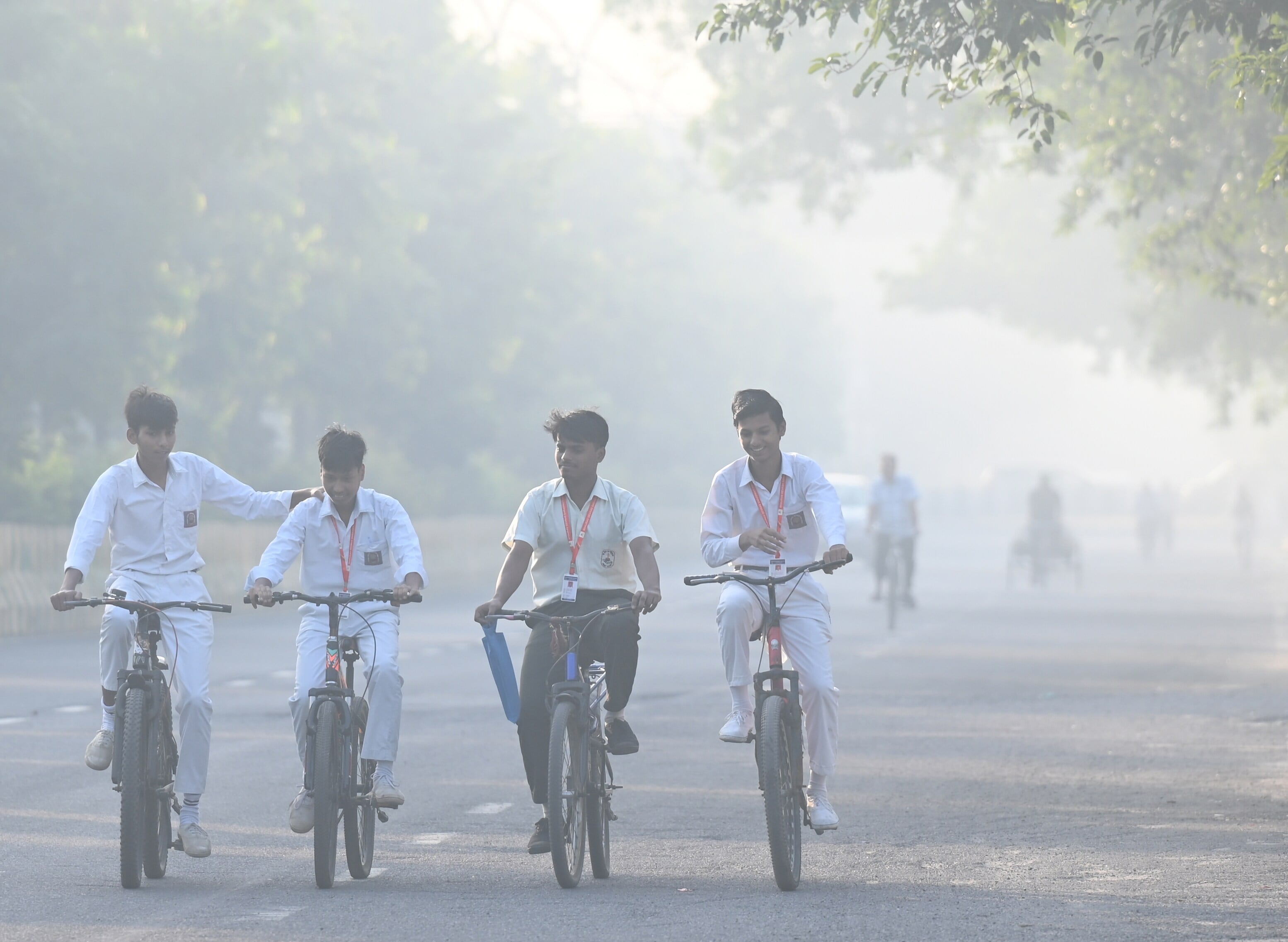

The project, a flagship initiative of the BJP-led Delhi administration, has faced multiple postponements since July. Originally slated for the monsoon months, the plan was delayed due to shifting weather patterns and administrative clearances. Now, with dry skies over the capital, the lack of suitable cloud cover has caused further setbacks.
An aircraft equipped for the cloud-seeding experiment is currently stationed in Meerut under the supervision of experts from IIT Kanpur, which is leading the scientific operations.
How the Artificial Rain Project Works
The Delhi government signed a Memorandum of Understanding (MoU) with IIT Kanpur earlier this year for five experimental cloud-seeding trials across northwest Delhi. The goal is to determine whether artificial rain can help reduce dust and particulate matter levels during winter smog episodes.
The project has received approval from 23 departments, including the Directorate General of Civil Aviation (DGCA), and will use IIT Kanpur’s Cessna 206-H aircraft (VT-IIT). Operations are authorized between October 1 and November 30, following strict flight safety and air traffic control regulations under Rule 26(2) of the Aircraft Rules, 1937.
Scientific Collaboration and Oversight
The initiative involves three major institutions — IIT Kanpur, the India Meteorological Department (IMD), and the Indian Institute of Tropical Meteorology (IITM), Pune. Their combined expertise is expected to guide the cloud-seeding process, monitor atmospheric changes, and measure any resulting impact on pollution levels.
Funds for the project have already been transferred to IIT Kanpur. The trials are expected to begin as soon as IMD identifies favorable cloud conditions over the capital and surrounding regions.
Urgency Grows as AQI Worsens
Delhi’s Air Quality Index (AQI) has sharply deteriorated post-Diwali, with several monitoring stations recording “severe” levels. Despite a temporary dip during the festival due to favorable winds, the return of calm conditions has led to a spike in PM2.5 levels. Environmentalists have called for urgent measures as visibility drops and respiratory complaints rise across the NCR.
The artificial rain project, if successful, could serve as a model for other Indian cities struggling with seasonal smog. However, experts caution that cloud seeding is not a long-term fix and must be paired with stricter emission controls, dust management, and public awareness initiatives.
Public Health Concerns Mount
Doctors have warned that prolonged exposure to high pollution levels could lead to a surge in respiratory illnesses. The Delhi government continues to implement short-term measures, including smog towers, anti-smog guns, and vehicle restrictions under the Graded Response Action Plan (GRAP). Still, without rain or wind, the city remains trapped under a thick layer of pollutants.
What’s Next?
Officials confirmed that all logistical and regulatory steps are complete. The first trial will be launched immediately when favorable conditions arise. Until then, Delhi’s residents continue to hope that technology and timely weather support might bring some relief from the capital’s choking air.