
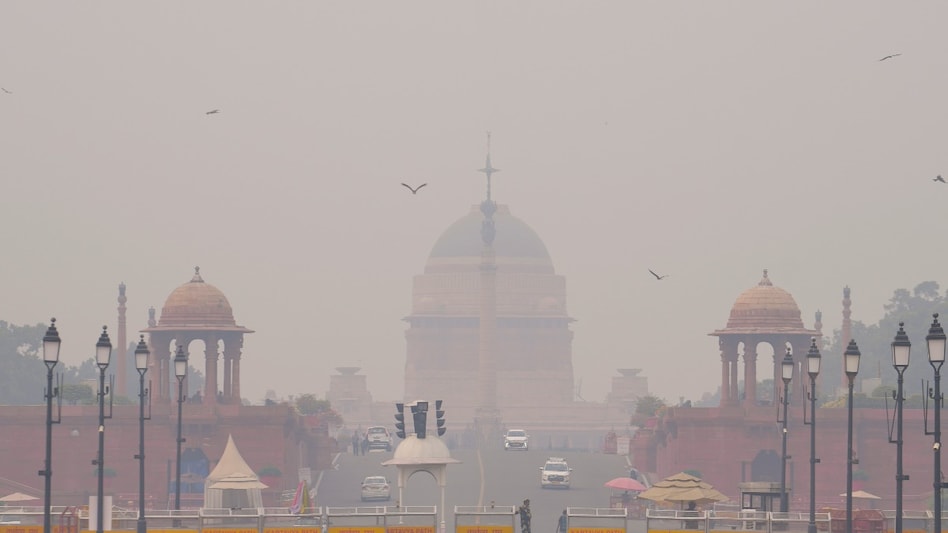
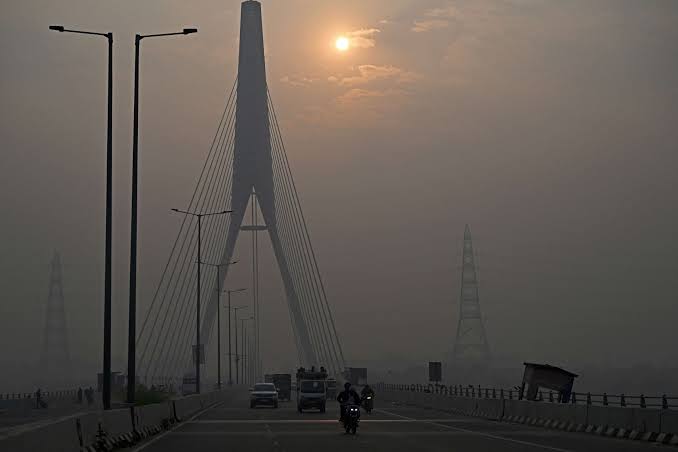

Delhi’s air-quality crisis has deepened following the post-Diwali spike in smog, aggravated by stubble-burning in neighbouring states, vehicular and industrial emissions and chilling weather that traps pollutants near the surface. On Tuesday morning, the city’s Air Quality Index (AQI) hovered around the 300-plus mark, classified as ‘very poor’.
In light of these conditions, the Delhi government approved a five-trial cloud-seeding project earlier this year at a cost of around ₹3.21 crore, in partnership with IIT Kanpur.
How the trial was executed
An aircraft—reported to be a Cessna-206H—took off from Kanpur, flew over target zones such as Khekra, Burari, North Karol Bagh, Mayur Vihar and Sadakpur, and released eight fire-flares containing silver iodide and sodium chloride into the clouds. The process lasted roughly half an hour.
Officials expect rain to set in within 15 minutes to up to four hours after the seeding, depending on moisture and cloud conditions.
Challenges and expert caution
While government sources called the operation a success, atmospheric experts caution that the technique has limitations. For one, the trial faced low cloud-moisture levels—below 20 per cent—far lower than the roughly 50 per cent often considered necessary for effective seeding.
Further, scientists note that even if artificial rain occurs, the relief is likely to be temporary unless the sources of pollution are addressed. They argue that cloud seeding cannot replace long-term emission reduction strategies.
What happens next?
Officials say this is only the first trial of the planned series. Results from the operation will be monitored via ambient-air quality stations around the seeding zones. If judged successful, the government may roll out more flights through the upcoming winter months.
However, the true test remains: ensuring the rainfall induced (if any) meaningfully lowers PM2.5/PM10 levels — and doing so repeatedly when conditions permit. The pilot is part of a wider winter-pollution mitigation strategy.
Significance for Delhi’s air-quality fight
At a time when Delhi regularly records one of the world’s worst urban air qualities, the initiative represents a novel and high-profile attempt at weather-engineering. If it works, it could serve as a supplementary tool to traditional pollution-control measures, such as construction bans, diesel-generator curbs and farm-stubble control.
Yet, experts emphasise this must not distract from structural reforms. Long-term improvement hinges on reducing emissions from vehicles, industries, thermal plants, and crop-burning – all year round.