

Sudden Rainfall Brings City to a Halt
On July 9, 2025, Delhi experienced a sudden and intense downpour. The rain came just as the evening rush hour began, turning roads into rivers and choking the city’s lifelines. Traffic stood still. Flights were delayed. People were stranded.
According to the India Meteorological Department (IMD), rainfall ranged from just 1.4mm in some areas to 60mm in others. Najafgarh recorded the highest rainfall, followed by Ayanagar and Pragati Maidan.
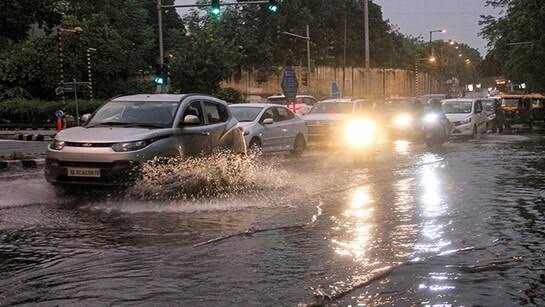

Drainage systems failed across the city. Water reached knee-level in places like Moti Bagh, Moolchand, and Mahipalpur. Commuters spent hours trapped in jams on the Ring Road, Mathura Road, and ITO.
Delhi Traffic Police confirmed that jams extended from south to north Delhi. Key areas like Shastri Park, Mehrauli, and West Patel Nagar reported gridlock lasting past midnight.
Flight Disruptions at IGI Airport
The chaos wasn’t limited to roads. The Indira Gandhi International Airport saw over 300 flight delays. According to Flightradar24, average delays stretched to 38 minutes. Six flights were diverted—two to Lucknow and four to Jaipur.
IndiGo Airlines and IGI Airport both issued travel advisories. Passengers were urged to take the Delhi Metro instead of road transport due to expected delays.
Why This Happened
IMD reported that a northward shift of the monsoon trough caused this unexpected rainfall. Two upper air cyclonic circulations—one over Haryana and another over Uttar Pradesh—fueled the showers.
“These weather patterns collided over NCR, creating pockets of intense rain,” said Naresh Kumar, IMD Scientist. The rain was classified as ‘moderate to heavy,’ with some localities experiencing nearly an entire month’s rain in a few hours.
Traffic Clogged, Even in ‘Fixed’ Zones
Ironically, areas like Minto Bridge and ITO, which had recently been upgraded by the Public Works Department (PWD), still saw slow drainage. Water Minister Parvesh Verma visited Minto Bridge and claimed visible improvement. Yet, videos circulating online showed submerged roads in other zones just kilometers away.
Additional Commissioner of Police (Traffic), Dinesh Kumar Gupta, said mobile pumps and extra personnel were deployed. “We worked with civic agencies to ease the flow,” he stated. Still, the volume of water overwhelmed existing systems.
Weather Outlook: More Rain Ahead
IMD first issued a yellow alert. It then upgraded to an orange alert by 6 PM and later to a red alert by 6:30 PM. On July 10, moderate rain is expected to continue, especially in NCR zones.
Forecast models from the Global Forecast System (GFS) indicated over 50mm of rain between July 9 evening and July 10 evening. Temperatures are also expected to dip, offering short-term relief from the previous heatwave.
Rainfall Data Snapshot (5:30 PM – 8:30 PM, July 9)
- Najafgarh – 60 mm
- Ayanagar – 50.5 mm
- Pragati Maidan – 37.7 mm
- Pusa – 30.5 mm
- North Campus – 22 mm
- Palam – 14.4 mm
- Safdarjung – 1.4 mm
How It Affected Daily Life
People shared images and videos online of stuck buses, stalled cars, and ankle-deep water inside shops. Some school buses took twice their usual time to reach. Office-goers reported reaching home hours late.
Yet, in some places, civic efforts paid off. “The rain was heavy, but Minto Bridge remained dry for the first time in years,” said a local shopkeeper. However, such examples were rare.
Environmental Impact
On a positive note, air quality improved. Delhi’s Air Quality Index (AQI) stood at 81—classified as ‘satisfactory’—marking the 14th straight day of clean air, according to the Central Pollution Control Board (CPCB).
Conclusion: A City on the Edge
Delhi’s rain crisis exposed deep flaws in its urban planning. While some efforts have improved certain zones, widespread waterlogging remains a major concern.
With the monsoon expected to linger another day, citizens are advised to stay updated, use public transport, and avoid flooded areas. The rain may bring relief from heat—but it also highlights the urgent need for better drainage infrastructure in India’s capital.