
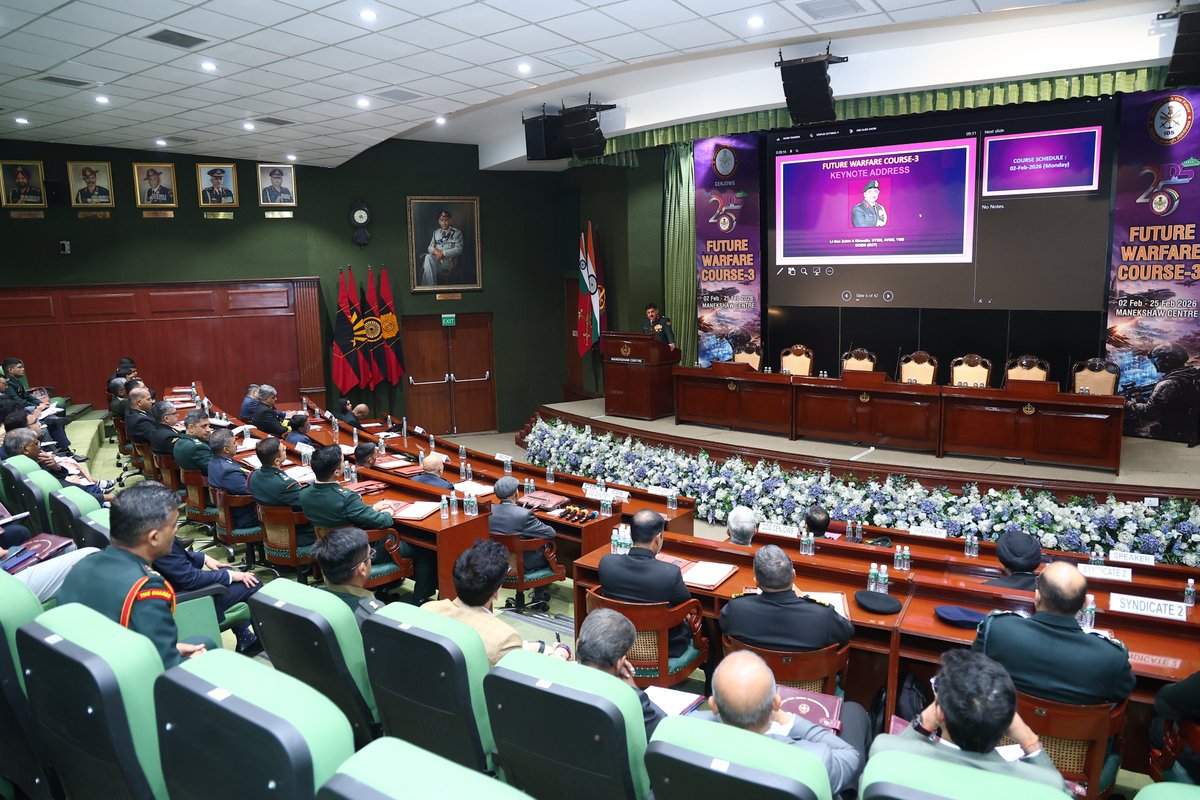
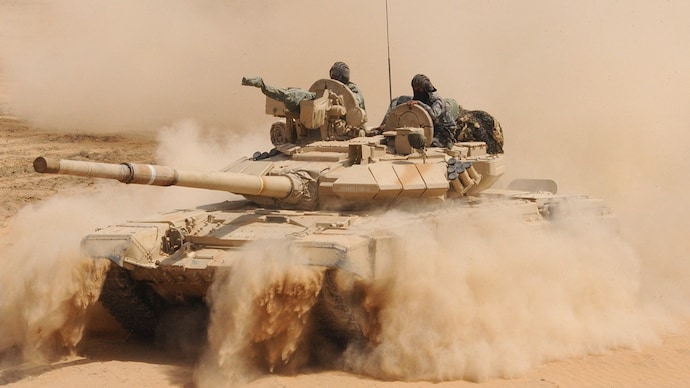

This edition of the Future Warfare Course features an expanded and enhanced curriculum, reflecting the growing complexity of contemporary military operations. Participants will examine how emerging technologies such as artificial intelligence, cyber capabilities, space-based assets and autonomous systems are influencing warfighting concepts.
The programme encourages a re-evaluation of traditional doctrines, strategies, and tactics, techniques and procedures (TTPs), ensuring that India’s military thinking remains relevant in an increasingly contested and technology-driven battlespace.
Joint Participation from Services and Industry
The course brings together officers from the Army, Navy and Air Force, fostering a joint-service approach to future operational challenges. The participating officers range in seniority from Majors to Major Generals and their equivalent ranks, creating a unique blend of youthful technical expertise and seasoned operational experience.
In addition to uniformed personnel, representatives from the defence industry are also part of the programme. These include professionals from defence startups, micro, small and medium enterprises (MSMEs), defence public sector undertakings (DPSUs) and private industry, ensuring meaningful interaction between the military and industry.
Bridging Armed Forces and Indigenous Industry
A key objective of the Future Warfare Course is to align the operational priorities of the Armed Forces with the capabilities of India’s indigenous defence industry. By facilitating open dialogue between users and producers, the course aims to strengthen self-reliance and innovation in defence manufacturing.
This interaction is expected to contribute to more responsive capability development, helping the Armed Forces adapt faster to emerging threats while supporting the Government’s Aatmanirbhar Bharat vision.
Expert-Led Discussions and Practical Exposure
The programme features a wide range of expert speakers, including veterans, serving officers, former diplomats, defence industry specialists and academic professionals. Their perspectives ensure that discussions on national security challenges are comprehensive and grounded in real-world experience.
Participants will also engage in practical demonstrations of emerging technologies and visit institutions critical to India’s defence capabilities, providing hands-on exposure beyond classroom learning.
Expanding the Scope of Military Planning
In a reflection of the changing nature of conflict, the course also covers non-traditional but increasingly relevant subjects. These include critical and rare earth elements, supply chain vulnerabilities, and regional and global geopolitical developments that influence future military operations.
Such topics underscore the need for defence planners to look beyond conventional battlefield considerations and factor in economic, technological and geopolitical dimensions.
Vision of the Chief of Defence Staff
The Future Warfare Course builds on the success of its inaugural edition held in September 2024. The expanded format aligns with the vision of Chief of the Defence Staff General Anil Chauhan to prepare Indian military leaders for complex, multi-domain conflicts.
By encouraging critical thinking and joint planning, the course aims to develop officers who can effectively operate in contested environments shaped by rapid technological change.