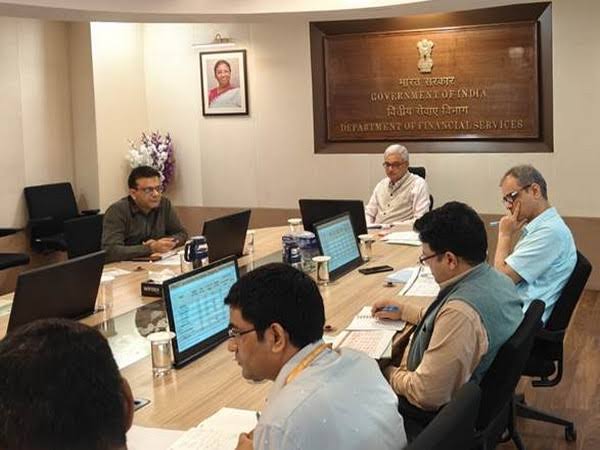
New Delhi, February 17, 2026: The Department of Financial Services (DFS) convened the tenth meeting of the Monitoring Committee on Business Correspondents (BCs), reviewing progress on financial inclusion initiatives and strengthening the BC ecosystem across the country.
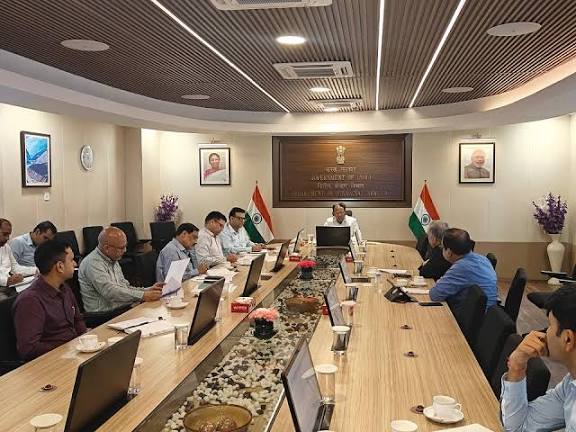 High-Level Participation
The meeting was chaired by Shri M. Nagaraju, Secretary, DFS, and attended by members of the Monitoring Committee, senior officials from public and private sector banks, the Reserve Bank of India (RBI), National Payments Corporation of India (NPCI), NABARD, Indian Banks’ Association (IBA) and BC associations.
Chief General Manager from RBI’s Financial Inclusion and Development Department and CEOs and Executive Directors of several banks also participated, reflecting the strategic importance of the Business Correspondent framework in India’s banking outreach model.
Review of BC Functioning and Services
Deliberations centred on strengthening the operational efficiency of Business Correspondents, who play a crucial role in extending banking services to remote and underserved regions. Discussions covered services offered at BC outlets, digital monitoring systems, geotagging of BC locations and commission structures.
Special focus was placed on challenges faced by BC agents in North Eastern and hilly regions, where terrain and connectivity constraints affect service delivery. The Committee examined ways to enhance viability and ensure equitable compensation structures in these areas.
At present, most banks are offering at least 42 services through BC points, including account opening, cash deposit and withdrawal, re-KYC processes and enrolment under micro-insurance schemes. The DFS Secretary advised banks to further expand the bouquet of services in response to evolving customer needs.
BC Registry Operationalised
A significant milestone highlighted during the meeting was the operationalisation of the BC Registry by the Indian Banks’ Association, effective from November 20, 2025. The registry is designed to eliminate duplication of BC agents and maintain detailed performance records.
The digital platform enables better oversight, enhances transparency and supports data-driven monitoring of service delivery. Member banks have also completed geotagging of their BC outlets, strengthening accountability and enabling location-based supervision.
Digital Monitoring and Financial Inclusion
Participants discussed the integration of digital tools to monitor BC operations in real time. Strengthening digital dashboards and improving data sharing mechanisms were identified as key steps to enhance service quality.
Shri Nagaraju emphasized that Business Correspondents remain the backbone of India’s financial inclusion drive, particularly under schemes aimed at deepening access to banking in rural and semi-urban regions. Continuous improvement in processes, he said, is necessary to maintain trust and efficiency in last-mile banking delivery.
Issues raised by BC organisations were also reviewed, and possible resolutions were discussed in consultation with stakeholders. The meeting concluded with a consensus on the need for sustained coordination between regulators, banks and field agents.
Expanding the Financial Inclusion Ecosystem
The Business Correspondent model has been instrumental in supporting initiatives such as Jan Dhan Yojana, direct benefit transfers and micro-insurance coverage. By expanding digital infrastructure and broadening services at BC points, DFS aims to further strengthen inclusive banking.
As India advances toward a more inclusive and digitally integrated banking system, the Monitoring Committee’s deliberations underscore the government’s continued commitment to strengthening the Business Correspondent framework.