

Ahmedabad, February 28, 2026: The Department of Financial Services (DFS), Ministry of Finance, concluded a two-day national workshop focused on strengthening the implementation of the Government of India’s Reservation Policy and enhancing accessibility for Persons with Disabilities (PwDs) across public financial institutions.
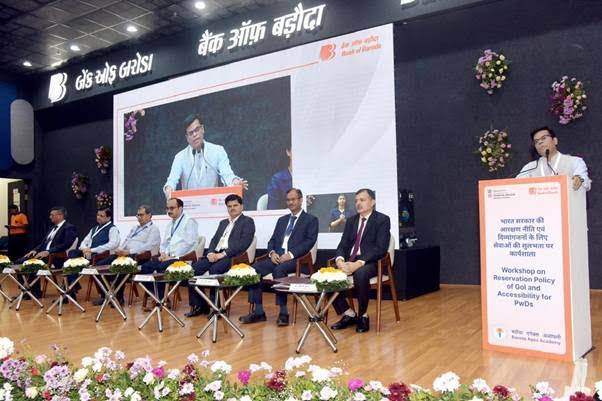

The workshop witnessed participation from senior officials of the Reserve Bank of India (RBI), Pension Fund Regulatory and Development Authority (PFRDA), and Insurance Regulatory and Development Authority of India (IRDAI). Representatives from all 12 Public Sector Banks, seven Public Sector Insurance Companies, and seven Public Financial Institutions were also present.
This wide representation ensured that regulatory bodies and financial institutions engaged collectively in reviewing existing mechanisms and addressing operational gaps in the implementation of the Reservation Policy.
Focus on Effective Implementation of Reservation Policy
Participants examined practical aspects of implementing the Government of India’s Reservation Policy within recruitment, promotions, and service conditions in public financial institutions. The discussions stressed the need for consistency, transparency, and adherence to statutory provisions.
Officials highlighted that effective execution requires not only policy awareness but also structured monitoring, periodic audits, and leadership commitment at institutional levels. Strengthening internal compliance systems was identified as essential for ensuring equitable representation.
Accessibility Under Sugamya Bharat Initiative
A key component of the workshop was a sensitisation session conducted under the Sugamya Bharat initiative, which focuses on creating accessible infrastructure and services for Persons with Disabilities. The session covered accessibility standards, compliance requirements, and institutional responsibilities.
Participants engaged in a roundtable discussion on legal provisions related to accessibility. The dialogue addressed practical challenges, expectations versus on-ground realities, and the importance of adopting best practices to make banking and financial services more accessible.
Officials noted that accessibility goes beyond physical infrastructure and includes digital platforms, communication tools, grievance redressal mechanisms, and customer service processes tailored to diverse needs.
Addressing Operational Challenges
The workshop concluded with an interactive question-and-answer session, allowing participants to share operational challenges and propose actionable solutions. Issues such as documentation requirements, uniform policy interpretation, and staff sensitisation were discussed in detail.
There was consensus that continuous training programmes and periodic knowledge-sharing forums are necessary to maintain compliance and strengthen inclusivity across institutions. Participants also emphasised the importance of data-driven monitoring to assess the effectiveness of policy implementation.
Commitment to Inclusive Financial Governance
The DFS reiterated its commitment to ensuring that public sector banks, insurance companies, regulators, and financial institutions uphold the principles of equality and accessibility. By focusing on capacity building and coordinated action, the workshop sought to bridge gaps between policy formulation and execution.
As India’s financial services sector continues to expand, the emphasis on inclusive governance and equitable access remains central to sustainable development. The Ahmedabad workshop marks another step toward strengthening institutional frameworks to support reservation policies and enhance accessibility for Persons with Disabilities nationwide.