
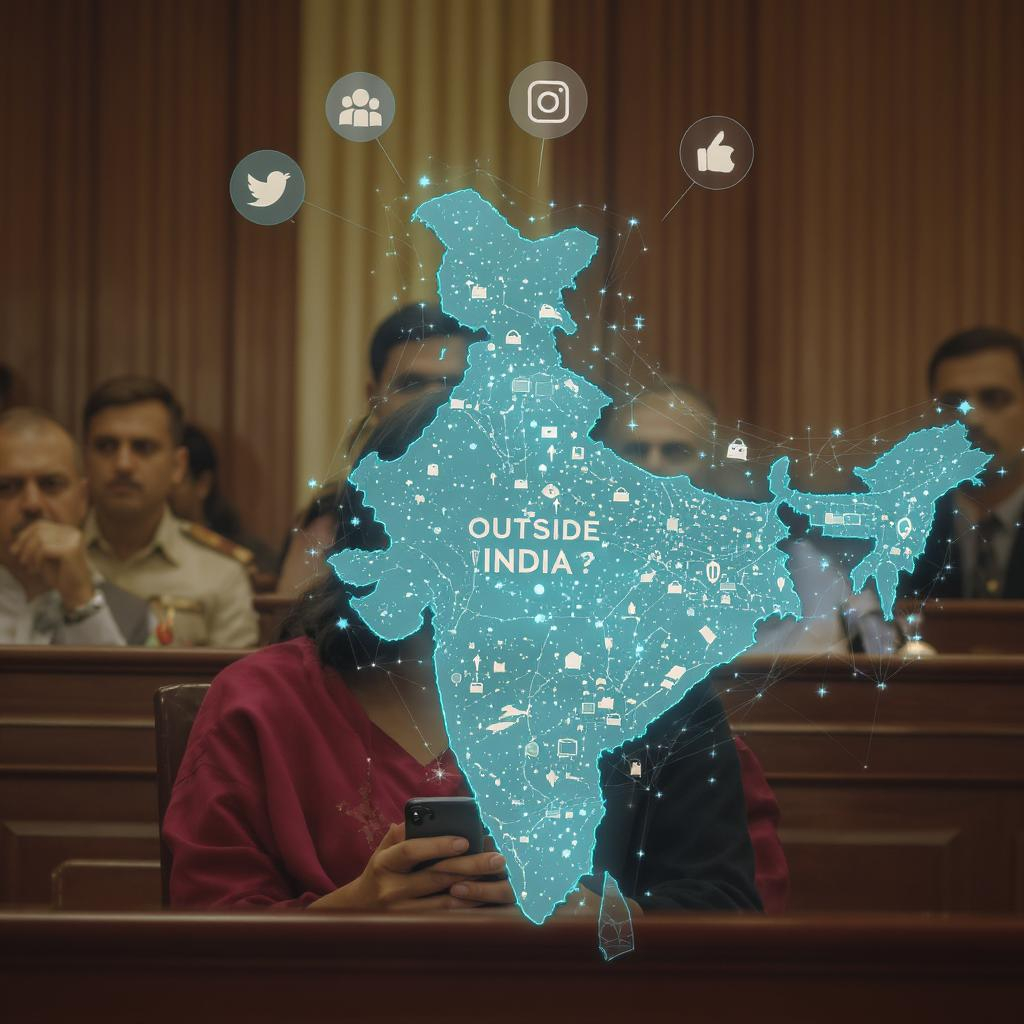
A young woman named Sarmishtha was arrested by the Kolkata Police from Delhi and presented in court, which granted transit remand to transfer her to Kolkata. The reason? A social media post. But the larger story reveals much more than just one arrest—it reflects the growing complexity of digital expression, cross-border provocation, and legal overreach in India’s digital age.
What Happened
According to reports, Sarmishtha reacted to a derogatory comment made by a Pakistani social media user. She replied in kind. The exchange, though online and international, offended some users in West Bengal, leading to an FIR against her. Although she deleted her post and issued an apology, she was still arrested and booked under serious charges.
This has sparked public concern and debate: Can a response to online abuse—especially when it originates from outside the country—really justify an arrest? And what does this say about our legal response and digital sovereignty?
A New Modus Operandi?
A troubling trend has been pointed out by digital rights activists:
-
A foreign account, often located in Pakistan or other neighboring countries, starts a provocation—sometimes through abusive language or by sharing offensive content related to Hindu gods or Indian figures.
-
An Indian user, angered or provoked, responds emotionally.
-
The response is then reported by local individuals or groups in India.
-
The responder faces legal action, while the original foreign provoker remains untouched.
This raises concerns about a manipulative cycle, where cross-border actors incite reactions, and domestic users pay the price—legally and socially.
Digital Jurisdiction and Policy Blind Spots
At the heart of this issue is a serious governance gap:
Why are foreign social media accounts, especially those with a record of spreading hate, still visible and accessible in India?
In many countries, geofencing and content moderation are used to block content or users from outside jurisdictions. India, despite having the Information Technology Act, lacks effective filtering when it comes to international abuse. The government’s inaction here raises a valid point—shouldn’t India implement stricter digital jurisdiction boundaries to avoid such situations?
Double Standards and Political Polarization
Critics also point to perceived double standards. Several left-leaning accounts and individuals have posted content critical of Indian culture, government, and even religious figures. In many such cases, no legal action follows, or courts intervene swiftly in favor of the accused.
On the other hand, right-wing users, when provoked or retaliating, often face harsher consequences—be it arrest, FIRs, or social media takedowns. This perceived imbalance has created frustration among users who feel their voices are suppressed while others go unchecked.
Is this just a perception, or is there an actual bias within the system? If one ideology appears immune to consequences while another is under scrutiny, it raises important questions about freedom of expression and equal application of the law.
What Should Be Done?
This incident is not just about one person—it’s about digital fairness and national security. Here’s what needs urgent attention:
-
The government should establish stricter controls to block foreign abusive content from reaching Indian users.
-
Law enforcement should differentiate between originators of provocation and those who respond emotionally.
-
There must be clarity and consistency in how laws are applied across political and ideological spectrums.
-
Most importantly, India must invest in digital border enforcement—so that online abuse from outside its borders doesn’t provoke legal chaos within.
Conclusion:
The arrest of Sarmishtha highlights the urgent need for reforms in India’s digital legal system. In an age where provocation knows no borders, our laws, policies, and platforms must be smart enough to protect citizens without punishing them unfairly.
Justice should not be triggered by who reacts—but by who instigates. And sovereignty today is not just about land—it’s about data, discourse, and digital dignity.