 Human Rights Day: From Declaration to Daily Dignity
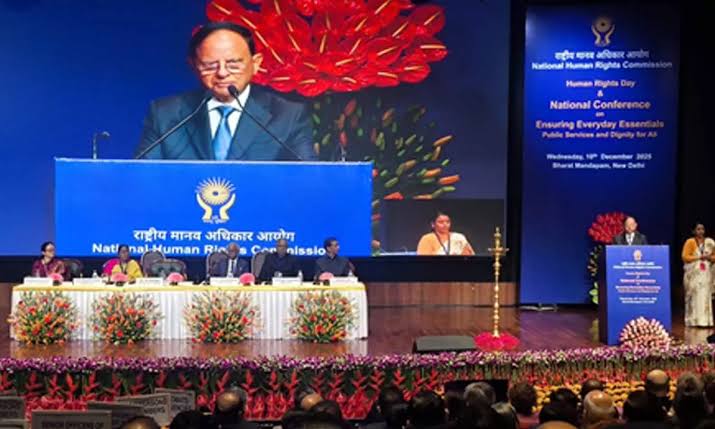
Dr Mishra opened with a reminder of the Universal Declaration of Human Rights and the historic contribution of Indian delegates such as Dr Hansa Mehta. He said that the Declaration’s promise adequate food, housing, health care and social security should be measured not just on paper but by the lived experience of citizens. “Human Rights Day is an invitation to reflect on the lived experience of dignity,” he said, urging officials to translate rights into reliable delivery.
Four Pillars Securing Everyday Essentials
Outlining a practical framework, Dr Mishra identified four pillars that secure everyday essentials: dignity at home, social protection, inclusive economic growth, and justice for vulnerable communities. He cited flagship programmes PM Awas Yojana, Jal Jeevan Mission, Swachh Bharat, Saubhagya and Ujjwala as examples of efforts that have raised living standards across millions of households.
On social protection, he highlighted the scale of response during COVID PM Garib Kalyan Anna Yojana feeding tens of crores and the expansion of Ayushman Bharat–PMJAY health coverage. Reforms in labour laws, pensions and insurance, he argued, extend the social safety net to informal and gig workers.
From Paper Rights to Implemented Rights
Dr Mishra contrasted earlier rights-based legislation such as the Right to Education Act and MGNREGA with the post-2014 emphasis on saturation delivery. He described the shift as moving from “paper rights” to “implemented rights,” bolstered by digital infrastructure, direct benefit transfers and outreach drives like the Viksit Bharat Sankalp Yatra. He also cited poverty reduction figures derived from official surveys to underscore progress in living standards.
Rights in the Digital and Environmental Age
Emphasising the evolving nature of rights, Dr Mishra said modern human rights must account for technology, the environment and digital inclusion. He urged institutions to adopt frameworks for data protection, algorithmic fairness and responsible AI. Climate resilience, clean air and access to mobility were cited as new dimensions of dignity that policy must safeguard.
Citizen-Centred Governance and Institutional Foresight
Central to the address was a call for governance that listens and responds. Dr Mishra urged a transformation from prescriptive schemes to partnerships with citizens, describing Jan Bhagidari as a guiding principle. He advocated strengthening grievance redressal, improving transparency and building institutional foresight so policies anticipate emerging vulnerabilities rather than react to crises.
Justice, Vulnerable Communities and Inclusive Growth
Dr Mishra highlighted legal and institutional steps to protect marginalised groups, including fast-track courts, POCSO, the Rights of Persons with Disabilities Act, and measures for tribal welfare. Financial inclusion JAM Trinity and Jan Dhan and women-focused programmes like SHGs have, he said, expanded access to opportunity and dignity. He also pointed to measures aimed at supporting artisans, gig workers and small entrepreneurs through schemes such as PM Mudra Yojana and PM SVANidhi.
Concluding Vision: A Dignified, Liveable India
In closing, Dr Mishra described good governance as a fundamental right defined by efficiency, accountability and timely service delivery. He envisioned a Viksit Bharat where liveable cities and vibrant villages assure dignity for every citizen. The Principal Secretary urged stakeholders to adopt responsible technology, build resilient institutions and sustain collective action to ensure dignity, justice and development for all.