 Gen AI and Future Networks
The first session, titled “Gen AI and Future Networks,” examined how generative AI is reshaping next-generation telecom infrastructure. Senior executives from leading telecom operators and global policy bodies joined officials from the DoT to share insights on AI-driven network transformation.
Speakers highlighted that predictive maintenance, intelligent spectrum optimisation, and energy-efficient network management are enabling telecom networks to become adaptive and self-optimising. AI-native architectures are increasingly supporting large-scale AI workloads, ensuring improved performance and reduced operational costs.
A key theme was the growing convergence between cloud infrastructure and telecom networks. Panelists observed that the boundaries between data centres, cloud systems, and telecom networks are blurring, enabling compute-on-demand capabilities and real-time resource allocation.
Future networks, experts said, will deliver ultra-low latency and high-speed connectivity essential for immersive technologies such as augmented reality (AR), virtual reality (VR), and other real-time digital applications.
AI-Powered Bharat Through Universal Connectivity
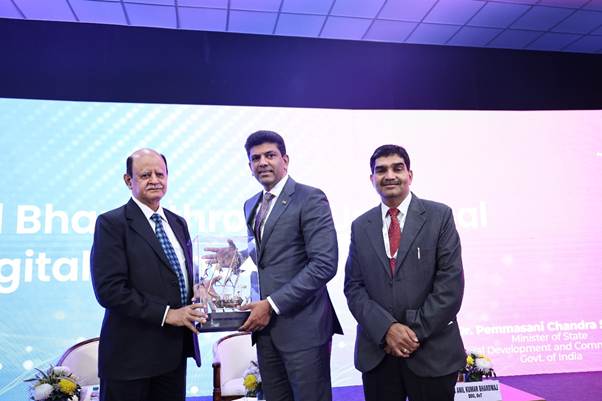
The second session, “AI Powered Bharat through Universal Digital Connectivity,” featured a keynote address by Dr. Chandra Sekhar Pemmasani, Minister of State for Communications and Rural Development. The session focused on leveraging AI to enhance connectivity, strengthen cybersecurity, and expand digital inclusion.
Panelists emphasized that universal and meaningful digital connectivity can only be achieved when the last person receives reliable, on-demand access to high-quality services. AI tools, they noted, can improve network capacity planning, optimise traffic management, and enhance service delivery in remote areas.
The discussion also addressed telecom fraud prevention and secure communications. Stakeholders highlighted citizen-centric initiatives such as Sanchar Saathi and fraud risk mitigation measures designed to protect users in the evolving digital landscape.
Strengthening Secure Communication
Panelists agreed that ensuring secure communication remains a shared responsibility among telecom operators, regulators, and policymakers. As AI capabilities expand, maintaining data protection and safeguarding networks from cyber threats have become top priorities.
Officials reiterated that AI can serve as both a technological accelerator and a defensive tool, enabling proactive detection of suspicious activities and strengthening trust in digital platforms.
Leadership Engagement at the Expo
On the sidelines of the Summit at Bharat Mandapam, senior officials from the DoT, including Secretary Amit Agrawal and other top officers, visited the AI Expo 2026 to assess emerging innovations relevant to the telecom sector.
The delegation reviewed technology demonstrations aimed at strengthening India’s digital backbone and enabling AI-driven services for citizens. The visit underscored the government’s intent to integrate cutting-edge innovations into policy and infrastructure frameworks.
Dr. Pemmasani also interacted with key stakeholders at the event and appreciated the Ministry of Electronics and Information Technology for organising the summit. The India AI Impact Summit 2026 continues to serve as a platform for collaboration between government, industry, and academia.
Commitment to an AI-Driven Digital Future
Through its active participation, the DoT reaffirmed its commitment to building a robust, AI-enabled telecom ecosystem that supports innovation, enhances service quality, and ensures secure connectivity for every citizen.
As India accelerates its digital transformation journey, the integration of AI with telecom infrastructure is expected to play a pivotal role in driving inclusive growth and technological advancement across sectors.