The Department of Telecommunications has intensified efforts to secure India’s telecom networks, prevent cyber fraud and recover stolen mobile handsets, the government informed Parliament.
The information was shared by Minister of State for Communications and Rural Development, Dr Pemmasani Chandra Sekhar, in a written reply to an unstarred question in the Lok Sabha on Tuesday. He said the initiatives are part of a comprehensive national strategy to enhance telecom security, prevent misuse of communication networks and ensure digital trust.
 Blocking International Spoofed Calls
One of the major steps taken by the DoT involves a collaborative system developed with Telecom Service Providers (TSPs) to detect and block international spoofed calls that display Indian mobile numbers. According to the ministry, this system has resulted in an almost 99 percent reduction in such fraudulent calls, which were often used to deceive citizens and facilitate financial scams.
This technological intervention has significantly reduced the volume of fake calls originating from overseas locations while impersonating domestic numbers, thereby strengthening user confidence in telecom services.
Digital Intelligence Platform and Network Audits
The DoT has also created a secure Digital Intelligence Platform (DIP) to enable real-time information sharing on misuse of telecom resources. The platform connects central security agencies, State and UT police forces, banks, UPI service providers and telecom operators, allowing swift coordinated action against emerging threats.
To further ensure network resilience, telecom operators are mandated to conduct annual security audits or audits whenever major network configuration changes take place. These audits must be carried out by accredited agencies following international standards such as ISO/IEC 27001, including vulnerability assessment and penetration testing. An external audit of telecom networks is compulsory at least once every three years.
Protecting Sensitive Telecom Data
Recognising the importance of data security, the DoT has issued advisories directing telecom companies to strengthen the protection of sensitive datasets, including Subscriber Detail Records, Call Detail Records and IP Detail Records. The focus is on safeguarding data both at rest and during transmission to prevent breaches and misuse.
Additionally, minimum security policy requirements have been prescribed for all DoT licensees, providing a structured framework for implementing and continuously improving security management practices.
Telecom Security Operations Centre and Fraud Risk Indicator
To enhance situational awareness and real-time monitoring of telecom cyber threats, the department has established a Telecom Security Operations Centre (TSOC). The centre plays a crucial role in analysing threats, coordinating responses and strengthening national telecom cyber resilience.
Another key initiative is the Financial Fraud Risk Indicator (FRI), a risk-based metric that categorises mobile numbers based on their association with financial fraud. Banks, NBFCs and UPI service providers use this tool to prioritise enforcement actions and introduce additional safeguards. The government said these measures have helped prevent fraud worth more than ₹1,000 crore through transaction declines and timely alerts to citizens.
Sanchar Saathi Delivers Citizen-Centric Outcomes
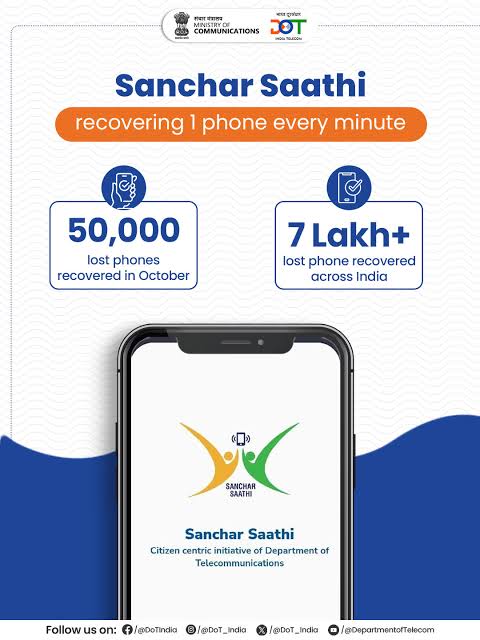
The DoT’s flagship citizen-centric initiative, Sanchar Saathi, has emerged as a cornerstone of telecom fraud prevention and consumer protection. The platform allows citizens to report suspected fraudulent communications, check mobile connections registered in their name, verify handset authenticity and report lost or stolen devices.
As a result of public participation, 27.96 lakh lost or stolen handsets have been traced so far, while 8.22 lakh devices have been successfully recovered. In addition, 2.22 crore mobile connections were disconnected after citizens flagged them as unauthorised or unnecessary, and over 39 lakh connections were terminated based on inputs related to suspected fraud communications.
Nationwide Awareness and Outreach
The department has complemented enforcement measures with extensive public awareness campaigns under the Sanchar Saathi and FRI initiatives. These include explainer videos, infographics, social media outreach, SMS campaigns and advertisements across digital and traditional media platforms.
The Sanchar Mitra scheme further engages student volunteers to educate citizens on digital safety, fraud prevention and effective use of government platforms. Officials said these combined efforts aim to build a culture of digital vigilance and shared responsibility.