
Driving Deep Tech Innovation in India
The Centre of Excellence (CoE) is India’s largest deep tech innovation hub. It connects startups, enterprises, academic institutions, and the government. Together, they address real-world problems using advanced technologies like IoT, Artificial Intelligence, Machine Learning, Robotics, AR/VR, Big Data, and Data Science.
During the visit, the DPIIT delegation engaged directly with startup founders and incubation leaders. Their goal was to understand key challenges and opportunities across industries. The interaction highlighted how innovation can drive transformation in manufacturing, logistics, and urban planning.


The Secretary acknowledged the critical role played by innovation hubs like this one. He stressed that government policy must support the startup ecosystem with the right infrastructure, funding models, and regulatory ease.
He also encouraged startups to share feedback so that policies can be tailored to real needs. The visit exemplifies how government and industry can co-create solutions for India’s future economy.
Reviewing Tumakuru Industrial Area: A Flagship Under NICDP
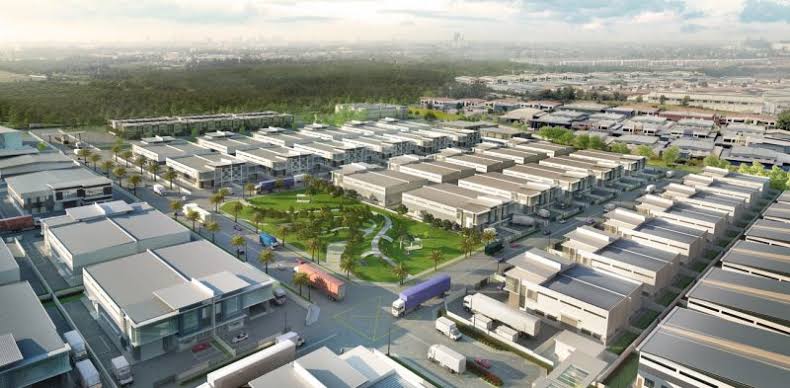
After Bengaluru, the Secretary visited the Tumakuru Industrial Area, a key project under the National Industrial Corridor Development Programme (NICDP). The review focused on the execution of Phase A, which spans 1,736 acres and includes roads, drainage, and utilities.
The delegation included NICDC CEO Rajat Kumar Saini, EPC contractor Larsen & Toubro (L&T), and project management consultants HaskoningDHV. L&T promised to accelerate progress so that land can be allotted to industries by year-end.
World-Class Infrastructure to Attract Global Investment
Shri Bhatia urged all stakeholders to maintain world-class standards and deliver results on time. His message was clear—India must compete globally in sectors like electronics, clean tech, logistics, and automotive manufacturing.
“Timely delivery and quality infrastructure are non-negotiable,” he stated. These factors will be essential to drawing domestic and international investors to Tumakuru and beyond.
Foxconn and Aerospace: India’s Next Growth Frontiers
The Secretary’s team also visited Foxconn Hon Hai Technology’s Mega Development facility. Foxconn is a key player in India’s electronics ambitions. The tour reaffirmed India’s growing role in semiconductor manufacturing and hardware production.
Later, the delegation explored the Devanahalli Aerospace SEZ and Dynamatic Technologies, a top aerospace component manufacturer. The visit offered a firsthand look at advanced manufacturing and precision engineering.
Aligning Centre-State Synergies
The review meeting saw the presence of several dignitaries, including:
- Dr. Selvakumar S, Principal Secretary, Government of Karnataka
- Dr. Mahesh M, MD, KIADB
- Smt. Shubha Kalyan, DC & DM of Tumakuru
They joined NICDC and DPIIT officials to ensure synchronized efforts. Their collective focus was on removing bottlenecks and fast-tracking progress across the industrial corridor.
India’s Vision: Innovation + Infrastructure = Investment
At every stop, Shri Bhatia reinforced India’s vision—to link innovation with infrastructure and back it with smart policy. This trinity, he said, is what will drive investment, exports, and job creation.
The visit was not just symbolic. It showed how coordination between central and state agencies, supported by startups and industries, can bring India’s economic goals to life.
Conclusion: A Bold Step for New India
The Bengaluru and Tumakuru visits highlight a government that’s proactive, connected, and focused on execution. From reviewing startups to inspecting roads, the DPIIT delegation demonstrated that India’s industrial future is in the making—right now.
The path ahead is clear. With deep tech, global standards, and coordinated governance, India is ready to build world-class industrial zones that power a new era of economic leadership.