
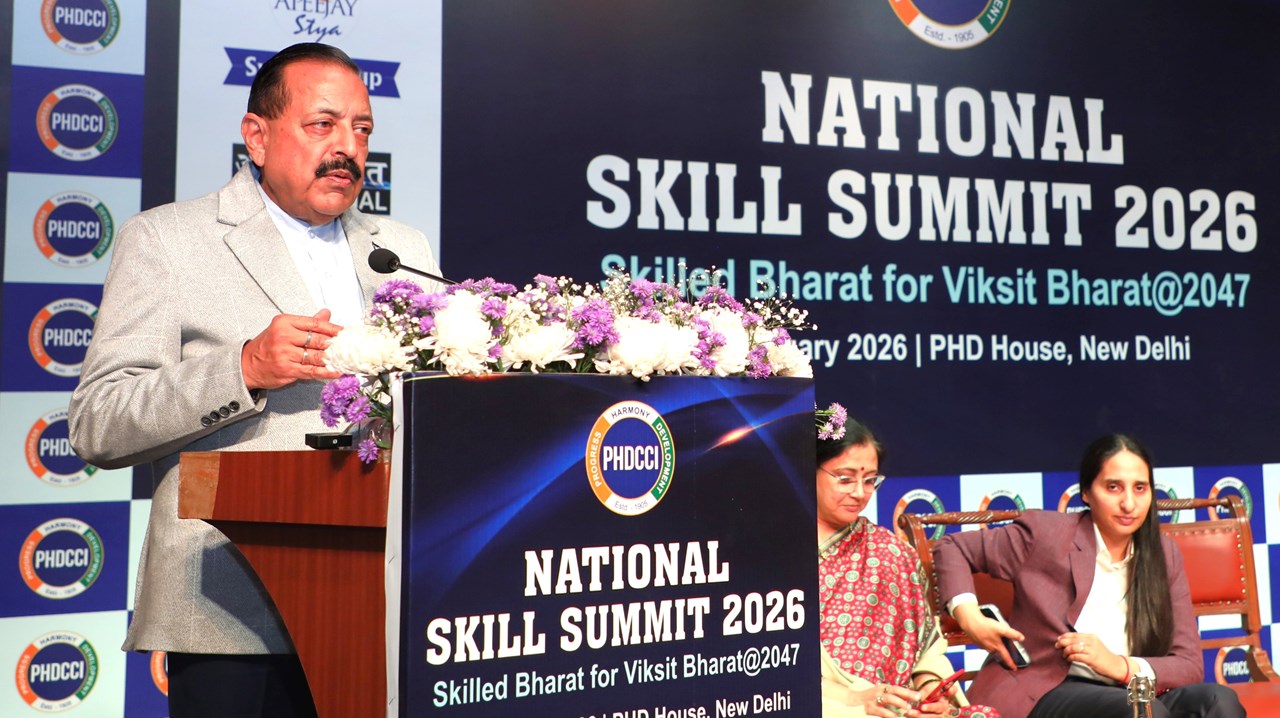

Addressing students from diverse regions, Dr Singh emphasized that India, one of the youngest nations globally, holds a demographic advantage with a significant population under 35. He highlighted that the ideas, skills, and innovation of today’s students will shape India’s journey towards becoming Viksit Bharat by 2047.
“India@2047 will be built by young innovators, not spectators. Youth-led innovation is the backbone of a progressive India,” Dr Singh stated, highlighting the transformative power of early engagement in problem-solving and creativity.
Atal Innovation Ecosystem Nurturing Talent
Dr Singh elaborated that the Atal Tinkering Lab ecosystem fosters confidence, creativity, and problem-solving among students. By encouraging experimentation and teamwork, ATLs help students explore technology as a platform for creation, rather than mere consumption.
The Minister noted that structured mentoring during formative years is crucial, as adolescence is the stage where interests and potential paths take shape. Platforms like ATLs enable students to discover their strengths, explore real-world challenges, and innovate solutions that matter.
Innovation Beyond Metropolitan Cities
Highlighting the emergence of startups in Tier-2 and Tier-3 cities, Dr Singh stressed that innovation is no longer confined to urban centers. Nearly half of India’s startups today are emerging from these regions, aided by institutional support and access to technology-driven education.
The Minister encouraged students to explore region-specific solutions, leveraging local resources and geography, such as coastal, island, hilly, and mining areas, to create unique and sustainable innovations.
From Ideas to Scalable Solutions
Dr Singh advised students to think beyond prototypes towards scalable, market-ready solutions. He discussed expanding support systems, including mentorship, funding, patent facilitation, and industry linkages, enabling students to transform innovations into impactful ventures.
He encouraged peer collaboration, sharing of ideas, and collective learning, emphasizing that teamwork strengthens solutions and nurtures leadership, communication, and entrepreneurial skills essential for India’s future workforce.
Defining Phase for National Transformation
Concluding the interaction, the Minister urged students to make the most of opportunities in this decade, describing it as a pivotal phase for individual growth and national progress. He expressed confidence that with curiosity, discipline, and proper guidance, today’s young innovators will play a decisive role in building a self-reliant, technology-driven, and inclusive India.