
Satellite Communication for Rural Connectivity
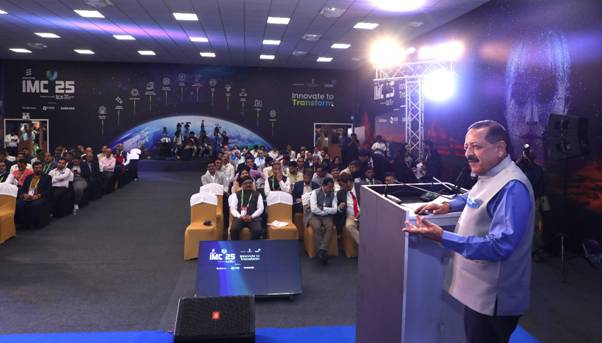
Dr. Singh underscored the importance of satellite communication (satcom) as the backbone of India’s digital infrastructure, particularly for rural areas where terrestrial networks face geographic challenges. With over 70% of new ATMs being installed in rural regions, he said satcom is pivotal for financial inclusion and expanding digital services, ensuring equitable access to technology across the country.
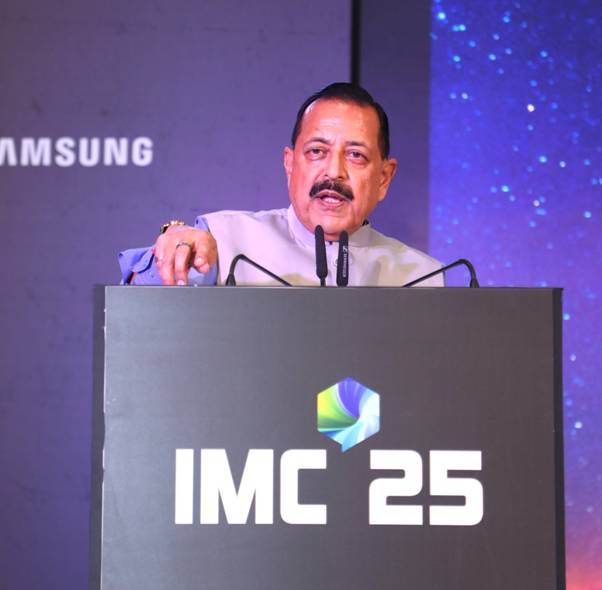

The Minister highlighted that India has launched 433 foreign satellites, generating over $190 million and €270 million in revenue. He also cited Chandrayaan-3’s historic soft landing near the Moon’s south pole in 2023 as an example of India’s cost-effective innovation, which earned global recognition while operating at roughly half the cost of comparable international missions.
Private Sector and Startup Growth
Dr. Singh credited reforms such as the creation of New Space India Limited (NSIL) and IN-SPACe for breaking the decades-long state monopoly and enabling private sector innovation. In the past five years, over 300 space startups have emerged, making India the world’s fifth-largest space startup ecosystem.
Long-Term Roadmap and Lunar Missions
Looking ahead, India plans to establish its own Bharatiya Antariksh Station by 2035 and expects to send an Indian astronaut to the Moon by 2040 under the vision of “Viksit Bharat 2047.” The roadmap includes launching more than 100 satellites in the next 15 years, mostly small satellites developed through government-private partnerships.
Space Technology in Governance
Dr. Singh highlighted the role of space technology in governance through initiatives like SVAMITVA, which provided land ownership rights to over 2.4 crore rural property owners. Satellites are also integral to disaster management, forest fire monitoring, agricultural assessments, and schemes like Gati Shakti and NavIC.
Global Collaboration and Diplomacy
India’s space diplomacy is strengthening with missions like Chandrayaan-5 in collaboration with Japan and the NASA-ISRO Synthetic Aperture Radar (NISAR) mission. Neighboring countries increasingly rely on Indian satellites for disaster management and communications support, reflecting India’s growing global presence in space technology.
Concluding Remarks
Dr. Singh concluded that India’s cost-effective missions, expanding private partnerships, and ambitious roadmap are positioning the nation as a global leader in space technology. “Seventy per cent of our space technology is dedicated to development and ease of living, not just rocket launches,” he said, emphasizing the convergence of space innovation, digital infrastructure, and governance as the digital nervous system of Viksit Bharat 2047.