
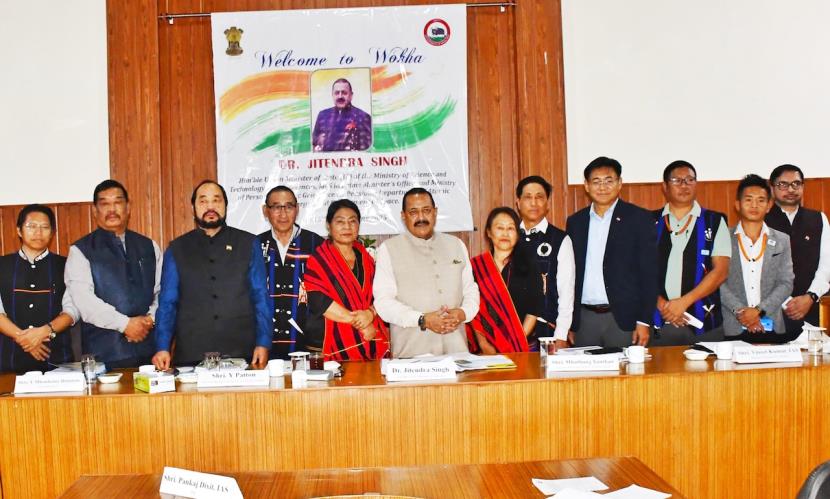
Dr Jitendra Singh’s Wokha Visit Reinforces Centre’s Commitment to Northeast
In a strong push towards inclusive development, Union Minister Dr. Jitendra Singh visited Wokha district in Nagaland on Monday, holding meaningful interactions with tribal leaders, civil society members, and local representatives. The outreach is part of the Centre’s sustained focus on bridging the gap between New Delhi and India’s northeastern frontier.
Dr. Singh, who oversees portfolios such as Science & Technology, PMO, Earth Sciences, and Atomic Energy, stressed the Modi government’s approach of integrating tribal voices into the nation’s development journey.
“Prime Minister Modi has given special focus to the Northeast, treating it not as a periphery but as a growth engine,” he said.
Focus on Real Development, Not Just Symbolism
Unlike symbolic gestures, Dr. Singh underlined that the Centre’s efforts are rooted in structural reforms and long-term plans. Over the last decade, the Northeast has seen a significant boost in infrastructure, connectivity, and scientific outreach programs tailored to rural and tribal needs.
The Minister highlighted key investments including:
- Improved road and rail connectivity
- Technology-driven rural development
- Initiatives for youth employment
- Scientific programs aimed at sustainability and livelihoods


Accompanied by District Magistrate Vaneet Kumar and senior state officials, Dr. Singh engaged with a diverse group including tribal bodies, village councils, and grassroots leaders.
These stakeholders raised issues ranging from:
- Local governance bottlenecks
- Lack of youth skill training
- The need for enhanced outreach in remote tribal hamlets
Leaders appreciated the direct interface, which allowed for candid conversations about their unique socio-cultural and administrative systems.
Strengthening Cooperative Federalism
The visit aligns with the Centre’s broader vision to promote participatory governance and cooperative federalism. It reinforces the idea that policies should evolve with input from those on the ground — particularly in culturally rich but administratively distinct regions like Nagaland.
Dr. Singh assured the attendees that their feedback would directly influence policies under central ministries. He reaffirmed that development planning would respect local traditions while introducing modern opportunities.
Wokha Visit: Part of a Larger Plan
This outreach isn’t a one-off event. It’s part of a series of interactions planned across the Northeast to improve last-mile delivery of government schemes and services. These engagements are expected to:
- Build trust between communities and administration
- Tailor schemes to local needs
- Encourage youth participation in governance
With such field visits, the Centre aims to foster a development model that is inclusive, responsive, and culturally grounded.
For a deeper look into how infrastructure is transforming the Northeast, read more on India’s Northeast Infrastructure Push.