
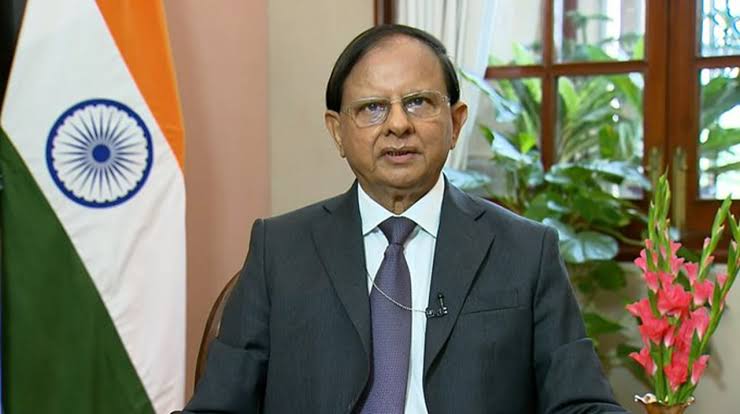
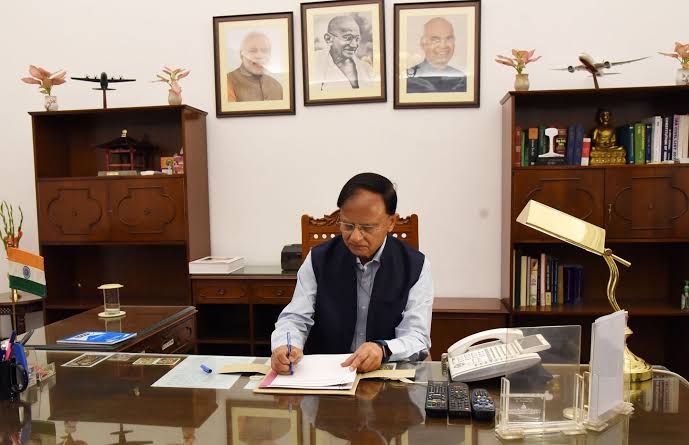

Tracing UPSC’s history, Dr. Mishra recalled its origins as the Public Service Commission in 1926, later becoming the Federal Public Service Commission under the Government of India Act, 1935. After independence, it evolved into the UPSC, entrusted with selecting officers for the Civil Services India’s “steel frame.”
He highlighted that UPSC examinations have continuously evolved to keep pace with modern governance while preserving fairness and equity. Beyond recruitment, the Commission also advises the government on promotions, deputations, and disciplinary matters, reinforcing administrative accountability.
Pratibha Setu: New Pathways for National Talent
Dr. Mishra spotlighted the newly launched Pratibha Setu, a digital platform that links candidates who reach the final stage of UPSC exams with career opportunities nationwide. The portal, integrated with the National Career Service, enables highly skilled youth to contribute meaningfully to national development.
Evolving Role of Civil Services in a Changing India
Reflecting on the changing nature of governance, Dr. Mishra said that the responsibilities of civil servants have transformed dramatically compared to the pre-independence era. Earlier limited to revenue collection and maintaining law and order, administrators gradually became central to development planning, institution-building, and expanding public services.
He noted that technology, climate change, urbanization, disaster management, and India’s digital transformation have reshaped administration. Today’s governance model relies more on collaboration, innovation, and citizen participation, marking a radical shift over the past decade.
From Process to Outcomes: A New Governance Mindset
Dr. Mishra emphasized that governance expectations have shifted from process compliance to outcome delivery, from isolated departmental functioning to unified digital ecosystems, and from a state “delivering” to citizens to a state “partnering” with citizens through Jan Bhagidari. These shifts are evident in sectors such as healthcare, taxation, logistics, digital payments, and skilling, and now extend to frontier domains like quantum tech, space innovation, and the green and blue economies.
Four Priorities for Viksit Bharat 2047
According to Dr. Mishra, civil services must prepare for four emerging realities shaping India’s future:
- Global volatility and strategic competition in AI, cybersecurity, supply chains, space, and critical minerals.
- Rapid technological disruption demanding ethical judgment and the ability to engage with scientists and innovators.
- Shift towards capability-driven growth where outcomes, accountability, and real-world impact matter more than inputs.
- Global competition for talent where civil services must attract the brightest, most motivated youth.
Mission Karmayogi: Building a Lifelong Learning State
Dr. Mishra underscored that Mission Karmayogi is central to transforming India’s administrative ecosystem. The programme introduces a role-based, competency-driven framework supported by the iGOT-Karmayogi platform, which offers over 3,000 courses sourced from global best practices.
He highlighted that the future of governance requires civil servants who learn continuously, collaborate across sectors, and work with integrity, humility, and purpose.
A Vision for the Next Generation of Civil Servants
Concluding his address, Dr. Mishra said that the next generation of officers will shape India’s institutions beyond 2047. They must combine analytical rigour with ethical grounding, embrace technology confidently, and uphold the values that strengthen India’s democratic fabric.
With UPSC’s century-long legacy and the reforms underway, he said India is well-positioned to build a future-ready administrative system that drives the nation’s journey toward Viksit Bharat.