
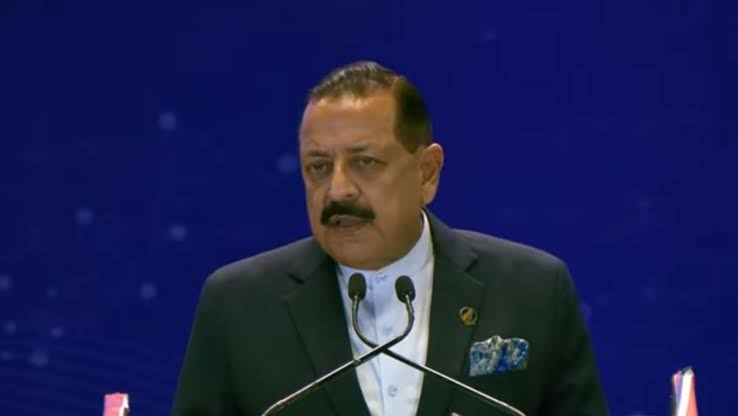
Strong opening: diaspora are part of India’s scientific family
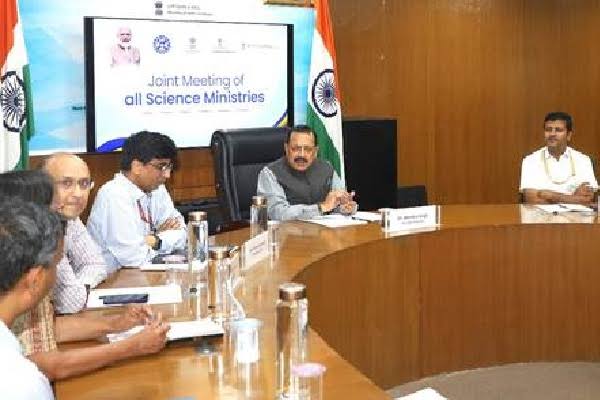

Dr. Singh and the VAIBHAV Fellows discussed concrete measures to deepen collaboration. Fellows recommended structured student mobility allowing Indian students to spend up to a year with foreign mentors, and reciprocal short-term placements for international students in Indian labs. They argued such mobility would nurture global talent and strengthen institutional ties.
Delegates also proposed easing travel and conference clearances, including a possible prior-approved list of global faculty to simplify visa and invitation processes. Several Fellows asked the government to consider extending the VAIBHAV fellowship tenure from three to five years, or introduce conditional two-year extensions to ensure long-term project continuity.
Focus on systems for India and industry linkages
Participants emphasised the need to build “systems for India” indigenous solutions tailored to the country’s unique scale, climate and affordability constraints. Research in 5G/6G, precision agriculture, biotechnology and affordable engineering were flagged as priority areas where system-level thinking matters.
Fellows also called for stronger public–private partnerships and cross-border collaborations that connect Indian startups and industry with overseas R&D infrastructure. One suggestion highlighted underused European research facilities paired with Indian talent as an efficient way to scale high-end experiments.
Government response and follow-up
Dr. Singh welcomed the Fellows’ suggestions and said many ideas could be operationalised. He welcomed the recommendation for a simplified approval framework and said the government would explore coordination with the Ministry of External Affairs for smoother academic travel.
The meeting was moderated by the Principal Scientific Adviser, Prof. Ajay K. Sood, with Secretary, Department of Science & Technology Prof. Abhay Karandikar delivering the welcome address. Dr. M. Ravichandran (Earth Sciences) and Dr. V. Narayanan (Department of Space) also participated and highlighted interdisciplinary opportunities under VAIBHAV.
Evidence of India’s rising R&D momentum
Dr. Singh cited recent achievements to underline India’s growing capabilities: a large share of recent patent filings by resident Indians, breakthroughs in biotechnology from COVID-19 vaccines to indigenous gene-therapy progress, and space milestones such as Chandrayaan-3. He encouraged diaspora scientists to act as “ambassadors of India’s scientific renaissance” and stressed that digital collaboration now allows sustained engagement without permanent relocation.
Voices from the VAIBHAV Fellows
Fellows from the US, Canada, Sweden, Australia and other countries praised the institutionalisation of diaspora engagement through the VAIBHAV fellowship. They urged systems that make long-term collaboration easier from longer fellowships to predictable administrative clearances and joint industry linkages that can translate research into products.
Several Fellows suggested performance-linked extensions, phased fellowships, and dedicated funds for collaborative infrastructure. A recurring recommendation was to strengthen student mobility and mentorship networks that bind future generations to India’s research ecosystem.
Conclusion: a golden era of Indian science
Concluding the Round Table, Dr. Jitendra Singh reaffirmed Prime Minister Narendra Modi’s sustained outreach to the scientific diaspora and described India as entering a “golden era” of science and innovation. He urged Fellows to stay connected beyond formal fellowship periods through virtual collaborations, mentoring and joint projects to help realise the VAIBHAV vision for a Viksit Bharat by 2047.